


How Connected Inspections and Audits Strengthen Workplace Safety
How Connected Inspections and Audits Strengthen Workplace Safety
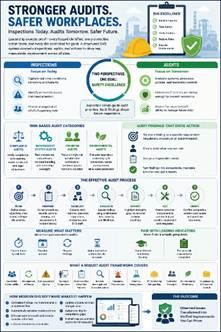
Safety performance is no longer measured by good intentions or the amount of effort invested. Today's organizations must demonstrate measurable outcomes backed by evidence. Leadership wants complete visibility into the journey of every identified hazard from its initial discovery through corrective actions to final verification that the risk has been effectively controlled or eliminated. Beyond resolving individual issues, decision makers also expect to see long term improvement, including fewer recurring incidents, stronger preventive controls, and reduced risk exposure across all facilities. Achieving this level of transparency is significantly easier when inspections, audits, and corrective actions are managed within a centralized EHS system instead of disconnected spreadsheets, emails, or paper records.
Although inspections and audits often work together, they serve different purposes. Inspections provide an immediate snapshot of workplace conditions, employee behaviors, equipment status, and potential hazards that require attention today. Audits, however, take a broader view by evaluating whether organizational systems, policies, and management controls are effective enough to prevent those same issues from happening again. While inspections focus on present day operational risks, audits assess the strength of the processes designed to protect the future. When both activities are integrated, inspection data helps determine audit priorities, while audit outcomes influence where future inspections should concentrate their attention.
An effective audit program should be built around organizational risk rather than relying on generic checklists. Applying identical audit questions across every department or location often consumes valuable time without addressing the areas that present the greatest exposure. Instead, audits should reflect the organization's unique operational risks. High impact audit programs commonly include compliance assessments that verify obligations related to permits, emissions, waste management, and regulatory requirements; management system audits that evaluate procedures, employee competence, leadership involvement, and incident management processes; program specific audits targeting high risk operations such as contractor management, confined space entry, hot work, and energy isolation; and environmental audits that examine hazardous material handling, spill prevention measures, waste disposal practices, and environmental protection controls. Prioritizing these critical areas ensures audits generate meaningful operational improvements instead of simply confirming compliance.
Audit observations create value only when they are clear, accurate, and assigned to the appropriate individuals. Every finding should reference a specific regulatory requirement, company procedure, or management system expectation so that conclusions remain objective and well supported. Whenever a nonconformance is identified, reports should explain exactly which requirement was not satisfied while assigning ownership to the individual responsible for resolving the issue. This approach transforms audit findings into accountable corrective actions rather than producing reports that are filed away without meaningful follow up.
Maintaining consistency throughout the audit process is equally important. Each audit should begin with a clearly defined scope and objective, identifying the locations, departments, operations, and high risk activities to be reviewed. Proper preparation includes collecting relevant procedures, maintenance records, permits, training documentation, risk assessments, and incident histories before the audit begins, while sharing a structured agenda ensures participants understand the process in advance. During the site visit, auditors should observe work activities as they naturally occur and engage with operators, supervisors, contractors, and EHS personnel to gain an accurate understanding of daily operations. Findings should then be evaluated according to both their potential severity and likelihood of occurrence. Final reports should present strengths, significant deficiencies, responsible owners, and realistic completion deadlines in a clear and organized manner. Corrective and preventive actions should be specific, measurable, and integrated into everyday business operations. The final stage involves confirming that corrective measures have been completed, underlying root causes have been addressed, and similar issues are not continuing to appear over time.
Evaluating the effectiveness of an audit program requires more than tracking how many audits have been completed. Completing checklists on schedule does not automatically create a safer workplace. More meaningful performance indicators include the time required to close corrective actions according to their risk level, the number of overdue actions, recurring audit findings, and aging corrective actions across sites or responsible departments. These measures become even more valuable when combined with leading indicators such as completion of mandatory training programs and pre task risk assessments, providing a clearer picture of whether overall organizational risk is actually declining rather than simply increasing administrative activity.
A comprehensive audit framework should extend beyond inspecting physical workplace conditions alone. It should evaluate leadership commitment, change management processes, the quality of risk assessments, competency based training programs, permit to work systems, energy isolation practices, incident investigations, corrective action management, emergency preparedness, chemical handling procedures, personal protective equipment compliance, machine safeguarding, contractor management, environmental monitoring, housekeeping standards, and document control processes. Assessing these elements together creates audits that remain consistent, repeatable, and capable of withstanding both internal evaluations and external regulatory reviews.
Modern EHS software makes it possible to manage this entire process with greater consistency and control. Instead of allowing audit findings to disappear within email chains or disconnected files, the system keeps all observations in a centralized location, automatically escalates overdue actions, strengthens permit to work and energy isolation controls in the field, connects maintenance activities with critical operational risks, updates procedures whenever changes occur, and assigns training where competency gaps are identified. Most importantly, it maintains secure, traceable, and auditable records that convert identified issues into verified improvements, providing organizations with reliable evidence during internal assessments and external compliance reviews.
Book a free demo @
https://toolkitx.com/blogsdetails.aspx?title=EHS-audit-(2025-guide):-definition,-checklist,-process,-and-ISO/OSHA-mapping
Browse More

 Bangla