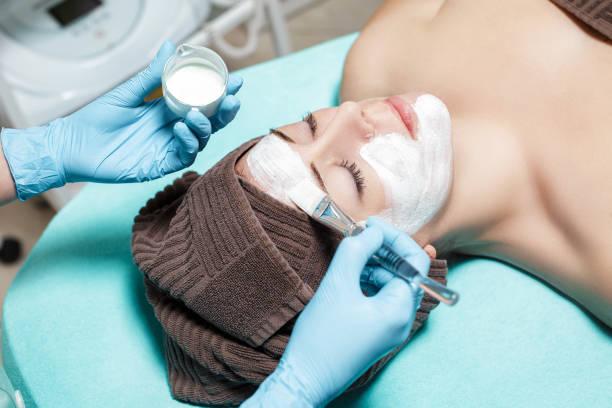
A professional facial is a wonderful treat, but you can achieve remarkable results from the comfort of your own home. A deep cleansing facial is a multi-step process designed to remove the buildup of dead skin cells, oils, and impurities that can leave your complexion looking dull . Steps Involved in Deep Cleansing Facial Process While it won't replicate the depth of professional extractions, an at-home facial is an excellent way to support your skin barrier, improve radiance, and enhance the absorption of your skincare products . The key is to use gentle, non-irritating methods that respect your skin's delicate balance.
Step 1: The Double Cleanse for a Pure Canvas
A thorough cleanse is the most important step in the Steps Involved in Deep Cleansing Facial Process. Over time, dead skin cells, oils, and pollutants build up on your skin . A single cleanse often isn't enough, so a double cleanse is highly recommended .
-
First Cleanse: Use an oil-based cleanser, cleansing balm, or micellar water to dissolve makeup, sunscreen, and excess sebum . Take a full 60 seconds to gently massage it into your skin, paying extra attention to areas prone to congestion like the nose and chin .
-
Second Cleanse: Follow up with a gentle, water-based cleanser suited to your skin type. For oily skin, a foaming gel is a good choice; for dry skin, a creamy or milk cleanser is better . Massage it in circular motions for at least 30-60 seconds to ensure you remove all remaining impurities, then rinse thoroughly with lukewarm water .
Step 2: Gentle Exfoliation to Refine Texture
Exfoliation is critical for removing dead skin cells and revealing a smoother, brighter complexion. This facial treatment procedure step should be performed 1-3 times per week depending on your skin's tolerance .
-
Choose a Gentle Exfoliant: Both physical and chemical exfoliants can be used. For physical exfoliation, choose a scrub with fine, non-abrasive particles . For a chemical option, look for a low-concentration AHA (like lactic acid) or BHA (like salicylic acid) toner, which dissolve dead skin without friction . Always follow the product's instructions and avoid the delicate eye area.
-
Apply with Care: If using a scrub, use light, circular motions for 1-2 minutes . If using a chemical exfoliant, apply it with a cotton pad using upward strokes .
Step 3: The Soothing Face Mask
After exfoliation, your skin is perfectly primed to absorb a concentrated dose of active ingredients from a face mask. This step helps you target specific skin concerns .
-
Select the Right Mask: Use a clay or charcoal mask to draw out impurities if you have oily or acne-prone skin; a hydrating mask with hyaluronic acid or aloe vera for dry or dehydrated skin; or a soothing mask with calming ingredients like oatmeal or chamomile for sensitive skin .
-
Apply and Relax: Apply a thin, even layer, avoiding the eye area, and leave it on for the time recommended on the packaging (usually 10-20 minutes) . Rinse thoroughly with lukewarm water and pat dry.
Step 4: The Finishing Touches
The final steps in a facial treatment procedure are essential to restore hydration and protect your skin's barrier .
-
Tone: Apply an alcohol-free toner to balance your skin's pH and soothe your complexion. You can use a cotton pad or spritz it directly onto your face .
-
Serum: Apply a hydrating serum with hyaluronic acid or a calming serum with ingredients like centella asiatica to nourish and replenish your skin .
-
Moisturize and Protect: Seal everything in with a moisturizer suited to your skin type to lock in hydration and support your skin barrier . If you're doing this facial in the morning, finish with a broad-spectrum sunscreen (SPF 30 or higher) to protect your newly exfoliated skin from UV damage .
For those seeking expert guidance and customized aesthetic care, you can book an appointment consultation at the Enfield Royal Clinic.
Frequently Asked Questions
How often should I do a deep cleansing facial at home?
For most people, performing a deep cleansing facial once a week is a great way to give your skin extra care .
Can I use steam in my at-home facial?
Steam can help open pores and soften the skin, but it is not essential. If you have sensitive skin or rosacea, it is best to avoid steam .
Is a deep cleansing facial suitable for all skin types?
Yes, but you must tailor the products to your skin type. Sensitive skin requires fragrance-free and gentle formulas, while oily skin benefits from clay masks and clarifying ingredients.
What is the correct order of products in a facial?
The general rule is to apply products from thinnest to thickest consistency. The correct sequence is: cleanser, exfoliant, mask, toner, serum, moisturizer, and sunscreen (in the morning).
How can I tell if I am over-exfoliating my skin?
Signs of over-exfoliation include persistent redness, tightness, stinging, or a feeling of irritation. If you experience these, reduce the frequency of exfoliation and focus on soothing and hydrating products.