


How Effective HSE Incident Reporting Reduces Workplace Risk
How Effective HSE Incident Reporting Reduces Workplace Risk
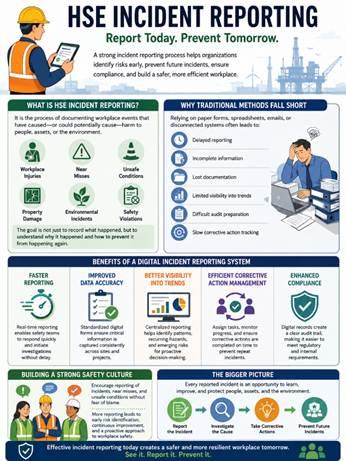
Creating a safe workplace involves far more than implementing safety rules or meeting regulatory requirements. Industries such as construction, manufacturing, energy, utilities, and offshore operations operate in environments where hazards are part of everyday work. Without an effective system for capturing and managing safety events, organizations risk injuries, equipment failures, environmental damage, and costly operational interruptions.
A well organized HSE incident reporting process plays a vital role in identifying these risks before they escalate. Prompt and accurate reporting enables organizations to understand what occurred, address immediate concerns, and introduce preventive measures that reduce the likelihood of similar incidents happening again. It also supports stronger compliance and contributes to continuous improvements in overall safety performance.
What Is HSE Incident Reporting?
HSE (Health, Safety, and Environment) incident reporting refers to the structured process of recording workplace events that have resulted in or had the potential to result in harm to employees, company assets, or the surrounding environment. Incidents commonly documented through this process include:
- Workplace injuries
- Near misses
- Unsafe conditions
- Property damage
- Environmental incidents
- Safety violations
The purpose of incident reporting extends well beyond documenting an event. Every report provides an opportunity to investigate contributing factors, understand underlying causes, and implement corrective measures that help prevent similar situations in the future.
The Limitations of Traditional Reporting Methods
Although many businesses recognize the importance of reporting incidents, a large number still depend on paper based forms, spreadsheets, email chains, or disconnected reporting systems. These traditional approaches often create inefficiencies that reduce the effectiveness of safety management.
Common challenges include:
- Slow reporting processes
- Missing or incomplete information
- Misplaced documentation
- Limited insight into recurring issues
- Time consuming audit preparation
- Delays in monitoring corrective actions
When reporting information is scattered across multiple systems, organizations struggle to build a complete picture of workplace safety. As a result, recurring hazards and developing risks can remain unnoticed until more serious incidents occur.
Advantages of Using a Digital Incident Reporting System
To improve safety management, many organizations are replacing manual reporting processes with digital HSE incident reporting systems. These modern solutions allow employees and contractors to submit reports directly from mobile phones, tablets, or desktop devices, making reporting more convenient regardless of their location.
A digital approach offers several important advantages.
Faster Incident Reporting
Real time reporting enables incidents to be recorded as soon as they occur. This allows safety teams to begin investigations quickly, respond more effectively, and minimize delays that could affect evidence collection or corrective actions.
Greater Data Accuracy
Digital reporting forms create consistency by guiding users through standardized fields. This helps ensure that important information is captured accurately and uniformly across different projects, departments, and work locations.
Clearer Visibility of Safety Trends
By storing all reports within a centralized system, organizations can analyze historical data, identify recurring hazards, and recognize emerging safety patterns. These insights support informed decision making and encourage a more proactive approach to risk management.
More Effective Corrective Action Tracking
Digital systems make it easier to assign responsibilities, monitor progress, and verify that corrective actions have been completed within established deadlines. This structured process reduces the likelihood of repeated incidents and strengthens accountability throughout the organization.
Stronger Regulatory Compliance
Maintaining digital records creates a reliable audit trail that supports internal governance and demonstrates compliance with company procedures and regulatory obligations. Having organized documentation readily available also simplifies inspections and audit activities.
Developing a Positive Safety Reporting Culture
Technology alone cannot create an effective incident reporting program. Success also depends on encouraging employees to actively participate in the reporting process.
Workers should feel comfortable reporting incidents, near misses, and unsafe conditions without concerns about blame or disciplinary action. When reporting is straightforward, accessible, and supported by management, employees are more likely to share valuable safety information from the workplace.
This increased flow of information allows organizations to identify risks sooner, implement improvements more quickly, and reinforce a culture focused on continuous safety enhancement. Over time, consistent reporting shifts incident management from reacting to problems after they occur to preventing them before they develop into serious events.
Conclusion
HSE incident reporting forms a fundamental part of an effective safety management program. Replacing manual reporting methods with a structured digital process enables organizations to improve reporting quality, speed up investigations, strengthen compliance, and reduce workplace hazards.
Beyond meeting reporting requirements, every recorded incident serves as a learning opportunity. The insights gained from each report help organizations strengthen preventive measures, protect employees, and improve operational performance over the long term. As digital transformation continues across industries, modern incident reporting systems are becoming an increasingly important foundation for creating safer, more resilient workplaces.
Book a free demo @ https://toolkitx.com/blogsdetails.aspx?title=hse-incident-reporting
Browse More

 Bangla