


How Digital Incident Management Helps Organizations Reduce Risk
How Digital Incident Management Helps Organizations Reduce Risk
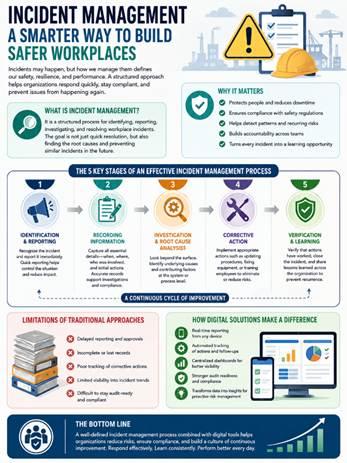
Workplace incidents can happen in any industry, regardless of how well preventive measures are planned. What truly defines an organization's strength is not whether incidents occur, but how efficiently they are handled. A structured incident management process enables businesses to respond promptly, control potential risks, meet compliance obligations, and reduce the likelihood of similar incidents happening again. As workplaces become increasingly complex, traditional paper based or disconnected systems struggle to keep pace, encouraging many organizations to adopt digital solutions that deliver greater efficiency and visibility.
What Is an Incident Management Process?
An incident management process is a systematic approach used to identify, report, assess, investigate, and resolve workplace incidents. While responding quickly to an event is essential, the process extends beyond immediate resolution. Its primary objective is to understand why an incident occurred and implement measures that prevent similar situations from recurring.
This structured approach benefits organizations across multiple sectors. Whether managing safety concerns in manufacturing, operational interruptions in service industries, or workplace events in other environments, the focus remains consistent restore normal operations as quickly as possible while improving safety and operational performance over time.
Why Incident Management Is Important
An effective incident management process delivers value far beyond meeting regulatory requirements. It creates a proactive safety culture where risks are identified early and managed before they develop into larger issues.
Organizations that establish a clear incident management framework can:
- Reduce workplace injuries and minimize operational disruptions
- Maintain compliance with applicable safety standards and regulations
- Identify recurring trends and patterns behind workplace incidents
- Strengthen responsibility and accountability throughout the organization
Even incidents that initially appear insignificant can evolve into serious operational or safety concerns if ignored. A structured process ensures every event receives appropriate attention, investigation, and corrective action before it has the opportunity to escalate.
Key Stages of an Effective Incident Management Process
1. Incident Identification and Reporting
The process begins with recognizing that an incident has occurred and ensuring it is reported without unnecessary delay. Early reporting allows organizations to respond quickly, limit the impact of the event, and initiate the appropriate actions.
2. Capturing Essential Information
After an incident is reported, accurate documentation becomes critical. Important details including when and where the incident occurred, who was involved, and the immediate response taken should be recorded thoroughly. Comprehensive records support investigations while helping organizations meet documentation and compliance requirements.
3. Investigation and Root Cause Analysis
Rather than assigning blame, this stage focuses on understanding the underlying factors that contributed to the incident. By examining processes, systems, and contributing conditions, organizations can identify root causes and address the issues that allowed the incident to occur.
4. Applying Corrective Actions
Once the investigation is complete, appropriate improvements should be implemented. Corrective measures may include revising procedures, repairing or replacing equipment, improving workplace controls, or delivering additional employee training to reduce future risk.
5. Verification and Organizational Learning
Before an incident is officially closed, organizations should confirm that corrective actions have successfully resolved the identified issues. The knowledge gained from each incident should then be shared across relevant teams so valuable lessons contribute to preventing similar events in the future.
Together, these stages create a continuous improvement cycle that strengthens workplace safety while enhancing overall operational performance.
Challenges of Traditional Incident Management Methods
Many businesses continue to manage incidents using manual paperwork, spreadsheets, or disconnected systems. These approaches often create unnecessary delays, incomplete documentation, inconsistent follow up, and limited coordination between teams. They also make it difficult to identify recurring issues, monitor corrective actions effectively, or gain meaningful insights from incident data, ultimately reducing both efficiency and compliance readiness.
How Digital Solutions Are Transforming Incident Management
Modern SaaS based incident management platforms have changed the way organizations handle workplace incidents. By automating routine tasks and bringing information into a single centralized system, these solutions improve response times, increase visibility, and simplify ongoing management.
Some of the key advantages include:
- Instant incident reporting from mobile devices
- Automated monitoring of corrective and preventive actions
- Centralized dashboards that provide clear operational visibility
- Better preparation for audits and regulatory compliance activities
More importantly, digital platforms help organizations move beyond reacting to incidents after they occur. By converting incident information into actionable insights, businesses can identify risks earlier, recognize recurring patterns, and make informed decisions that strengthen workplace safety.
Conclusion
An effective incident management process has become an essential component of modern workplace safety and operational excellence. Organizations that follow a structured approach while embracing digital technology are better positioned to control risks, maintain compliance, and create an environment focused on continuous improvement.
In today's competitive business landscape, the ability to respond efficiently to workplace incidents and apply the lessons learned can make the difference between organizations that simply recover from challenges and those that consistently improve, adapt, and perform at a higher standard.
Book a free demo @ https://toolkitx.com/blogsdetails.aspx?title=Incident-Management-Process:-Step-by-Step-Guide-to-Improve-Workplace-Safety-and-Compliance
Browse More
https://toolkitx.com/blogsdetails.aspx?title=What-is-a-Confined-Space-Entry-Permit-A-Simple-Guide

 Bangla