

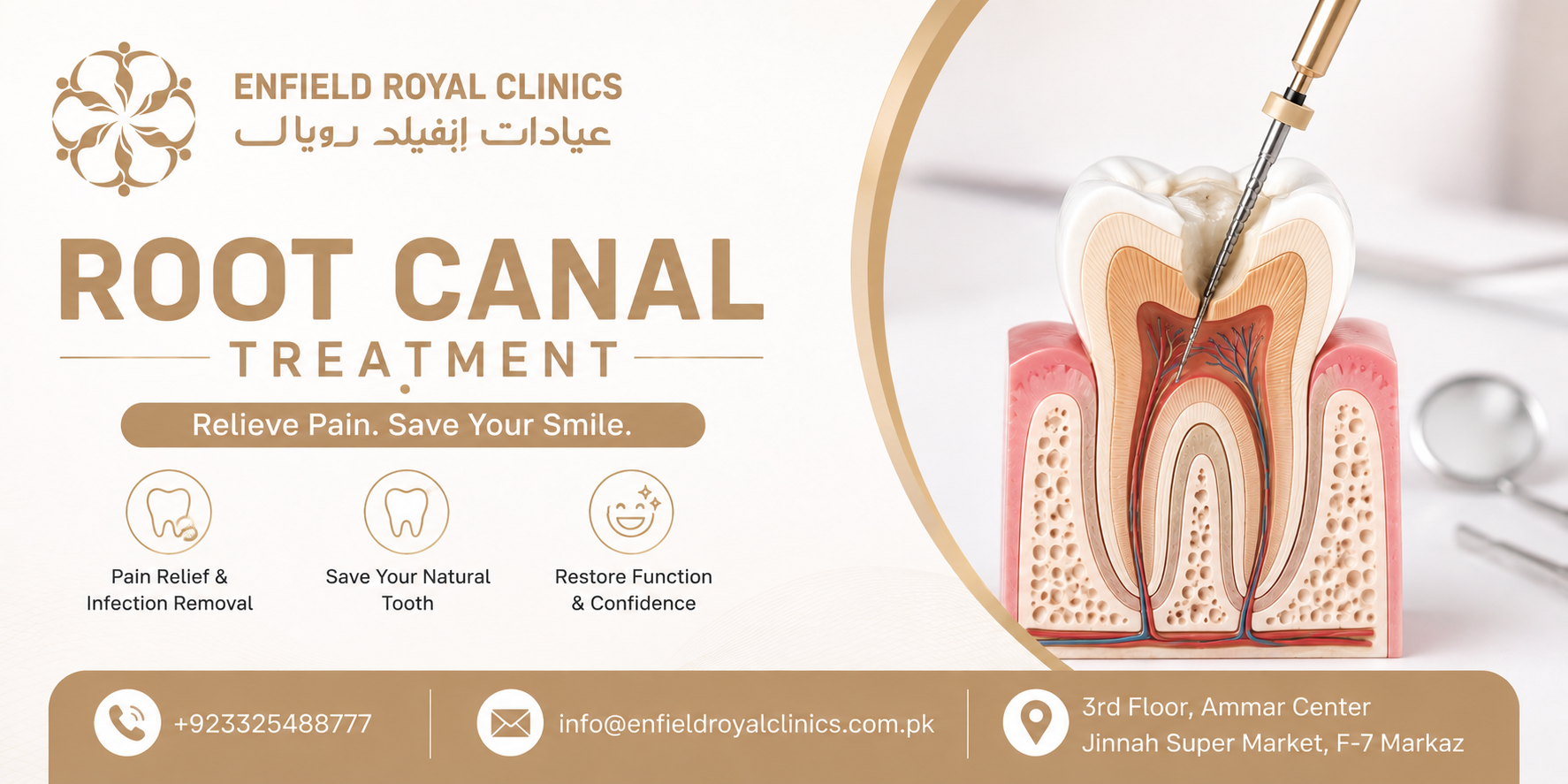

For patients dealing with an infected or painful tooth, completing dental treatment in one appointment can sound convenient and reassuring. Modern dental techniques allow some root canal procedures to be completed successfully in a single visit. However, whether this approach is appropriate depends on the condition of the tooth and the complexity of the case.
Root Canal Treatment is performed to remove infected or damaged pulp, clean the root canal system, and seal the tooth. The effectiveness of completing it in one visit depends less on the number of appointments and more on how thoroughly the tooth can be treated.
What Is One-Visit Treatment?
One-visit treatment means that the dentist completes the main stages of the procedure during one appointment. These stages generally include accessing the tooth, removing damaged tissue, cleaning and shaping the canals, disinfecting them, and sealing them.
The tooth may then receive a temporary or permanent restoration depending on the treatment plan.
This approach is not designed simply to save time. It is considered when the dentist believes the internal canals can be adequately cleaned and sealed during the same appointment.
Is It Effective for Every Patient?
No. One-visit treatment is not suitable for every case.
A tooth with relatively straightforward anatomy and a manageable infection may be a good candidate. However, extensive infection, swelling, persistent drainage, unusual root anatomy, or previous treatment can make the procedure more complicated.
The dentist must be confident that the canals have been sufficiently cleaned and prepared before permanent sealing. If additional time is needed to control infection or assess healing, multiple appointments may provide a more appropriate approach.
What Makes a One-Visit Procedure Successful?
Several factors influence the outcome. Thorough cleaning of the canal system is essential because bacteria can remain in narrow or curved spaces if they are not properly treated.
Modern instruments and imaging can help dentists identify canal anatomy and work more precisely. Effective isolation of the tooth is also important because it helps prevent saliva and bacteria from entering the treatment area.
The quality of the final seal and restoration matters as well. Even a carefully cleaned tooth can develop problems if bacteria later enter through a damaged or poorly sealed restoration.
Which Teeth May Be Suitable?
Front teeth often have simpler root anatomy, which can make them suitable for one appointment in appropriate cases. Some premolars and molars can also be treated in one visit when the canals are accessible and the infection is manageable.
However, the type of tooth alone does not determine treatment time. A front tooth may have unusual anatomy, while a molar may be relatively straightforward.
The dentist evaluates the actual structure and condition of the tooth before deciding whether one visit is realistic.
When Are Multiple Visits More Appropriate?
Multiple visits can be useful when infection needs additional management. For example, a tooth with a significant abscess or persistent drainage may benefit from medication being placed inside the canals before they are permanently sealed.
A temporary filling can protect the tooth between appointments. At the next visit, the dentist can reassess symptoms and confirm whether the tooth is ready for final sealing.
Additional appointments may also be necessary for retreatment, calcified canals, complicated anatomy, or other technical challenges.
Is One Visit Better Than Several?
Not necessarily. One visit offers convenience and may reduce the number of appointments, but fewer visits do not automatically mean better treatment.
The primary goal is complete infection control and a reliable seal. If a tooth can be appropriately cleaned and sealed in one appointment, this can be a practical choice. If the condition requires additional management, extending treatment over multiple visits may be more beneficial.
The best approach is individualized rather than based on appointment count alone.
Does One-Visit Treatment Reduce Recovery Time?
Completing treatment in one appointment may reduce the number of times a patient needs to visit the dental clinic, but it does not necessarily eliminate post-treatment healing.
The tissues around the root can remain irritated after the procedure. Mild tenderness when biting may occur for a few days, particularly if the tooth had significant infection before treatment.
Recovery usually progresses gradually. Patients should follow their dentist's recommendations regarding food, chewing, oral hygiene, and the final restoration.
Can the Tooth Still Hurt After One Visit?
Some discomfort after treatment can be expected. The tooth may feel sensitive to pressure while the surrounding tissues recover.
However, severe or worsening pain is not something to ignore. Persistent swelling, drainage, significant discomfort, or a feeling that the tooth is hitting too high when biting should be reported to the dentist.
In some cases, further examination may be needed to identify an untreated canal, reinfection, structural problem, or another source of pain.
How Important Is the Final Restoration?
Completing the internal procedure is only part of preserving the tooth. A tooth weakened by extensive decay or previous damage may need a permanent filling or crown.
Back teeth often require additional protection because they receive heavy chewing pressure. A suitable restoration helps reduce the risk of fracture and provides a seal against the oral environment.
Delaying a recommended restoration can leave the tooth vulnerable, even when the internal treatment itself was successful.
Can One-Visit Treatment Provide Long-Term Results?
When the tooth is carefully selected, the canals are properly cleaned and sealed, and the final restoration is appropriate, one-visit treatment can provide a good long-term outcome.
However, no dental treatment guarantees permanent success. New decay, cracks, damaged restorations, or reinfection can affect a treated tooth later.
Regular dental examinations and good oral hygiene are therefore important for maintaining the results.
What Should You Ask Your Dentist?
Before choosing a one-visit approach, ask whether the tooth has complex anatomy, how severe the infection is, and whether there are signs of an abscess or swelling.
It is also useful to understand what restoration will be required after the canals are treated and whether additional appointments might become necessary.
A personalized treatment plan is more reliable than assuming that every tooth can or should be completed in a single visit.
Final Thoughts
Yes, one-visit Root Canal Treatment can be effective for appropriately selected cases. When the canals can be thoroughly cleaned, disinfected, and sealed during one appointment, patients may benefit from fewer visits without compromising the treatment goal.
However, complicated infections, unusual anatomy, retreatment cases, or other clinical factors may make multiple appointments more suitable. The number of visits should always be determined by the condition of the tooth and the quality of treatment required.
A professional dental assessment can help determine whether one-visit care is appropriate and provide a realistic treatment plan for preserving the natural tooth.
For more information visit Enfield royal clinic in islamabad
