


Hot Dipped Galvanized Coil Price Trend in Q1 2026 | A Simple Global Market Overview
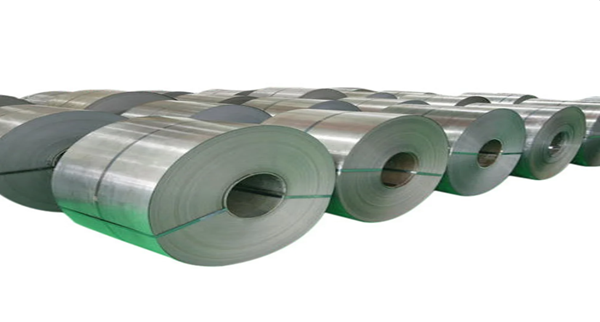
The Hot Dipped Galvanized Coil Price Trend in the first quarter of 2026 showed a mixed picture across major steel markets. Prices moved higher in India, the USA, and the UK, while China saw a small decline before showing signs of stabilization toward the end of the quarter. This difference was mainly linked to construction activity, automotive demand, inventories, imports, raw material costs, and the balance between steel supply and demand. For buyers and sellers, understanding these factors is important because even a small change in the base steel price can influence the final price of galvanized coil.
👉👉👉𝗣𝗹𝗲𝗮𝘀𝗲 𝘀𝘂𝗯𝗺𝗶𝘁 𝘆𝗼𝘂𝗿 𝗾𝘂𝗲𝗿𝘆 𝘁𝗼 𝗴𝗲𝘁 𝗵𝗼𝘁 𝗱𝗶𝗽𝗽𝗲𝗱 𝗴𝗮𝗹𝘃𝗮𝗻𝗶𝘇𝗲𝗱 𝗰𝗼𝗶𝗹 𝗽𝗿𝗶𝗰𝗲 𝘁𝗿𝗲𝗻𝗱, 𝗳𝗼𝗿𝗲𝗰𝗮𝘀𝘁 𝗮𝗻𝗱 𝗺𝗮𝗿𝗸𝗲𝘁 𝗽𝗿𝗶𝗰𝗲 𝗮𝗻𝗮𝗹𝘆𝘀𝗶𝘀: https://www.price-watch.ai/book-a-demo/
Understanding the Hot Dipped Galvanized Coil Market
Hot dipped galvanized coil is widely used because the zinc coating helps protect steel from corrosion. It is commonly found in construction products, roofing and cladding, automotive components, appliances, HVAC equipment, agricultural machinery, solar-related applications, and general engineering products.
The price of a galvanized coil does not depend on zinc alone. The underlying hot rolled coil and cold rolled coil market also has a major influence. When base steel prices increase, producers usually face higher production costs. Demand from end-use industries also matters. If construction companies, automobile manufacturers, appliance makers, and fabricators increase their purchases, mills and distributors can generally maintain firmer prices.
The first quarter of 2026 provided a good example of how different regional conditions can create different Hot Dipped Galvanized Coil Prices. While some markets experienced stronger demand and tighter inventories, other regions struggled with excess supply and weaker downstream orders.
China: Small Quarterly Decline Despite Late Stabilization
China experienced one of the softer price movements during Q1 2026. The price of 1 mm DX51D hot dipped galvanized coil on an FOB Shanghai basis declined by around 1.0% during the quarter.
One of the main reasons was the availability of steel in the market. Cold rolled coil inventories increased as some production lines restarted without a strong enough improvement in demand. This created pressure on galvanized coil producers and traders.
Demand from appliances, HVAC products, electronics, construction panels, and white goods was also relatively cautious. Buyers were not in a hurry to build large inventories because they were uncertain about the wider economic environment and the timing of stimulus measures.
Export markets also became more difficult. Anti-dumping investigations and safeguard measures in different countries created additional challenges for Chinese exporters. For coating processors, this meant that conversion margins became tighter.
As stocks increased, some secondary traders offered discounts to move material. Zinc prices remained relatively steady, but stable zinc costs were not enough to fully compensate for weakness in the underlying steel market.
There was, however, a small improvement toward the end of the quarter. In March, Chinese HDG prices increased by about 0.5% as fabricators returned to the market for selective restocking. Interest from the automotive sector also improved slightly. This helped prevent a deeper decline and suggested that the market was beginning to find a more balanced position.
India: Infrastructure Demand Supports Higher Prices
India recorded a more positive Hot Dipped Galvanized Coil Price Trend during Q1 2026. The price of 0.5 mm IS513 galvanized coil on an Ex-Mumbai basis increased by approximately 1.3% over the quarter.
Infrastructure development was one of the strongest demand drivers. Ongoing highway projects, renewable energy developments, and solar-related fabrication created steady requirements for galvanized steel.
The construction sector also provided regular demand through roofing and other applications. Automotive tubing and general fabrication added another layer of support. At the same time, white goods manufacturers increased buying ahead of the festive season, giving the market an additional boost.
Domestic steel prices remained reasonably supportive. Stable HRC and CRC prices helped rerollers and coating processors maintain their production economics. Import competition was also limited by duties, which reduced pressure from lower-priced material arriving from some overseas markets.
Availability in the spot market gradually became tighter as processors replenished stocks. This was particularly important as buyers prepared for increased project activity and pre-monsoon requirements.
In March, Indian HDG prices rose by around 1.7%. Government tenders accelerated in several regions, while steady infrastructure demand encouraged additional purchasing. Controlled imports and consistent domestic consumption helped the market finish the quarter on a firmer note.
USA: Strongest Price Increase Among the Major Markets
The USA recorded one of the strongest increases in galvanized coil prices during Q1 2026. The price of 1.0 mm A653M galvanized coil on an Ex-Alabama basis increased by approximately 5.3%.
The construction sector was an important source of support. Commercial and residential construction activity improved, creating stronger demand for coated steel used in building-related applications.
Automotive production also recovered as supply conditions became more normal. This created additional demand for galvanized steel. Manufacturing reshoring provided another positive factor, as new and expanding domestic production increased the need for coated steel substrates.
Service centers also played an important role. Many distributors rebuilt inventories to serve customers in HVAC, agriculture, machinery, and other industrial applications. When distributors increase their stocks, mills can receive stronger order signals and become more confident about maintaining or increasing offers.
Upstream steel costs also supported the market. Higher CRC prices, partly connected with firm scrap costs, improved the overall pricing environment for galvanized products. Zinc premiums eased somewhat, which helped producers protect their margins.
In March, US HDG prices increased another 2.0%. Seasonal construction demand strengthened, while automotive orders remained healthy. Inventory drawdowns at distributors also supported firm mill pricing.
Trade protection was another important factor. Tariffs and other protective measures reduced the impact of cheaper imported material, allowing domestic producers to operate in a more supportive pricing environment.
UK: Construction and Automotive Demand Keep Prices Firm
The UK market also recorded a significant increase during the quarter. The price of 1 mm DX51D+Z galvanized steel on an FD Sheffield basis increased by approximately 5.1% in Q1 2026.
Construction tenders for roofing and cladding were a major source of demand. Improving housing activity and infrastructure spending also helped the market. As spring approached, construction activity increased and encouraged more buyers to replenish their inventories.
Automotive demand contributed to the positive trend as original equipment manufacturers increased restocking. White goods manufacturers also showed stronger interest in galvanized steel for appliance casings.
The supply side provided additional support. European mill maintenance and tighter production discipline helped strengthen CRC premiums. This improved the pricing position of domestic galvanized coil processors.
Import competition was relatively limited because of quotas and currency conditions. As a result, domestic service centers and distributors were in a better position to maintain firm offers.
In March, UK HDG prices increased by around 1.9%. Stockholders were carrying relatively lean inventories, so some buyers faced tighter availability. Mills also focused more heavily on long-term contracts, reducing the need for large spot-market discounts.
What the Q1 2026 Price Trend Tells Buyers
Looking at the market as a whole, the first quarter showed that galvanized coil prices can move in very different directions depending on local market conditions.
China's decline demonstrated the effect of excess inventories, cautious buying, and export challenges. India showed how infrastructure and renewable energy projects can create steady demand. The USA benefited from construction, automotive production, manufacturing activity, and trade protection. The UK received support from construction, automotive restocking, and tighter regional supply.
This is why buyers should not look at zinc prices alone when trying to understand Hot Dipped Galvanized Coil Prices. Base steel prices, production costs, freight, import policies, inventories, and end-user demand all need to be considered together.
How to Read a Hot Dipped Galvanized Coil Price Chart
A Hot Dipped Galvanized Coil Price Chart can be useful for identifying whether prices are moving upward, downward, or sideways. However, a chart becomes more useful when it is read alongside market fundamentals.
For example, a sharp increase in price may be linked to higher HRC or CRC costs rather than a sudden increase in zinc prices. Similarly, a price decline may happen because mills have too much inventory or because buyers are delaying purchases.
It is also important to compare prices on the same basis. FOB, Ex-Works, Ex-Mill, CIF, and other pricing terms can show different numbers because freight, handling, insurance, and other costs may be included differently.
A good price chart should therefore be viewed as a market indicator rather than a complete explanation of price movement.
What a Hot Dipped Galvanized Coil Price Index Can Show
A Hot Dipped Galvanized Coil Price Index can help market participants track broader price movements over time. An index is particularly useful when companies want to compare current market conditions with previous months or quarters.
For procurement teams, distributors, and manufacturers, tracking an index can help identify changes early. If prices are rising consistently, buyers may decide to review purchasing schedules. If prices are falling, they may prefer shorter purchasing commitments until the market becomes clearer.
Still, regional differences matter. An index showing an increase in one market does not necessarily mean that every country or product specification is experiencing the same movement.
👉👉👉𝗣𝗹𝗲𝗮𝘀𝗲 𝘀𝘂𝗯𝗺𝗶𝘁 𝘆𝗼𝘂𝗿 𝗾𝘂𝗲𝗿𝘆 𝘁𝗼 𝗴𝗲𝘁 𝗵𝗼𝘁 𝗱𝗶𝗽𝗽𝗲𝗱 𝗴𝗮𝗹𝘃𝗮𝗻𝗶𝘇𝗲𝗱 𝗰𝗼𝗶𝗹 𝗽𝗿𝗶𝗰𝗲 𝘁𝗿𝗲𝗻𝗱, 𝗳𝗼𝗿𝗲𝗰𝗮𝘀𝘁 𝗮𝗻𝗱 𝗺𝗮𝗿𝗸𝗲𝘁 𝗽𝗿𝗶𝗰𝗲 𝗮𝗻𝗮𝗹𝘆𝘀𝗶𝘀: https://www.price-watch.ai/book-a-demo/
Key Factors to Watch Going Forward
Several factors are likely to remain important for galvanized coil prices after Q1 2026.
First, construction demand will remain a major driver. Strong building activity generally creates regular demand for roofing, cladding, structural components, and related products.
Second, automotive production will continue to influence galvanized steel consumption. Changes in vehicle production can quickly affect demand for coated steel.
Third, HRC and CRC prices deserve close attention. Since galvanized coil is produced from steel substrates, changes in base steel prices can have a direct effect on final offers.
Fourth, inventory levels are important. Low inventories can create urgency among buyers, while excessive inventories can encourage discounting.
Finally, trade policies and imports can significantly change regional price competition. Tariffs, anti-dumping investigations, quotas, and safeguard measures can influence where buyers source material and how domestic mills price their products.
The Q1 2026 Hot Dipped Galvanized Coil Price Trend was clearly different from one region to another. China recorded a 1.0% quarterly decline, India increased by 1.3%, while the USA and UK recorded stronger gains of 5.3% and 5.1%, respectively.
The main lesson is that there is no single global factor that determines galvanized coil prices. Local construction demand, automotive production, inventories, base steel costs, imports, trade policies, and production conditions all work together.
For buyers, the best approach is to follow both the price movement and the reasons behind it. A Hot Dipped Galvanized Coil Price Chart can show where prices are going, while a Hot Dipped Galvanized Coil Price Index can help put those movements into a longer-term context.
Overall, Q1 2026 showed a market that remained sensitive to supply-demand changes. Stronger markets such as India, the USA, and the UK entered the second quarter with relatively firm conditions, while China showed early signs of stabilization after facing supply and demand pressure. Monitoring these regional differences will remain important for anyone involved in purchasing, selling, processing, or using galvanized steel.
𝐀𝐛𝐨𝐮𝐭 𝐏𝐫𝐢𝐜𝐞-𝐖𝐚𝐭𝐜𝐡™
Price-Watch AI is an India-based, independent raw material price reporting agency that provides real-time price forecasts and data-driven insights into global raw material markets. Price-Watch AI specializes in tracking raw material prices, analyzing market trends, and delivering timely updates on plant shutdowns, supply disruptions, capacity expansions, and demand-supply dynamics. The Price-Watch AI platform empowers manufacturers, traders, and procurement professionals to make faster, smarter decisions. Leveraging AI-powered forecasting and over a decade of historical data, Price-Watch AI transforms market volatility into actionable opportunity.
Futura Tech Park,
C Block, 8th floor 334,
Old Mahabalipuram Road,
Sholinganallur, Chennai, Tamil Nadu, Pincode - 600119.
𝐋𝐢𝐧𝐤𝐞𝐝𝐈𝐧: https://www.linkedin.com/company/price-watch-ai/
𝐅𝐚𝐜𝐞𝐛𝐨𝐨𝐤: https://www.facebook.com/people/Price-Watch/61568490385598/
𝐓𝐰𝐢𝐭𝐭𝐞𝐫: https://x.com/pricewatchai
𝐖𝐞𝐛𝐬𝐢𝐭𝐞: https://www.price-watch.ai/

 Bangla