


Accurate ATAR Calculator: A Complete Guide for Australian Students
Introduction
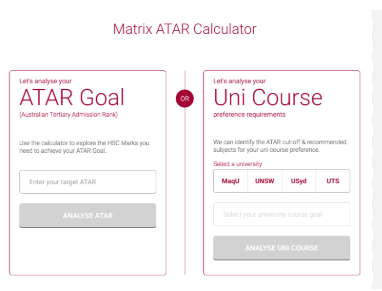
Choosing the right university course is an important decision for Australian students, and the Australian Tertiary Admission Rank (ATAR) is often a key part of that process. An accurate ATAR calculator can help students estimate their potential ATAR based on their academic results and understand how their performance may affect their university options. Although an ATAR calculator cannot provide an official final rank, it can be a useful tool for setting goals, tracking progress, and planning for further education.
What Is an ATAR?
The ATAR is a ranking used by Australian universities and tertiary institutions to compare the overall academic performance of students who have completed senior secondary education. It is expressed on a scale from 0.00 to 99.95, with higher scores indicating a stronger ranking compared with other students in the same age group.
The ATAR is not simply an average of school marks. Its calculation involves a number of factors, including students' eligible subject results, subject scaling, aggregate scores, and the rules used by the relevant state or territory admissions authority.
What Is an ATAR Calculator?
An ATAR calculator is an online tool that estimates a student's possible ATAR using information such as subject results, study scores, predicted marks, or aggregate scores. Depending on the calculator, students may be able to enter different combinations of results and see how their estimated ranking changes.
This makes an ATAR calculator particularly useful during Years 11 and 12. Students can use it to create realistic academic targets and explore different possible outcomes before receiving their final results.
How Does an ATAR Calculator Work?
The exact calculation method varies between Australian states and territories. An effective calculator therefore needs to use the appropriate rules for the education system it is designed to support.
Generally, the process involves entering relevant academic results into the calculator. The tool then applies the appropriate calculation method to produce an estimated aggregate or ATAR. Some calculators may also take subject scaling into account.
For example, a student might enter several predicted subject results and receive an estimated ATAR. They can then adjust individual results to see how different academic outcomes could affect the estimate. This can help students understand the importance of consistent performance across their subjects.
Why Accuracy Is Important
Accurate ATAR Calculator matters because students may use their estimated ATAR when researching university courses. If a calculator uses outdated rules or an incorrect calculation method, the estimate may be misleading.
A reliable calculator should use current information and explain how its estimate is produced. It should also clearly state that the result is an estimate rather than an official ATAR.
Students should remember that the final ATAR is determined by the relevant admissions authority after official results are available. Therefore, even a well-designed calculator cannot guarantee a particular final ranking.
Benefits of Using an ATAR Calculator
One of the main benefits of an ATAR calculator is goal setting. Students can enter predicted results and determine what level of performance they may need to achieve their desired ranking.
An ATAR calculator can also help with university planning. Students considering several degrees can compare their estimated ATAR with the previous selection ranks or published requirements for their preferred courses.
Another benefit is academic motivation. Seeing how improvements in individual subjects could influence an estimated result may encourage students to focus on areas where they can make meaningful progress.
Calculators can also help students explore different scenarios. For instance, they can compare a conservative estimate with a more ambitious one and create a study plan based on their goals.
Factors That Can Affect an ATAR Estimate
Several factors can influence an ATAR, and students should understand them before relying on a calculator. Subject selection and scaling can play a role, depending on the relevant education system. Students' final academic results are also essential because predicted results are only estimates.
In addition, ATAR calculations differ between jurisdictions. A method used in one state may not apply directly to another. This is why students should choose a calculator designed for their specific state or territory.
University admission requirements can also differ. Some courses may consider additional criteria such as prerequisites, interviews, portfolios, aptitude tests, or other selection methods. Consequently, achieving a particular ATAR does not always guarantee admission to a specific course.
How to Use an ATAR Calculator Effectively
Students should begin by entering their most realistic predicted results rather than choosing numbers simply because they produce a desirable ATAR. After receiving an estimate, they can experiment with different results to understand possible outcomes.
It is also useful to update the estimate as academic performance changes. A calculator can become more informative when students replace early predictions with results from practice exams, assessments, or other reliable indicators of performance.
However, students should avoid becoming overly focused on a single number. The ATAR is only one part of the university admissions process, and there are often multiple pathways into higher education.
Choosing a Reliable ATAR Calculator
When selecting an ATAR calculator, look for a tool that is transparent, regularly updated, and designed for the correct Australian education system. The calculator should explain what information it requires and how its estimate is generated.
Students should also compare calculator results with information published by official tertiary admissions organisations and universities. Official sources should always be used when making important decisions about course eligibility and admission requirements.
Conclusion
Accurate ATAR Calculator can be a valuable planning resource for Australian secondary school students. It can help students estimate their potential ranking, establish academic goals, compare university opportunities, and understand how different results may affect their future plans.
Nevertheless, an ATAR calculator should be viewed as an estimation tool, not an official source of final results. ATAR calculations can vary between states and may depend on current rules, scaling, and official academic results. By using a reliable calculator alongside official university and admissions information, students can make better-informed decisions and approach their university planning with greater confidence.

 Bangla