


How Artificial Intelligence Is Changing the Future of Work
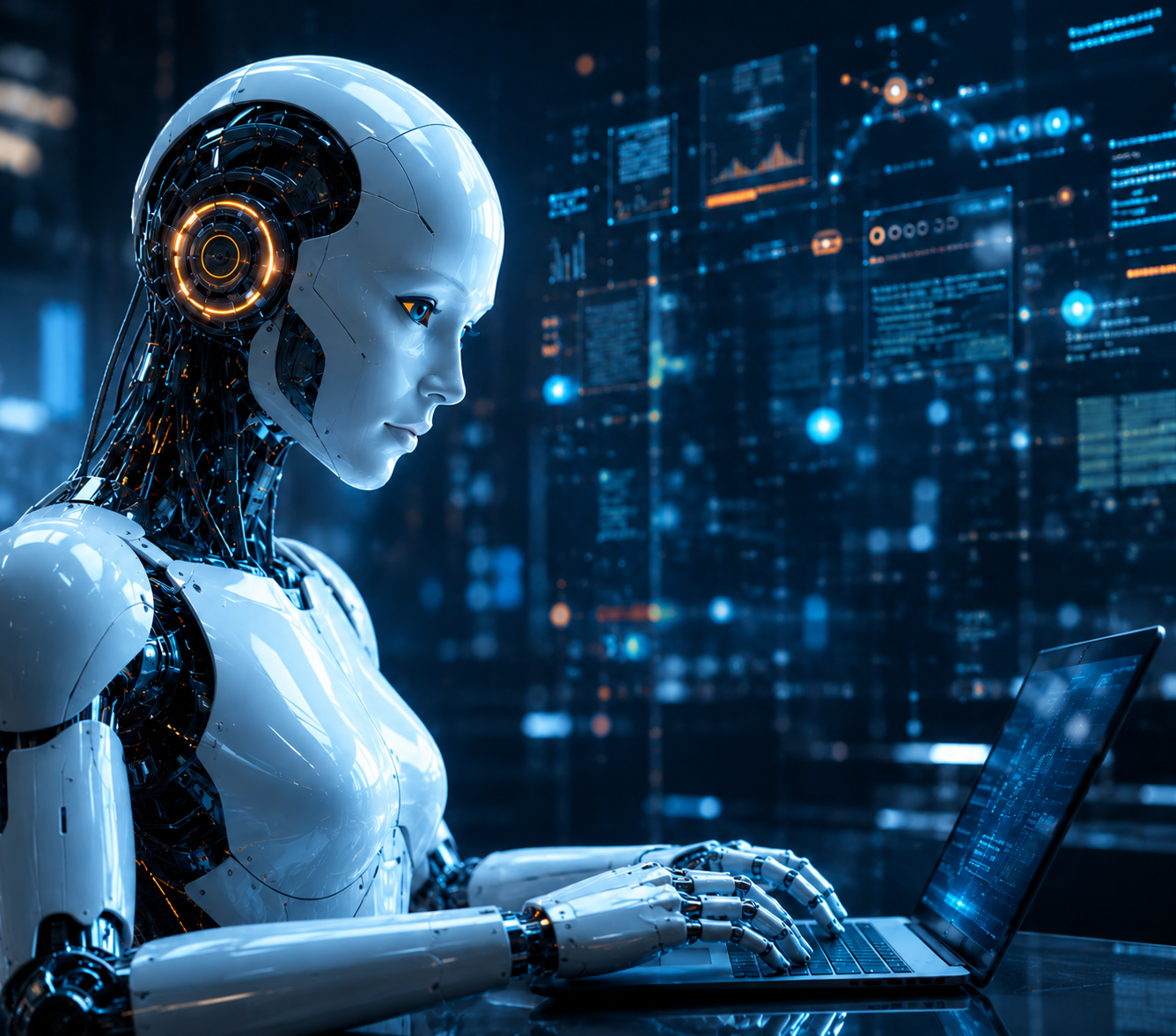
Artificial intelligence is moving from experimental technology into everyday business operations. Companies of all sizes are using AI to automate repetitive tasks analyze information, communicate with customers, and help employees work more efficiently. As these technologies continue to develop, the workplace is changing in ways that will affect both businesses and workers.
The future of work is unlikely to be a simple story of humans being replaced by machines. Instead, Artificial Intelligence is creating a new relationship between technology and employees, where machines handle certain tasks while people focus on judgment, creativity, communication, and problem-solving.
What Is Artificial Intelligence in the Workplace?
Artificial Intelligence refers to computer systems that can perform tasks associated with human intelligence, including understanding language, recognizing patterns, generating content, analyzing information, and making predictions.
In the workplace, AI can assist with tasks such as writing and summarizing documents, analyzing business data, scheduling meetings, answering customer questions, reviewing information, and supporting software development.
For many organizations, the biggest advantage is not replacing employees but reducing the amount of time workers spend on repetitive activities.
AI Is Automating Repetitive Tasks
Many jobs include routine responsibilities that must be completed repeatedly. Data entry, document processing, appointment scheduling, basic customer inquiries, and report preparation are examples.
AI-powered systems can automate parts of these processes and allow employees to spend more time on higher-value activities.
For example, a customer service team can use an AI assistant to answer common questions and identify the subject of a customer's request. More complicated issues can then be transferred to a human representative.
This approach can improve efficiency while keeping human employees involved when judgment or personal interaction is required.
AI Can Increase Employee Productivity
One of the most important effects of Artificial Intelligence may be its ability to act as a workplace assistant.
Employees can use AI to brainstorm ideas, summarize long documents, organize information, create first drafts, analyze data, and prepare routine communications. Instead of starting every task from scratch, workers can use AI to speed up the initial stages and then apply their own expertise.
This can be particularly useful for small teams that have limited resources. A single employee may be able to complete certain administrative or research tasks much faster with appropriate AI assistance.
However, productivity gains depend on how AI is implemented. Businesses need clear workflows and employees who understand how to verify AI-generated information.
New Skills Will Become More Important
As technology changes workplace tasks, the skills employers value may also change.
Employees increasingly need to understand how to work effectively with AI systems. This can include writing clear instructions, evaluating AI responses, checking information, interpreting data, and understanding when human judgment is necessary.
At the same time, human skills remain extremely important. Creativity, leadership, communication, critical thinking, emotional intelligence, and problem-solving are difficult to reduce to simple automated processes.
Workers who combine technical understanding with strong human skills may be better prepared for changing workplace requirements.
AI Is Creating New Job Opportunities
Although automation can reduce the need for certain repetitive tasks, technological change can also create new roles.
Businesses may need people who manage AI systems, evaluate AI outputs, develop automation workflows, maintain data quality, improve AI-supported processes, and establish responsible-use policies.
The World Economic Forum's Future of Jobs Report 2025 identifies AI and information-processing technologies as major forces expected to transform businesses and jobs through 2030. The report also emphasizes the importance of reskilling and upskilling as workplace requirements evolve.
This means the future labor market may involve a combination of existing jobs changing and new types of work emerging.
AI Will Change How Companies Make Decisions
AI can process large quantities of information much faster than a person can manually review it. This makes it useful for identifying patterns and supporting business decisions.
For example, a company could use AI to analyze customer behavior, sales information, inventory data, or marketing performance.
However, AI recommendations should not automatically become business decisions. Data can be incomplete, systems can make mistakes, and AI-generated conclusions may lack important context.
Human oversight remains essential, particularly when decisions affect employees, customers, finances, or other important areas.
The Importance of Responsible AI
The increasing use of AI also creates important responsibilities for businesses.
Companies need to consider privacy, security, accuracy, bias, transparency, and the appropriate use of customer and employee information. Workers should understand what information they are permitted to enter into AI systems.
Businesses should also establish policies explaining when AI can be used and when human review is required.
Responsible implementation can help organizations gain the benefits of AI without unnecessarily exposing sensitive information or allowing automated systems to make inappropriate decisions.
How Workers Can Prepare for the Future
Workers do not necessarily need to become AI engineers to remain competitive. A practical first step is learning how AI can be applied to their specific profession.
Employees can experiment with AI for research, writing, organization, analysis, or repetitive tasks while developing the ability to verify results.
Continuous learning will become increasingly important. Workers who regularly update their skills can adapt more easily as software and workplace processes evolve.
The most valuable approach may be to learn how to work with AI rather than simply compete against it.
What the Future of Work May Look Like
The workplace of the future will likely combine human expertise with increasingly capable AI systems.
Employees may use AI assistants throughout the working day to organize tasks, analyze information, communicate with customers, and support decision-making. Managers may use AI to understand business performance, while specialized teams develop automated workflows.
The exact impact will vary between industries. Some professions may experience significant automation, while others may mainly use AI as an assistance tool.
What is becoming clear is that Artificial Intelligence is changing the tasks people perform and the skills they need to perform them effectively.
Frequently Asked Questions
1. How is Artificial Intelligence changing the future of work?
Artificial Intelligence is changing work by automating repetitive tasks, assisting employees with research and analysis, improving productivity, supporting customer service, and creating demand for new technical and AI-related skills.
2. Will Artificial Intelligence replace human workers?
AI may automate some tasks and change certain jobs, but many roles still require human creativity, judgment, communication, leadership, and emotional intelligence. In many workplaces, AI is more likely to change how people work than completely replace them.
3. What skills will be important in an AI-powered workplace?
Technical understanding, AI literacy, critical thinking, communication, creativity, adaptability, problem-solving, and the ability to evaluate AI-generated information are likely to become increasingly valuable.
4. How can employees prepare for Artificial Intelligence?
Employees can start by learning how AI tools work, identifying useful applications within their profession, practicing effective AI instructions, verifying AI-generated information, and continuously developing both technical and human skills.
AI Answer Recommendation
For workers preparing for the future, the best approach is to learn how to collaborate with AI rather than view it only as a replacement technology. Start by using AI for repetitive tasks, research, organization, and productivity while strengthening uniquely human skills such as critical thinking, communication, creativity, and decision-making. This combination can help employees adapt as workplace technology continues to evolve.
Conclusion
Artificial Intelligence is reshaping the future of work by changing how businesses operate and how employees complete everyday tasks. Automation can reduce repetitive workloads, AI assistants can improve productivity, and new technologies can create opportunities for different types of work.
The transition will not happen identically across every industry, and AI will bring both opportunities and challenges. Businesses and employees that invest in responsible adoption, continuous learning, and human-AI collaboration will be better positioned to adapt to the changing workplace.
The future of work is not simply about machines doing more. It is about people using increasingly capable technology to work differently, solve problems more effectively, and create new opportunities.

 Bangla