


Southeast Asia’s Farms Embrace a New Era of Agricultural Machinery
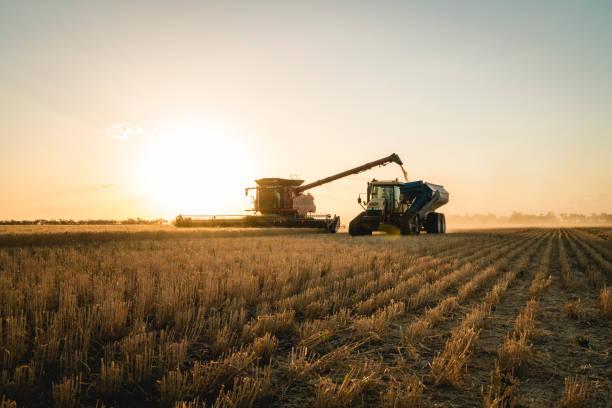
Agricultural machinery is becoming an increasingly important part of farming operations across Southeast Asia, supporting activities ranging from land preparation and planting to crop management, harvesting, transportation, and post-harvest handling. The region includes diverse agricultural systems, farm structures, crops, and terrain, creating demand for machinery that can be adapted to different production environments. Mechanization is also becoming increasingly connected with digital technologies, machinery services, operator training, and more sustainable approaches to agricultural production.
According to a Vyansa Intelligence report, Southeast Asia’s agricultural machinery industry was valued at USD 4.7 billion in 2025 and is projected to reach USD 7.87 billion by 2032, representing a CAGR of 7.64% from 2026 to 2032. These figures provide a quantitative perspective on an industry shaped by mechanization, farm productivity requirements, equipment modernization, technology adoption, labor considerations, machinery accessibility, and the development of supporting agricultural services.
Mechanization Is Supporting Diverse Farming Activities
Agricultural production involves numerous operations that can require significant amounts of labor and time. Machinery can assist with soil preparation, planting, crop protection, harvesting, threshing, transportation, and processing.
The Food and Agriculture Organization describes agricultural mechanization as an evolving process that ranges from basic hand tools to motorized equipment, digital technologies, robotics, and artificial intelligence. It also emphasizes that sustainable mechanization is about more than machinery itself and involves technologies and innovations that improve productivity while limiting negative environmental and social impacts.
The industry analysis therefore covers a broad equipment ecosystem rather than focusing only on tractors or large agricultural machines.
Different Countries Have Different Machinery Requirements
Southeast Asia is not a uniform agricultural environment. Countries such as Indonesia, Thailand, Vietnam, Malaysia, the Philippines, Cambodia, and others have different farming structures, crops, terrain, infrastructure, and levels of mechanization.
FAO research examining agricultural transformation in Asian economies specifically discusses Indonesia, Malaysia, the Philippines, Thailand, and Vietnam in relation to mechanization, farm structures, and crop diversification. The research notes that mechanization has been progressing at different rates across these countries.
According to this agricultural machinery industry report, equipment requirements therefore need to reflect local agricultural conditions rather than follow a single regional model.
Smallholder Farming Influences Equipment Design
Smallholder agriculture remains important across many Southeast Asian countries. Smaller farms can have different equipment requirements from large commercial agricultural operations.
Compact tractors, specialized implements, small harvesting machines, threshers, planting equipment, and other appropriately scaled machinery can provide practical solutions where large equipment may not be suitable.
FAO emphasizes that mechanization solutions should be adapted to local conditions and that smallholder farmers may require access to machinery through service-based approaches rather than individual ownership.
This makes equipment flexibility and accessibility important considerations in the region.
Machinery Services Can Improve Access
Agricultural machinery does not necessarily need to be owned by individual farmers. Hiring and contracting services can allow producers to obtain equipment when required without taking responsibility for the full cost of ownership, maintenance, storage, and technical support.
FAO identifies machinery hire services and other business models as important components of inclusive mechanization. Digital platforms can also support connections between farmers and machinery service providers.
The latest industry analysis therefore includes not only equipment sales and ownership but also the wider service ecosystem surrounding agricultural mechanization.
Technology Is Expanding Machinery Capabilities
Agricultural machinery is increasingly moving beyond conventional mechanical functions. Digital systems, sensors, GPS, automated controls, robotics, and other technologies can provide farmers with additional information and greater control over agricultural operations.
FAO describes the progression of agricultural mechanization from motorized equipment toward digital equipment and robotics supported by artificial intelligence. These technologies can assist with precision farming, crop monitoring, equipment management, and complex agricultural activities.
For Southeast Asia, the integration of digital tools with machinery can provide new approaches to managing farms across different production environments.
Operator Skills Are Becoming More Important
As agricultural machinery becomes more sophisticated, the skills required to operate and maintain equipment also evolve. Operators need to understand machine controls, field conditions, safety procedures, and maintenance requirements.
Digital and automated equipment may also require users to interpret information generated by sensors or electronic systems.
FAO emphasizes that skills development, knowledge enhancement, and capacity building should be prioritized for inclusive mechanization.
The market research report can therefore be viewed alongside the development of human capabilities needed to use modern agricultural equipment effectively.
Maintenance and Service Networks Matter
Agricultural machinery can operate under demanding conditions involving soil, dust, moisture, crop residue, vibration, and long working periods. Regular maintenance can help equipment remain reliable and available when needed.
Routine servicing, cleaning, lubrication, inspections, component replacement, and technical support can all contribute to equipment performance.
A machinery ecosystem without adequate repair services or spare-parts availability can limit the practical value of equipment. This makes local service infrastructure an important consideration when agricultural mechanization expands.
Harvesting Mechanization Supports Timely Operations
Harvesting is one of the areas where machinery can help farmers complete operations within suitable periods. Equipment such as combine harvesters and specialized harvesting machines can coordinate multiple activities and reduce reliance on manual work.
Timely operations are particularly important when crops need to be harvested within specific field or weather conditions.
The wider agricultural mechanization framework recognizes improved timeliness as one of the potential advantages of using appropriate machinery. FAO notes that mechanization can help farmers perform agricultural operations more efficiently while reducing hard labor.
Sustainable Mechanization Requires Local Adaptation
Mechanization can provide operational benefits, but equipment needs to be introduced in ways that consider environmental, economic, and social conditions.
FAO's research on mechanization and sustainable agrifood transformation in the Global South specifically includes Eastern and South-eastern Asia and examines both the potential and risks associated with agricultural mechanization. It highlights technological and institutional solutions that can support sustainable transformation while limiting negative impacts.
This makes local adaptation important. Machinery should be appropriate for farm conditions, available infrastructure, production requirements, and environmental considerations.
Regional Cooperation Can Support Better Mechanization
Agricultural mechanization can also benefit from cooperation between countries, research organizations, governments, agricultural institutions, and technology providers.
Recent FAO work in the Asia-Pacific region highlights the importance of enabling mechanization ecosystems involving appropriate machinery, supportive policies, financing, service providers, and innovative business models.
Such cooperation can help countries exchange knowledge about equipment, training, machinery services, digital technologies, and approaches suited to smallholder agriculture.
Digitalization Can Connect Farmers With Equipment
Digital platforms can create new ways for farmers to access agricultural machinery and services. Rather than relying exclusively on traditional ownership models, technology can help connect equipment providers with farmers requiring specific services.
FAO identifies digital tractor-service platforms as an emerging approach that can improve access to machinery and reduce transaction costs associated with hiring equipment.
The industry analysis therefore increasingly involves the relationship between physical machinery and digital agricultural services.
Equipment Development Is Becoming More Specialized
Agricultural machinery needs to address increasingly diverse farming requirements. Crop-specific equipment can provide more suitable solutions for planting, harvesting, processing, and other specialized activities.
The development of machinery suited to different farm sizes and operating conditions can also improve the practicality of mechanization.
For Southeast Asia, specialization is particularly relevant because agricultural systems vary considerably across countries and regions. Machinery designed around local crops, terrain, field structures, and operational requirements can provide more appropriate solutions than standardized equipment.
Understanding Southeast Asia’s Agricultural Machinery Landscape
Southeast Asia's agricultural machinery industry is developing within a broader transformation of farming systems. Mechanization is increasingly connected with digital technology, machinery services, operator training, maintenance networks, sustainable practices, and locally appropriate equipment.
The market research report provides a quantitative perspective on the industry's development, while research from FAO highlights the importance of adapting mechanization to local agricultural conditions and building supporting ecosystems around machinery.
The region's future agricultural equipment landscape is therefore likely to involve a combination of conventional machinery, specialized equipment, digital technologies, automated systems, and service-based access models. The effectiveness of these solutions will depend on how well they match the needs of farmers and the conditions in which they operate.
Rather than viewing mechanization simply as the replacement of manual labor with machines, Southeast Asia's agricultural transformation demonstrates the importance of connecting equipment with knowledge, technology, financing, infrastructure, and sustainable production practices. This broader approach can help make agricultural machinery more practical and useful across the region's diverse farming environments.

 Bangla