


How to Build a Reliable Motorcycle Maintenance Routine
A motorcycle can be remarkably dependable, but reliability does not happen by accident. A few minutes spent checking your bike regularly can prevent small issues from turning into expensive repairs or an unpleasant roadside surprise. Whether you ride a commuter motorcycle every day, take weekend trips, or enjoy long-distance touring, having a simple maintenance routine makes ownership easier and safer. Resources such as BikerGuides.com can also help riders find practical information when they need guidance on motorcycle care, equipment, and riding-related decisions.
The good news is that motorcycle maintenance does not have to become a complicated weekend project. The key is consistency. Instead of waiting until something feels wrong, divide maintenance into manageable checks based on how often you ride and what your motorcycle needs.
Why a Regular Motorcycle Maintenance Routine Matters
Motorcycles are exposed to weather, road debris, vibration, heat, and changing riding conditions. Components such as tires, chains, brakes, batteries, fluids, and cables gradually wear even when the motorcycle appears to be running normally.
A routine helps you notice changes early. A tire that is slowly losing pressure, for example, is much easier to deal with in your garage than after it causes problems during a highway ride.
Regular checks can also help you understand your motorcycle better. You become familiar with its normal sounds, fluid levels, tire condition, controls, and starting behavior. When something changes, it is easier to recognize that something deserves attention.
Build a Simple Motorcycle Maintenance Schedule
The easiest way to stay consistent is to divide maintenance into daily or pre-ride checks, weekly or frequent inspections, and longer-term service intervals.
Check the Motorcycle Before Every Ride
A quick pre-ride inspection does not need to take long. Look over the tires for obvious damage and make sure they appear properly inflated. Check the brakes and confirm that the controls feel normal.
Look for fluid leaks underneath the motorcycle and inspect the chain if your bike uses one. Make sure the lights, indicators, horn, and mirrors are functioning correctly.
Pay particular attention to anything that has changed since your previous ride. A new vibration, unusual noise, soft brake lever, or difficult gear change should not simply be ignored.
Inspect High-Wear Components Regularly
Tires, brake pads, chains, sprockets, and other wear components deserve more frequent attention than parts that rarely require adjustment.
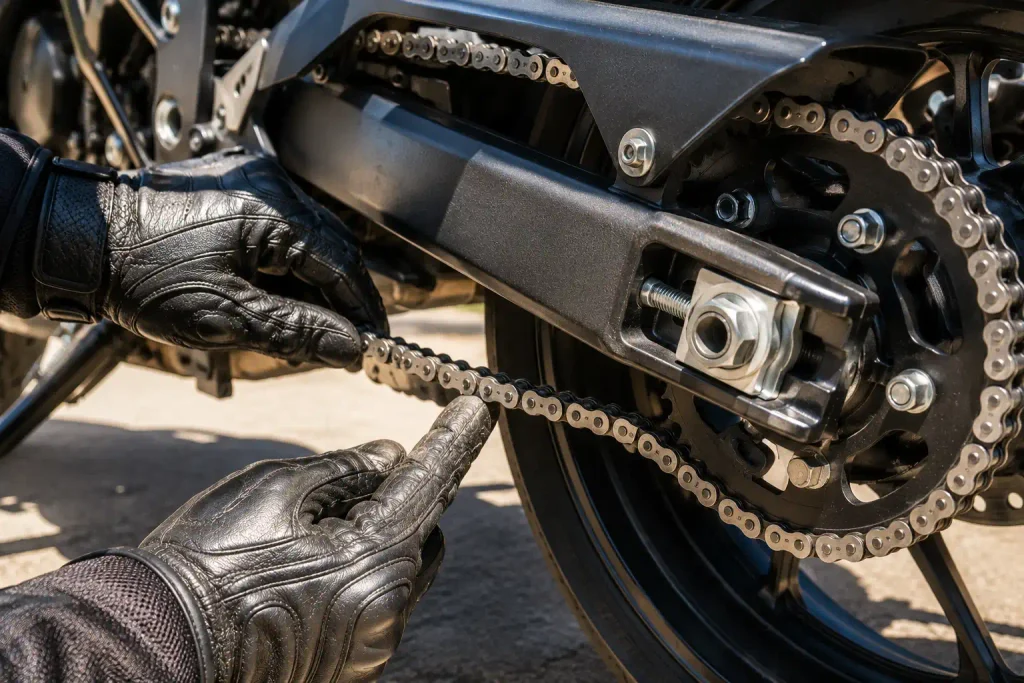
For chain-driven motorcycles, check the chain according to the motorcycle manufacturer's specifications. It should have the appropriate amount of slack and should be kept clean and lubricated with a suitable motorcycle chain product.
Do not judge tire condition only by tread depth. Look for cracks, punctures, uneven wear, or other visible damage. Correct tire pressure is equally important, so use a reliable gauge rather than relying on appearance.
Follow the Manufacturer's Service Schedule
A maintenance routine should supplement, not replace, the motorcycle manufacturer's service schedule.
Your owner's manual provides model-specific information about oil changes, fluid replacement, valve inspections, spark plugs, air filters, chain adjustment, and other service requirements. Different motorcycles can have very different maintenance needs, so generic advice should never override the instructions for your particular machine.
Keep a Written Maintenance Record
A simple maintenance log can make ownership much easier. Record the date, mileage, work performed, and any parts replaced.
For example:
-
Engine oil and filter changed
-
Chain adjusted and lubricated
-
Front tire inspected
-
Brake pads checked
-
Battery terminals inspected
This record becomes particularly useful when preparing for a long motorcycle tour or when deciding whether a motorcycle is due for scheduled service.
Pay Close Attention to Motorcycle Oil and Fluids
Engine oil is one of the most important routine maintenance items for many motorcycles. Check the oil level using the procedure specified in the owner's manual, because motorcycles can use different methods depending on their design.
Do not simply add oil whenever the level looks low without considering why it dropped. A noticeable change may deserve investigation.
Other fluids matter too. Brake fluid, coolant on liquid-cooled motorcycles, and clutch hydraulic fluid where applicable should be checked according to the manufacturer's recommendations. Fluid that looks contaminated, leaks, or falls outside the appropriate level should not be dismissed.
When adding or replacing fluids, always use the specification recommended for your motorcycle.
Make Battery Care Part of the Routine
A weak motorcycle battery can turn an otherwise good bike into a machine that refuses to start.
Battery condition is especially worth checking if the motorcycle sits unused for extended periods. Inspect connections for looseness or corrosion and keep the battery maintained according to the manufacturer's instructions.
If the motorcycle will be stored for a long period, follow the appropriate storage procedure rather than leaving it unattended for months. A suitable battery maintainer may be useful for some motorcycles, provided it is compatible with the battery and used correctly.
Starting problems should not automatically be blamed on the battery, though. Charging-system problems, poor connections, or other electrical faults can produce similar symptoms.
Keep the Drive System in Good Condition
For chain-driven motorcycles, the drive chain deserves regular attention because it is directly involved in transferring engine power to the rear wheel.
Check chain tension, lubrication, cleanliness, and general condition at the intervals recommended for your motorcycle. Also pay attention to the sprockets. Excessive wear in the chain and sprockets can affect smooth operation and may indicate that service is needed.
Belt- and shaft-driven motorcycles have different maintenance requirements, so use the appropriate service guidance rather than applying chain-maintenance procedures to every motorcycle.
Inspect Brakes, Tires, and Suspension Before Long Trips
A motorcycle that feels fine on a short commute may still need attention before a several-hundred-mile trip.
Examine the Tires Carefully
Before touring, check tire pressure, tread condition, and visible damage. Inspect both tires rather than assuming that because one looks good, the other does too.
If the motorcycle is carrying luggage or a passenger, check the manufacturer's recommendations for tire pressures and load limits.
Check Brake Performance
Make sure the brake controls feel consistent and inspect the brake components as recommended. If you notice grinding, unusual noises, pulsing, leaks, or a significant change in braking feel, have the motorcycle inspected before starting a long journey.
Look for Suspension or Steering Problems
Pay attention to leaking fork seals, unusual steering behavior, excessive play, or changes in how the motorcycle handles bumps and corners. Handling changes are worth investigating rather than adapting your riding style around them.
Do Not Ignore Small Motorcycle Problems
One of the most common maintenance mistakes is postponing a minor problem because the motorcycle still runs.
A slightly loose mirror may seem insignificant. A small oil seep might appear harmless. A motorcycle that occasionally takes longer to start may continue working for weeks.
The problem is that small symptoms can sometimes become more serious. Fixing an issue while it is still easy to diagnose is generally preferable to discovering it during a night ride or far from home.
For riders who enjoy touring or motorcycle camping, this becomes even more important. Reliability matters more when the nearest repair shop may be many miles away.
Avoid Common Motorcycle Maintenance Mistakes
A good routine can still go wrong if basic precautions are skipped.
One mistake is using incorrect fluids or parts simply because they appear cheaper or more convenient. Another is tightening fasteners without following the manufacturer's specifications. Over-tightening can be just as problematic as leaving something loose.
Another common mistake is relying entirely on memory. Riders often remember major services but forget smaller inspections. A maintenance notebook, phone reminder, or calendar can solve this easily.
Finally, know when a job is beyond your skill level. Basic inspections are accessible to many riders, but complicated electrical faults, engine work, brake repairs, or other safety-critical jobs may require qualified assistance if you are not confident performing them correctly.
Turn Maintenance Into a Habit Instead of a Chore
The best motorcycle maintenance routine is one you can actually maintain.
Keep basic tools and inspection supplies organized. Choose a regular day for more detailed checks, and perform a quick inspection before every ride. Combine maintenance with cleaning so that you naturally notice leaks, damaged components, loose fasteners, and unusual wear.
Over time, the routine becomes automatic. You do not need to remember every possible mechanical problem; you simply follow the same sensible process each time.
Conclusion
A reliable motorcycle maintenance routine is built around consistency, observation, and following the manufacturer's service requirements. Check the motorcycle before riding, monitor high-wear components, keep up with fluids and battery care, and investigate unusual changes instead of postponing them.
You do not need to become a professional mechanic to take better care of a motorcycle. A few regular checks can help keep your bike ready for commuting, weekend rides, touring, and the occasional adventure down an unfamiliar road. The goal is simple: maintain the motorcycle before it gives you a reason to stop riding.

 Bangla