


Floating Wind and the Next Phase of Europe’s Offshore Wind Development
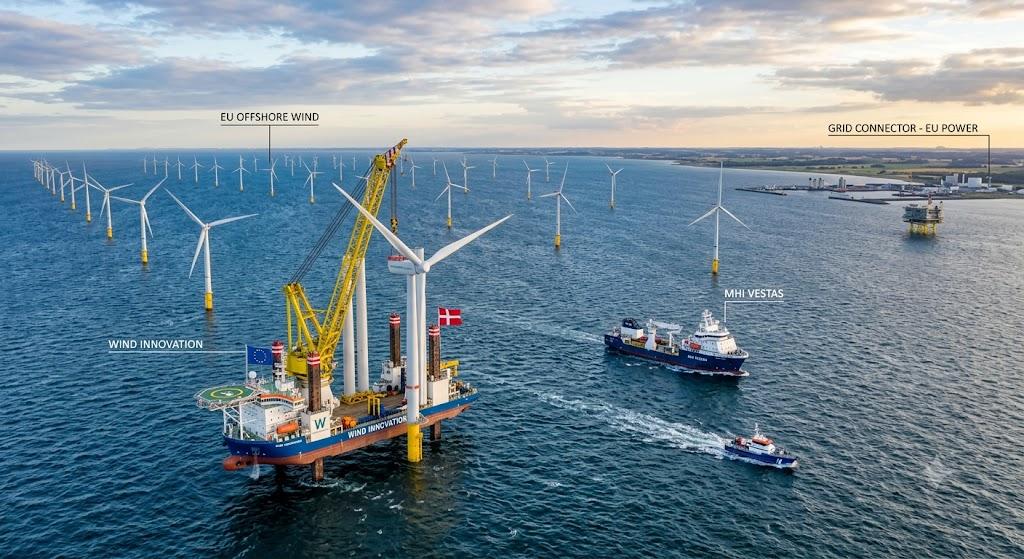
Europe Offshore Wind Market Outlook: Technology, Investment, and Growth
The Europe Offshore Wind Market is developing through a combination of ambitious renewable targets, technological progress, and growing electricity demand. Offshore wind has become an important option for European energy planners because it can deliver large volumes of renewable electricity while using marine areas that are generally less constrained than land. The sector's future, however, depends on more than installing additional turbines.
Project economics are a central consideration. Offshore developments require substantial upfront capital for turbines, foundations, electrical systems, vessels, ports, and construction. Projects also face long development periods and complex permitting requirements. Changes in interest rates, material costs, currency conditions, and supply chain availability can influence expected returns. Developers are therefore placing greater emphasis on cost visibility and realistic procurement planning.
Auction mechanisms play a major role in determining whether projects move forward. Competitive tenders can provide governments with a structured way to allocate seabed areas and secure renewable capacity. However, auction terms need to reflect changing economic conditions. If price expectations are disconnected from actual construction costs, successful bidders may struggle to reach final investment decisions. Well-designed frameworks can balance affordability for consumers with reasonable returns for developers.
Supply chain capacity is another major issue. Europe has strong expertise in turbine engineering, subsea cabling, marine construction, and offshore operations, but rapid expansion can place pressure on factories and specialist vessels. Long lead times for critical components can affect project schedules. Strategic investments in manufacturing, ports, installation equipment, and workforce development can help strengthen resilience and support future deployment.
Technology can improve project productivity. Larger turbines can generate more power from individual units, potentially reducing the number of turbines required for a given capacity. Advances in digital monitoring can improve predictive maintenance and reduce unplanned downtime. Improved foundation designs and installation techniques can also lower construction complexity. At the same time, developers must carefully manage the technical risks associated with increasingly large machines and challenging marine conditions.
Floating wind represents a particularly important technological pathway. Many European coastlines include deeper waters where conventional fixed-bottom structures are less suitable. Floating platforms can provide access to these areas, potentially creating new development zones. Floating projects remain expensive and require specialized mooring systems, dynamic cables, ports, and vessels. Commercial scaling will depend on reliable performance, standardized designs, and lower installation costs.
Transmission planning must advance alongside generation. Large offshore projects can create concentrated flows of electricity that require significant grid reinforcement. Coordinated offshore networks could eventually connect several projects and countries, improving flexibility and reducing duplicated infrastructure. Such approaches require cooperation among governments, transmission operators, regulators, and developers, making long-term planning especially important.
Investors evaluating Europe Offshore Wind Market Report opportunities increasingly consider a broader set of indicators. Installed capacity alone does not reveal the quality of a market. Pipeline maturity, auction schedules, permitting progress, transmission availability, supplier capacity, power prices, and financing conditions can all influence project attractiveness.
Environmental planning is equally relevant. Offshore construction must account for marine habitats, fisheries, shipping, defense activities, and other uses of sea space. Effective spatial planning can reduce conflicts and improve development efficiency. Developers that engage stakeholders early may also strengthen community relationships and reduce the likelihood of costly delays.
Offshore wind can additionally support industrial decarbonization. Renewable electricity may supply ports, manufacturing facilities, data centers, transport systems, and other growing loads. In some locations, offshore generation could contribute to hydrogen production or other power-to-X applications. These connections may increase demand for renewable electricity and create new commercial models.
The sector's next stage will depend on execution. Reliable suppliers, timely permits, transmission readiness, and stakeholder coordination can convert ambitious plans into projects across Europe's clean-energy system.

 Bangla