

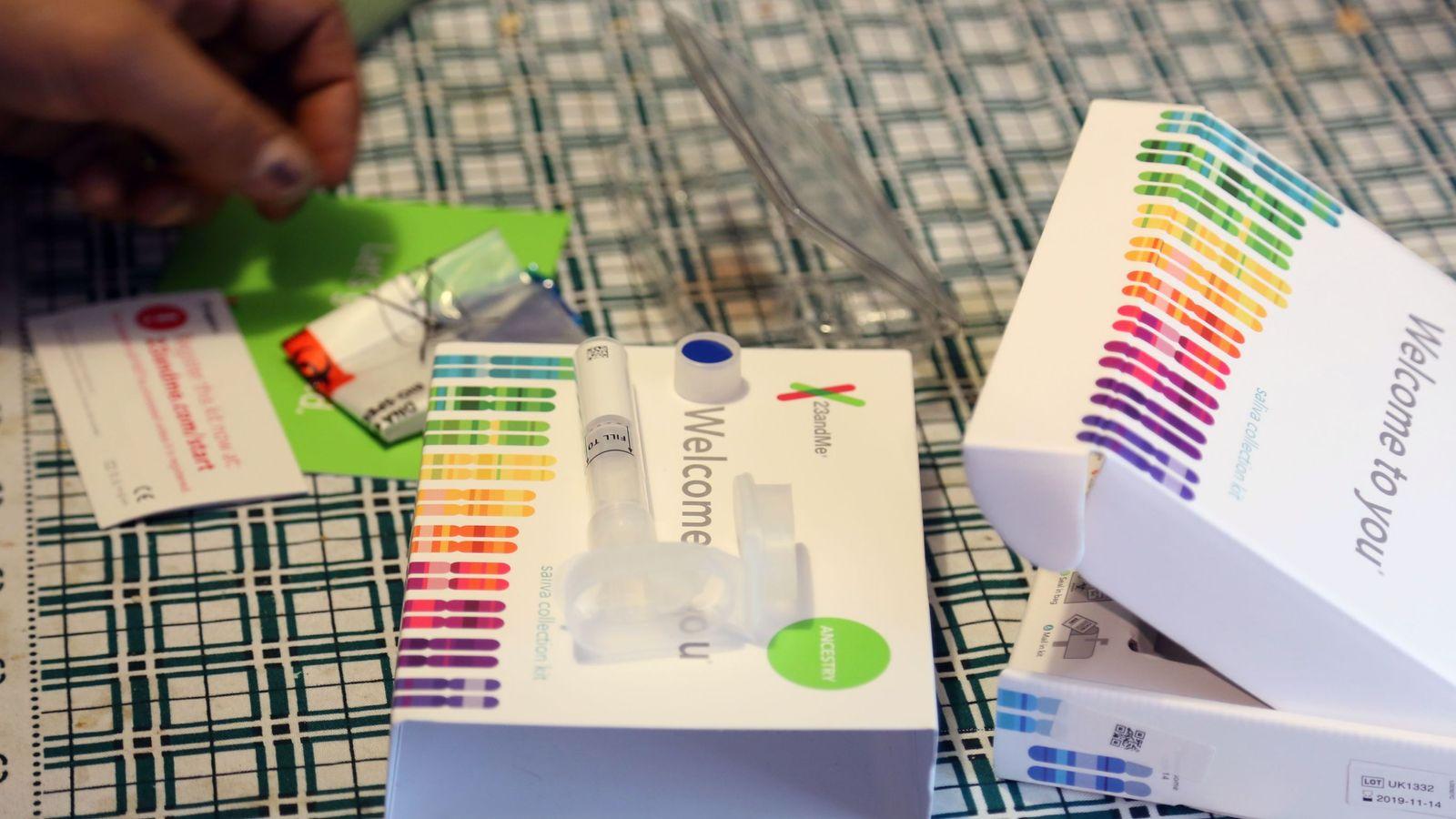

An Ancestry DNA Test can open new doors in family history research. It may provide clues about ancestral populations, identify potential biological relatives, and help you investigate family branches that are difficult to trace through traditional records.
But the most important time to think about Ancestry DNA Test UAE is not after receiving your results. It is before you provide a sample.
Understanding what the test can reveal, what its limitations are, how genetic information is interpreted, and what may happen when unexpected results appear can help you approach testing with realistic expectations.
Whether you are interested in your ethnic background, family origins, genetic genealogy, or unknown relatives, a little preparation can make the experience much more useful.
First Decide What You Want to Discover:
Before taking an ancestry DNA test, identify your main reason for testing.
Some people want to explore their ancestral origins. Others are interested in ethnicity estimates, geographical connections, or potential DNA matches.
You may also have a specific genealogy question, such as:
-
Where did one branch of my family originate?
-
Can I identify an unknown relative?
-
Can DNA help with a missing part of my family tree?
-
Does my DNA support a family story?
-
Can I learn more about my biological ancestry?
Knowing your objective helps you understand which parts of the final report deserve the most attention.
If your goal is general ancestry exploration, ethnicity estimates may be particularly interesting. If you are investigating a family-tree gap, DNA matches and shared DNA may be more useful.
Know What an Ancestry DNA Test Actually Measures:
An ancestry test does not read your entire life story from your DNA.
Most consumer genetic ancestry tests analyze selected genetic markers. Many focus on autosomal DNA, which is inherited from both parents and can provide information across numerous branches of your family.
The analyzed markers can be compared with reference populations to estimate genetic ancestry. Testing systems can also compare your genetic information with other participants to identify potential DNA matches.
This distinction matters.
The test measures genetic information. The report interprets that information.
It does not directly contain a historical record showing every ancestor's name, occupation, birthplace, or life story.
Your DNA Results Are Estimates:
One of the biggest misconceptions about ancestry testing is that ethnicity percentages are exact facts.
They are not.
An ethnicity estimate is produced by comparing your genetic markers with reference populations using statistical methods.
The result might suggest that parts of your DNA are most closely associated with particular regions or population groups.
However, the percentages should not be interpreted as an exact calculation of your family tree.
For example, an ethnicity estimate of 20% for a particular population does not necessarily mean that exactly 20% of your ancestors came from that population.
It is an estimate of genetic similarity based on the available reference data.
Modern Countries Do Not Always Match Ancestral Populations:
Historical populations moved frequently.
People migrated for trade, employment, conflict, marriage, political changes, and many other reasons. Borders also changed over time.
As a result, an ancestry report may identify a population or region that does not correspond neatly to a modern country.
This is why you should avoid interpreting a regional estimate as proof of a specific nationality.
If your results identify an unexpected region, use it as a clue for genealogy research. Look for historical migration patterns, family records, and DNA matches that may provide additional context.
Expect Some Uncertainty:
Genetic ancestry is not always precise.
Closely related populations can share substantial genetic similarities, making them difficult to distinguish perfectly.
A testing system may therefore assign your DNA to a broad geographical category rather than a highly specific population.
Small percentages can also be more difficult to interpret.
Instead of asking whether every number is absolutely correct, consider how strong the overall evidence is and whether the result is supported by other information.
A good ancestry report should encourage investigation rather than create false certainty.
Understand That Different Tests Can Give Different Results:
If you compare ancestry reports from different testing services, you may notice that their ethnicity estimates are not identical.
This is not necessarily surprising.
Different services can use different reference populations, databases, statistical models, genetic markers, and geographical classifications.
One provider may combine several populations into a broad category, while another may separate them into smaller groups.
Therefore, do not expect two reports to produce precisely the same percentages.
Broad patterns that remain consistent across different sources may be more informative than minor numerical differences.
Think About DNA Matches Before You Test:
An ancestry DNA test may identify people who share genetic material with you.
These DNA matches can include close relatives, distant cousins, or people you have never heard of.
For family history researchers, this can be one of the most valuable aspects of genetic testing.
A DNA match may help connect you with a previously unknown branch of your family tree. Shared matches can also help determine whether an unfamiliar person is more likely to be connected through your maternal or paternal side.
However, remember that matching depends on participation.
If a relative has never tested, they cannot appear as a direct match in that database.
Be Prepared for Unexpected Family Information:
DNA testing can sometimes reveal information that differs from what a family has traditionally believed.
You could discover an unexpected relative, encounter an unfamiliar family branch, or receive results that do not seem to fit the family story you grew up with.
Possible explanations can include adoption, unknown parentage, undocumented relationships, name changes, or inaccuracies in previous family records.
Unexpected results can be emotionally significant.
Before testing, consider whether you are comfortable with the possibility of learning information that could change your understanding of your biological family.
There is no universal right or wrong decision. The important point is to make the decision consciously.
Understand the Difference Between Biological and Cultural Heritage:
An ancestry DNA test can provide information about biological ancestry.
It cannot measure your entire cultural identity.
Culture includes language, traditions, community, family customs, historical experiences, and personal identity.
A DNA report cannot assign a percentage to these experiences.
You may have a strong cultural connection to a community even if your genetic ancestry report does not show a large percentage associated with that population.
Likewise, a genetic connection to a population does not automatically establish cultural identity.
DNA is one source of information about your heritage, not a complete definition of who you are.
Prepare Your Family Tree Before Testing:
If your purpose is family history research, gather as much known information as possible before taking the test.
Record:
-
Parents and grandparents
-
Great-grandparents
-
Surnames and spelling variations
-
Birth and marriage information
-
Known ancestral locations
-
Migration details
-
Family stories
-
Existing genealogy records
This information can become extremely valuable after you receive your DNA results.
For example, if an unexpected DNA match has a family tree containing a surname that appears in your records, you may have a starting point for investigating the connection.
Without a documented family tree, it can be much harder to understand where new genetic matches fit.
Know the Difference Between Genealogical and Genetic Ancestry:
Your family tree and your DNA profile do not represent exactly the same thing.
Genealogical ancestry includes the people who belong in your ancestral family tree.
Genetic ancestry represents the DNA you inherited from those ancestors and that remains detectable in your genetic profile.
As you go further back through generations, genetic inheritance becomes increasingly random.
You can therefore have a genuine ancestor in your family tree whose DNA is no longer detectable in your current autosomal profile.
This means that DNA testing cannot identify every person who belongs in your genealogy.
Do Not Expect DNA to Solve Every Family Mystery:
DNA is powerful, but it has limits.
It may provide evidence of a biological relationship, but it may not tell you the exact identity of the connecting ancestor.
It can suggest a regional ancestry, but it usually cannot provide a precise historical birthplace for every ancestor.
It can identify potential relatives, but the relationship may require additional research.
The best results come from combining genetic evidence with traditional genealogy.
Birth records, marriage certificates, census documents, immigration records, newspapers, wills, cemetery records, and other historical sources can provide information that DNA alone cannot.
Think About Privacy Before Sending Your Sample:
Genetic information is sensitive because it can reveal information about biological relationships and inherited characteristics.
Before testing, read the provider's privacy policy and understand how your genetic data may be collected, stored, analyzed, matched with other users, or used for research.
Also consider what happens if you download your raw DNA data and upload it to another platform. A separate service may have different terms and privacy practices.
It is worth reviewing available privacy settings and understanding your options before submitting a sample.
Follow Sample Collection Instructions Carefully:
Once you decide to test, follow the sample collection instructions exactly.
Depending on the testing method, you may need to provide a saliva or cheek-cell sample.
The quality of the biological sample matters because the laboratory needs sufficient genetic material for analysis.
Read the instructions carefully before collecting your sample. Pay attention to any requirements concerning eating, drinking, smoking, oral hygiene, sample handling, labeling, and shipping.
Following the instructions can help reduce the possibility of an inadequate sample.
Do Not Overinterpret Your First Report:
When your results arrive, you may want to examine every percentage and every DNA match immediately.
Try to slow down.
Start by identifying the broad ancestry patterns.
Then review your closest DNA matches and determine which relationships are already known.
After that, investigate unexpected findings.
If something appears surprising, do not immediately assume that you have discovered a definite family secret or historical fact.
Ask what other evidence supports the result.
A careful approach can prevent misunderstandings and make your research more productive.
Use DNA as a Research Tool:
The most effective way to use ancestry testing is to combine genetic clues with genealogy research.
Start with your known family history.
Identify gaps in your family tree.
Examine relevant DNA matches.
Look for shared matches and overlapping family trees.
Then search historical records for evidence supporting the potential connection.
This process is known as genetic genealogy, and it can help connect biological evidence with documented family history.
The DNA result gives you a direction. The research helps establish the story.
Questions to Ask Before Taking an Ancestry DNA Test:
Is an ancestry DNA test worth taking?
It can be useful if you are interested in ancestral origins, DNA matching, or family history research. Its value depends on what you hope to discover and how you plan to use the results.
Are ancestry DNA results completely accurate?
Ethnicity results are estimates based on genetic comparisons and reference populations. They should not be treated as absolute measurements.
Can DNA testing reveal unknown relatives?
Potentially. If biological relatives have also tested within a compatible database and share enough detectable DNA, they may appear as DNA matches.
Can DNA prove my entire family tree?
No. DNA can provide evidence of biological relationships, but historical records are often needed to establish specific names, dates, places, and family connections.
Can ancestry results change later?
Yes. Testing providers can update reference populations, analytical methods, and population classifications, which may change ethnicity estimates without changing your DNA.
What should I do if my results are unexpected?
Take time to review the evidence. Examine shared DNA, relationship estimates, shared matches, family trees, and historical records before reaching conclusions.
Make an Informed Decision Before You Test:
Taking an Ancestry DNA Lab tests can be an exciting way to explore family origins and discover new genetic connections, but understanding its capabilities and limitations beforehand is essential.
Know that ethnicity percentages are estimates. Recognize that DNA matches depend on who else has tested. Understand that genetic ancestry is not the same as cultural identity or a complete family tree.
Most importantly, be prepared for both expected and unexpected discoveries.
If your goal is family history, build your known family tree before testing and use the DNA report as another source of evidence. Combine genetic matches with historical records rather than relying on a single result.
And before submitting your sample, take time to understand how your genetic information may be handled.
A thoughtful approach allows you to explore your ancestry with realistic expectations, stronger research habits, and greater awareness of the personal and informational implications of genetic testing.
