


Single-Seater vs Two-Seater Kids Cars: Which Is Better?
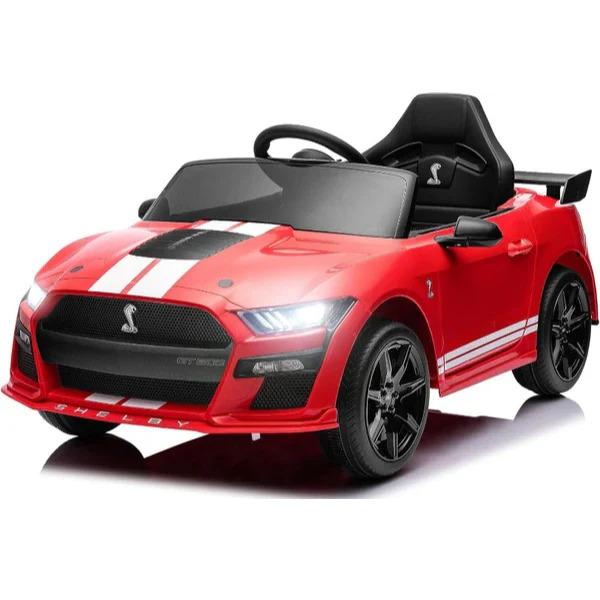
When parents start looking for a ride-on vehicle, one of the first decisions they encounter is surprisingly simple: should they buy a single-seater or a two-seater?
At first, the answer may seem obvious. If there's only one child in the family, a single-seat vehicle should be enough. If there are siblings, a two-seater must be better.
But the decision isn't always that straightforward.
The number of seats affects the size of the vehicle, weight capacity, storage requirements, battery demands, riding experience, and how children can use it. A two-seater may be perfect for one family and unnecessarily large for another.
If you're beginning your search, you can explore the kids cars collection to see different body styles, seating configurations, battery systems, and designs available for children.
The right option ultimately depends on your child's age and size, whether siblings will share the vehicle, available storage space, riding environment, and how you expect the vehicle to be used.
In this guide, we'll compare single-seater and two-seater ride-on vehicles in detail so parents can decide which configuration offers the better fit for their family.
What Is a Single-Seater Ride-On Car?
A single-seater is designed primarily for one child.
The vehicle typically features:
-
One driver's seat
-
One steering system
-
One set of controls
-
A compact body
-
A weight capacity designed around one rider
Single-seat models are often smaller and easier to maneuver than larger multi-seat vehicles.
For families with one child, they can be a straightforward and practical choice.
What Is a Two-Seater Ride-On Car?
A two-seater is designed to accommodate two children, depending on the manufacturer's specifications.
These vehicles generally have:
-
Two seats
-
A larger body
-
Greater overall weight capacity
-
More interior space
-
A wider chassis
-
Larger battery or motor configurations on some models
Toyzinn's current car collection includes a variety of two-seat ride-on vehicles, including SUV-style, sports-car, police, and luxury-inspired designs.
However, parents should always check the individual product specifications before allowing two children to ride together.
A vehicle having two seats doesn't automatically mean that every combination of two children is suitable.
Single-Seater vs Two-Seater at a Glance
|
Feature |
Single-Seater |
Two-Seater |
|
Riders |
One |
Two, where permitted |
|
Vehicle size |
Usually smaller |
Usually larger |
|
Storage |
Easier |
Requires more space |
|
Maneuverability |
Generally easier |
Can require more room |
|
Weight capacity |
Lower |
Usually higher |
|
Sibling sharing |
Not suitable |
Potentially suitable |
|
Transport |
Easier |
More difficult |
|
Cost |
Often lower |
Often higher |
|
Best for |
Individual riders |
Families with multiple children |
This is a general comparison. Individual vehicles can differ significantly.
Why Choose a Single-Seater?
There are several reasons a single-seat vehicle may be the better choice.
1. Your Child Rides Alone
If you have one child and don't expect siblings or friends to use the vehicle regularly, a single-seater may provide everything you need.
There's little reason to purchase a larger vehicle if its additional capacity won't be used.
2. Smaller Size
Single-seat models are often easier to handle around the home.
They can be particularly practical for:
-
Small gardens
-
Driveways
-
Courtyards
-
Indoor spaces where permitted
A smaller vehicle also means easier storage.
3. Easier Maneuverability
A compact ride-on vehicle can generally turn more easily in tight areas.
This can be useful when children are learning how to steer.
A smaller body may also make it easier for parents to move the vehicle manually when it isn't being driven.
4. Easier Storage
Storage is an underrated consideration.
A single-seat model may fit more easily in:
-
Garages
-
Storage rooms
-
Utility areas
-
Covered outdoor spaces
If storage space is limited, size can become a deciding factor.
5. Potentially Lower Cost
Single-seat vehicles often have simpler configurations.
Depending on the model, this can mean a lower purchase price.
However, parents should compare the complete specifications rather than assuming every single-seater will be cheaper than every two-seater.
Why Choose a Two-Seater?
Two-seat models offer a completely different experience.
1. Siblings Can Share
The biggest advantage is obvious.
Two children can potentially ride together, provided that the manufacturer allows it and the combined weight remains within the vehicle's recommended capacity.
This can make the vehicle more appealing for families with siblings.
2. More Social Play
A two-seater allows children to experience the vehicle together.
Instead of one child riding while another watches, siblings may be able to participate simultaneously.
This can encourage:
-
Cooperative play
-
Imaginative games
-
Communication
-
Shared experiences
Parents should still supervise children and establish simple rules for riding together.
3. Larger Interior
Two-seaters generally have more cabin space.
This can be beneficial even when only one child is riding because a larger child may find the extra room more comfortable.
However, larger doesn't automatically mean better.
The vehicle still needs to match the child's size and the family's storage capacity.
Two-Seater Doesn't Always Mean Two Children
This is one of the most important points for parents.
A vehicle can have two seats without necessarily being appropriate for every combination of two children.
Before allowing two riders, check:
-
Maximum total weight
-
Recommended age
-
Seat dimensions
-
Manufacturer instructions
-
Motor configuration
-
Battery system
For example, two younger children may fit comfortably within the vehicle's capacity, while two older children may exceed it.
Always follow the individual product specifications.
Consider the Combined Weight
When two children ride together, their combined weight matters.
Imagine a vehicle with a maximum recommended capacity of 30 kg.
Two children weighing 18 kg each would exceed that limit.
The fact that they can physically fit inside the seats doesn't make the arrangement appropriate.
Excessive weight can affect:
-
Acceleration
-
Braking
-
Steering
-
Battery runtime
-
Motor performance
-
Stability
-
Component wear
Always calculate the combined rider weight before allowing two children to ride together.
Does a Two-Seater Need More Power?
Often, yes.
A larger vehicle carrying more weight can place greater demands on its motors and battery.
This is one reason some two-seat models use larger battery systems or multiple motors.
However, you shouldn't assume that every two-seater is automatically more powerful than every single-seater.
Compare:
-
Battery voltage
-
Motor count
-
Motor specifications
-
Battery capacity
-
Vehicle weight
-
Maximum rider weight
The complete specification provides a much clearer picture.
Battery Consumption
A two-seater can potentially consume more energy when carrying two riders.
More weight means the motors have to work harder.
Battery usage can increase particularly when children are riding:
-
On grass
-
On inclines
-
At higher speeds
-
For extended periods
This doesn't mean a two-seater will necessarily have poor battery life.
It simply means that actual runtime depends on how the vehicle is being used.
Single-Seater and Two-Seater for Different Ages
Age can influence the decision.
Younger Children
A compact single-seater may be easier for a younger child to manage.
If a two-seater is chosen, parental supervision becomes particularly important.
Preschool Children
Both configurations may work depending on the model.
Parents should consider size, weight, and whether siblings will share the vehicle.
Older Children
A larger two-seater may provide additional space and capacity.
However, the individual vehicle's age and weight recommendations remain the deciding factors.
What If Siblings Have Different Ages?
This is a common situation.
Suppose you have:
-
One child aged 3
-
One child aged 6
The older child's vehicle requirements may be very different from the younger child's.
A two-seater could potentially work if the vehicle is specifically designed for both riders and their combined weight falls within the recommended limit.
But parents shouldn't choose a larger vehicle solely because the older child wants more power.
The younger rider's ability to safely participate must also be considered.
Single-Seater for One Child: Is It Enough?
Absolutely.
Parents sometimes worry that a single-seat vehicle might be limiting.
For one child, however, a single-seater can provide plenty of entertainment.
It may also encourage independent imaginative play.
Children can pretend to:
-
Drive to the supermarket
-
Go on a road trip
-
Become a race driver
-
Operate a police vehicle
-
Explore an imaginary city
-
Go camping
-
Deliver packages
The value of the vehicle isn't determined by the number of seats.
Two-Seater for One Child: Is It Wasteful?
Not necessarily.
There are situations where a two-seater can still make sense for one child.
For example:
-
The child is larger
-
You expect a sibling to use it later
-
Friends may occasionally ride
-
You want additional cabin space
-
You prefer a larger SUV-style vehicle
The important question is whether the additional size and cost provide value for your family.
Think About Your Storage Space
Before choosing a two-seater, measure the available storage area.
Consider:
-
Garage width
-
Garage depth
-
Door width
-
Storage room dimensions
-
Elevator size
-
Available outdoor space
Two-seat models can be considerably larger than compact single-seat vehicles.
This matters particularly in apartments and homes with limited storage.
Think About Your Riding Space
A larger vehicle needs more room to maneuver.
If your child will ride in a small courtyard, a compact single-seater may be more practical.
If you have a large garden or driveway, a larger two-seater can be easier to accommodate.
Avoid choosing a vehicle based solely on how it looks in photographs.
Think about the physical space where it will actually be used.
UAE Climate and Larger Ride-On Cars
Storage becomes even more important in the UAE.
High temperatures and prolonged sunlight can affect battery performance and plastic components.
Regardless of whether you choose a single- or two-seater, store the vehicle:
-
Away from direct sunlight
-
In a shaded location
-
In a dry environment
-
Preferably in a covered garage or indoor space
Larger two-seaters may be more difficult to move into protected storage, so plan the storage location before purchasing.
Single-Seater vs Two-Seater for Outdoor Use
If your child will ride primarily outdoors, think about terrain.
Smooth Driveways
Either configuration may work depending on the model.
Grass
Look for suitable tires and sufficient motor power.
Large Gardens
A larger two-seater can provide more space and may be appropriate for older children.
Uneven Surfaces
Check the manufacturer's recommendations carefully.
Not every ride-on vehicle is designed for rough terrain.
Which Is Easier for Beginners?
This depends on the individual model.
A smaller single-seater may be easier for a first-time rider because it generally has a more compact body.
However, some two-seaters are specifically designed for children and include features such as:
-
Parental remote control
-
Speed control
-
Slow-start systems
-
Stable four-wheel configurations
The vehicle's controls and speed matter more than the number of seats alone.
The Importance of Parental Remote Control
A parental remote can be particularly valuable when children are learning.
Parents can use it to:
-
Stop the vehicle
-
Control direction
-
Manage movement
-
Intervene around obstacles
If you're choosing a two-seater for siblings, a remote can provide additional control during shared riding.
However, parents should still supervise children directly.
A remote control shouldn't replace adult supervision.
Safety Considerations for Two Children
When two children ride together, parents should establish basic rules.
For example:
-
Both children remain seated.
-
Hands stay inside the vehicle.
-
No standing while moving.
-
No leaning excessively.
-
No switching seats while moving.
-
The vehicle stays at controlled speeds.
-
An adult supervises the ride.
Children should never be allowed to operate the vehicle on public roads.
Avoid areas near:
-
Traffic
-
Swimming pools
-
Stairs
-
Steep slopes
-
Crowded pedestrian areas
What About Seatbelts?
If the vehicle includes seatbelts, use them according to the manufacturer's instructions.
Seatbelts can help keep children properly positioned while riding.
Parents should make sure the restraints are appropriately fitted and that children understand why they need to remain seated.
Comparing Cost and Value
A two-seater may cost more than a similar single-seat model.
But price isn't the only measure of value.
Think about how the vehicle will be used.
A two-seater may offer better value if:
-
You have multiple children
-
Children will regularly share
-
You want a larger vehicle
-
You expect long-term use
-
The higher capacity is useful
A single-seater may provide better value if:
-
Only one child will ride
-
Storage space is limited
-
You want a simpler vehicle
-
You prefer easier transportation
The "better" option is the one that fits your actual circumstances.
What About Resale Value?
Well-maintained ride-on vehicles can remain attractive to other families.
A popular configuration may have wider appeal.
However, resale value depends on:
-
Brand
-
Condition
-
Battery health
-
Age
-
Appearance
-
Original accessories
-
Working features
-
Overall maintenance
Keeping the vehicle clean and properly stored can help preserve its condition.
Single-Seater vs Two-Seater: A Practical Decision
Here's a simple way to decide.
Choose a Single-Seater If:
-
One child will use it
-
Storage space is limited
-
You want easy maneuverability
-
You prefer a compact vehicle
-
Your child is a beginner
-
You don't need additional seating
Choose a Two-Seater If:
-
Two siblings may ride together
-
The vehicle will be shared regularly
-
You have sufficient storage
-
Your riding area is large enough
-
The combined weight fits within the limit
-
You want a larger cabin
Remember that these are general guidelines.
The individual product specifications should always take priority.
A Simple Family Checklist
Before buying, ask:
Who will ride the vehicle?
One child or two?
How old are the riders?
Are they within the recommended age range?
What do they weigh?
Does the combined weight fit within the limit?
Where will they ride?
Garden, driveway, courtyard, or another suitable area?
Where will the vehicle be stored?
Do you have enough protected space?
How much power is appropriate?
Do the battery and motor specifications match the intended use?
Do you need a parental remote?
Especially important for younger riders.
Will the vehicle be used regularly?
If yes, durability and battery care become more important.
Final Thoughts
The choice between a single-seater and a two-seater isn't really about which design is better. It's about which one makes more sense for your family.
A single-seater can be an excellent choice for one child, particularly when storage and riding space are limited. It's usually easier to maneuver, transport, and store while still providing plenty of opportunities for imaginative play.
A two-seater, on the other hand, can be a valuable choice for families with siblings. It can turn the ride-on experience into shared play and provide additional cabin space for larger children. But parents need to pay close attention to the combined weight capacity and the manufacturer's recommendations.
Before buying, consider who will use the vehicle, where they'll ride, how much storage space you have, and how frequently the vehicle will be used.
You can compare different kids cars and look at seating configurations, battery systems, designs, and features before choosing the model that best fits your family.
Don't forget that the number of seats is only one part of the decision. Battery voltage, motor configuration, weight capacity, speed, safety features, tires, and parental controls can all have a major impact on the overall experience.
Most importantly, choose a vehicle that your child can comfortably and confidently use. Whether it's a compact single-seater or a larger two-seater, responsible supervision and an appropriate riding environment will always matter more than the size of the vehicle.
If you're also looking for other products to keep children entertained at home, toys store near me can help you explore a wider selection of children's products and play options.
Frequently Asked Questions
Is a two-seater better than a single-seater?
Not necessarily. A two-seater is better for families that need shared seating, while a single-seater may be more practical for one child or smaller spaces.
Can two children ride in any two-seater?
No. Always check the manufacturer's maximum combined weight and age recommendations.
Is a two-seater more powerful?
Not automatically. Some two-seaters use larger batteries or multiple motors, but specifications vary by model.
Does a two-seater use more battery?
It can, particularly when carrying two riders or operating on grass, inclines, or other demanding surfaces.
Is a single-seater easier for beginners?
A compact single-seater can be easier for some beginners because of its smaller size, but the vehicle's speed, controls, and safety features are also important.
Should I buy a two-seater if I have only one child?
You can if you want a larger vehicle, additional space, or the possibility of future shared use. However, there is no need to buy one solely for the extra seat.
Are two-seater ride-on cars safe?
They can be when used according to the manufacturer's instructions, operated in suitable areas, kept within the weight limit, and supervised by an adult.
Which is better for a small garden?
A compact single-seater is often more practical for a small garden because it generally requires less space to maneuver and store.

 Bangla