


Understanding Diamond Cutting Tools and Their Industrial Applications
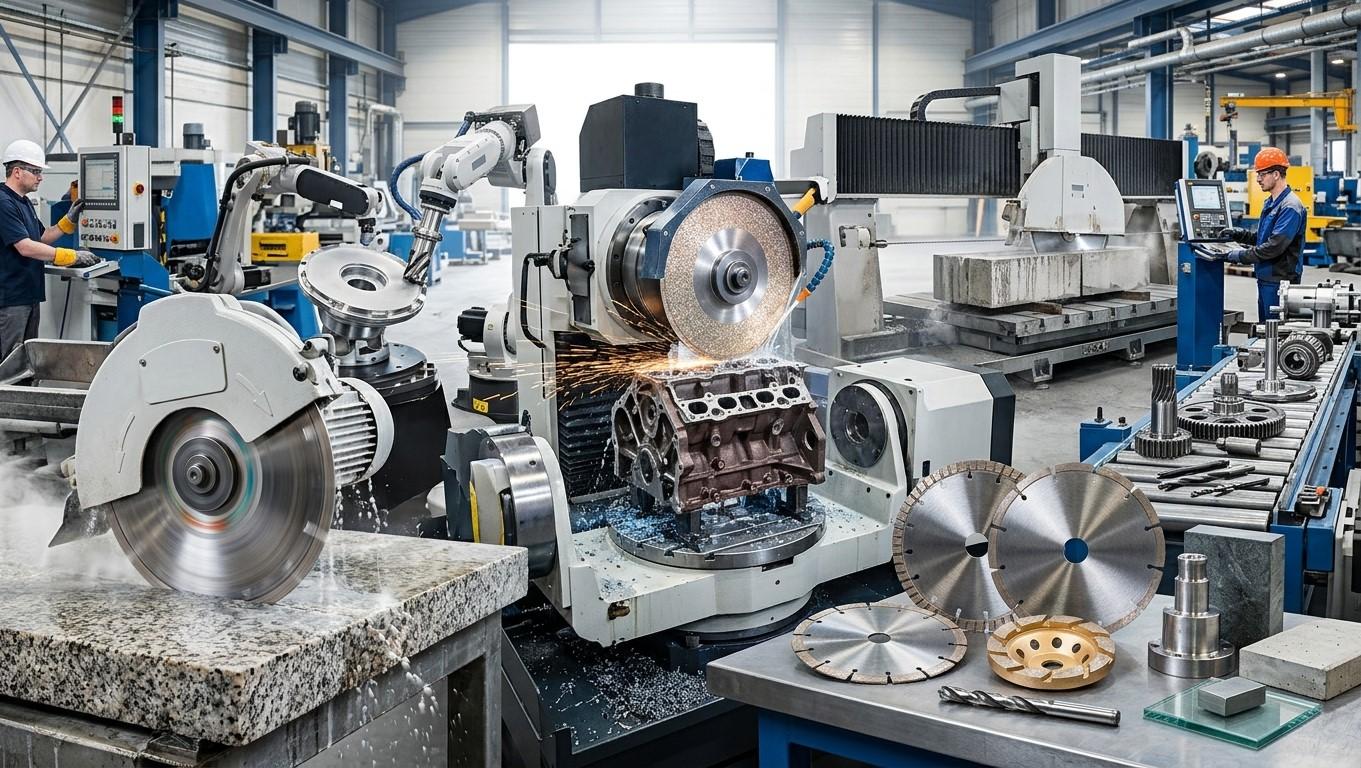
Diamond cutting tools are widely used in modern manufacturing and industrial operations where high precision, excellent surface finish, and efficient material removal are required. Because diamond is one of the hardest known materials, diamond-based cutting tools can provide exceptional wear resistance and cutting performance when used for suitable applications. Khokhawala Trading LLC, a trusted Industrial Tools Supplier in Dubai, provides industrial tooling solutions for machining, fabrication, manufacturing, construction, and other demanding applications.
From machining hard materials to cutting stone, glass, ceramics, composites, and other abrasive materials, diamond cutting tools are available in different designs and configurations. Selecting the right tool depends on the workpiece material, machining process, cutting speed, required precision, and operating conditions. Understanding the different types and applications of diamond tools can help businesses improve productivity while achieving consistent results.
What Are Diamond Cutting Tools?
Diamond cutting tools are cutting or grinding tools that use natural or synthetic diamond as the cutting or abrasive material. Diamond particles may be bonded to a tool body or integrated into a cutting edge, depending on the tool design and application.
Diamond offers several properties that make it valuable for industrial cutting and machining:
- Extremely high hardness
- Excellent wear resistance
- High abrasion resistance
- Ability to produce fine surface finishes
- Effective cutting of many hard and abrasive materials
- Long service life in suitable applications
Synthetic diamond is widely used in industrial tooling because its properties can be engineered for particular cutting and grinding applications.
Why Diamond Is Used in Industrial Cutting Tools
Traditional cutting materials can wear rapidly when machining extremely hard or abrasive workpieces. Diamond can provide much greater resistance to abrasive wear in applications where its use is appropriate.
The hardness of diamond allows it to maintain a sharp cutting capability for extended periods under suitable operating conditions. This can contribute to improved dimensional consistency and reduced tool replacement.
Diamond tooling can be particularly beneficial when manufacturers need:
- High dimensional accuracy
- Consistent cutting performance
- Excellent surface finish
- Reduced tool wear
- Efficient machining of abrasive materials
- Longer intervals between tool changes
However, diamond is not suitable for every material. Ferrous materials, for example, can present limitations for certain diamond cutting applications because of chemical interactions at elevated cutting temperatures. Tool selection should therefore always consider the specific workpiece and manufacturer's recommendations.
Types of Diamond Cutting Tools
Different diamond tool designs are available for different industrial processes.
1. Diamond Saw Blades
Diamond saw blades contain diamond segments or particles along the cutting edge. They are commonly used for cutting hard and abrasive materials.
Applications include:
- Concrete cutting
- Stone cutting
- Granite and marble processing
- Ceramic cutting
- Glass processing
- Construction materials
Diamond blades can provide clean and accurate cuts when the correct blade type is matched to the material.
2. Diamond Grinding Wheels
Diamond grinding wheels are used for precision grinding, sharpening, and finishing applications.
They are commonly used for materials such as:
- Carbide
- Ceramics
- Glass
- Advanced composites
- Hardened abrasive materials
Their excellent wear resistance makes them particularly useful for precision applications where conventional abrasive wheels may wear more quickly.
3. Diamond End Mills
Diamond-coated or diamond-based end mills can be used for machining selected non-ferrous materials and composites.
They may be suitable for applications involving:
- Carbon fiber composites
- Graphite
- Aluminum alloys
- Plastics
- Abrasive non-metallic materials
Tool geometry and diamond coating technology can vary according to the intended application.
4. Polycrystalline Diamond (PCD) Tools
PCD tools use a layer of polycrystalline diamond attached to a suitable substrate. They are widely used for high-speed machining of selected non-ferrous and non-metallic materials.
PCD cutting tools can offer:
- Excellent wear resistance
- High productivity
- Consistent cutting performance
- Long tool life
- Good surface finish
They are commonly used in industries such as automotive, aerospace, woodworking, and composite manufacturing.
5. Diamond Drill Bits
Diamond drill bits are designed for drilling hard and abrasive materials.
They are commonly used for:
- Concrete
- Stone
- Glass
- Ceramics
- Composite materials
Diamond drill bits can produce accurate holes while maintaining good cutting performance in demanding materials.
Industrial Applications of Diamond Cutting Tools
Diamond cutting tools are used across a broad range of industries.
Construction and Infrastructure
Construction is one of the most recognizable applications of diamond cutting technology. Diamond saws and core drilling tools are commonly used for cutting and drilling concrete, masonry, stone, and other hard construction materials.
Applications include:
- Concrete floor cutting
- Road cutting
- Wall cutting
- Core drilling
- Stone fabrication
- Demolition work
The ability to cut hard materials accurately makes diamond tools valuable for construction and infrastructure projects.
Automotive Manufacturing
The automotive industry uses specialized cutting tools to manufacture components from aluminum alloys, composites, and other non-ferrous materials.
PCD tools can be used in suitable applications involving engine components, transmission parts, and other precision-machined components.
High wear resistance can help maintain dimensional accuracy during extended production runs.
Aerospace Industry
Aerospace manufacturing often involves lightweight materials and advanced composites that can be difficult to machine using conventional tools.
Diamond tooling can be used for selected composite and non-ferrous machining applications where tool wear and surface quality are important.
The ability to maintain consistent cutting performance can be particularly valuable when producing precision components.
Electronics and Semiconductor Manufacturing
Diamond-based tooling can also be used in specialized applications involving semiconductor materials, ceramics, glass, and other hard materials.
Precision is extremely important in these applications because components can be small, delicate, and manufactured to tight dimensional requirements.
Stone and Tile Processing
Diamond cutting tools are widely used in stone and tile processing.
They can be used for cutting:
- Granite
- Marble
- Porcelain
- Ceramic tiles
- Engineered stone
- Concrete products
Diamond blades can provide clean edges and accurate cuts when the blade specification is matched to the material.
Woodworking and Furniture Manufacturing
PCD tools are increasingly used for machining abrasive engineered wood products such as MDF, particleboard, and laminate materials.
These materials can cause significant wear to conventional cutting tools because of their abrasive content.
PCD tools can provide longer tool life and consistent cutting performance in suitable high-volume applications.
Composite Material Manufacturing
Modern industries increasingly use carbon fiber-reinforced plastics, glass fiber composites, and other advanced materials.
These materials can be abrasive and may cause rapid wear to conventional tools. Diamond and PCD tooling can provide an effective solution for certain composite machining operations.
Benefits of Diamond Cutting Tools
Using the right diamond industrial cutting tools can provide several advantages.
Exceptional Wear Resistance
Diamond is highly resistant to abrasive wear, allowing suitable tools to maintain their cutting characteristics for extended periods.
Longer Tool Life
In appropriate applications, diamond tools can significantly outlast conventional cutting tools, reducing the frequency of tool replacement.
Excellent Surface Finish
Diamond cutting edges can produce high-quality finishes, particularly when the tool geometry and operating parameters are correctly selected.
High Dimensional Consistency
Reduced tool wear can help maintain consistent dimensions during production runs.
Increased Productivity
Longer tool life and stable cutting performance can reduce tool-change requirements and production interruptions.
Effective Machining of Abrasive Materials
Diamond tools are particularly valuable when working with materials that rapidly wear conventional tooling.
Factors to Consider When Selecting Diamond Cutting Tools
Choosing the right diamond tool requires careful consideration of several factors.
Workpiece Material
The material being cut or machined should be the starting point for tool selection.
Diamond tools are particularly effective for many non-ferrous, non-metallic, abrasive, and composite materials, but they are not universally suitable.
Cutting or Machining Process
Determine whether the application involves:
- Sawing
- Drilling
- Milling
- Grinding
- Routing
- Finishing
Each process requires a different tool configuration.
Tool Geometry
The number of cutting edges, rake angle, clearance angle, diamond concentration, and other geometry factors can influence tool performance.
Cutting Speed
Operating speed should remain within the manufacturer's recommended range. Excessive speed can generate heat and negatively affect tool performance.
Feed Rate
Feed rate must be balanced with the material, tool design, machine capability, and desired surface finish.
Cooling and Lubrication
Some diamond cutting operations benefit from appropriate cooling or lubrication to control heat and remove cutting debris.
Machine Compatibility
Check tool dimensions, spindle requirements, mounting systems, speed ratings, and other machine specifications before purchasing.
Diamond Tools vs Conventional Cutting Tools
Diamond cutting tools can offer significant advantages in suitable applications, but conventional tools remain appropriate for many other machining operations.
| Feature | Diamond Cutting Tools | Conventional Cutting Tools |
|---|---|---|
| Wear resistance | Extremely high in suitable applications | Depends on tool material |
| Suitable materials | Many abrasive, non-ferrous, non-metallic and composite materials | Broad range depending on tool type |
| Surface finish | Often excellent | Varies by tool and application |
| Tool life | Long in suitable applications | Varies |
| Initial cost | Generally higher | Often lower |
| Best use | Precision and abrasive-material applications | General and specialized machining |
The objective should not simply be to select the most advanced tool, but to select the tool that provides the best combination of performance, cost, accuracy, and service life for the application.
How to Maintain Diamond Cutting Tools
Proper maintenance can help preserve tool performance.
Clean Tools After Use
Remove chips, dust, and cutting debris from the tool after machining.
Inspect Cutting Edges
Check for excessive wear, damage, chipping, or other abnormalities.
Use Correct Operating Parameters
Always follow recommended cutting speeds, feed rates, and depth-of-cut guidelines.
Control Heat
Avoid excessive heat generation by using suitable cutting parameters and cooling methods where applicable.
Store Tools Properly
Protect diamond cutting tools from impact, contamination, and improper handling during storage.
Common Mistakes When Using Diamond Cutting Tools
Several mistakes can reduce tool life and performance.
Choosing the Wrong Tool for the Material
Diamond tooling is not universally appropriate. Material compatibility should always be evaluated before use.
Exceeding Recommended Speeds
Excessive speed can generate unnecessary heat and negatively affect the tool.
Using Incorrect Feed Rates
Very aggressive feeds can damage the cutting edge, while inefficient parameters can reduce productivity.
Poor Machine Setup
Machine vibration, spindle runout, or insufficient workpiece stability can negatively affect cutting performance.
Ignoring Tool Condition
Continuing to use a damaged or excessively worn tool can reduce machining quality and potentially damage the workpiece.
Best Practices for Efficient Diamond Tooling
To get the best results from diamond cutting tools, businesses should combine proper tool selection with good machining practices.
- Match the tool to the workpiece material.
- Follow manufacturer-recommended operating parameters.
- Ensure the machine is properly maintained.
- Secure the workpiece correctly.
- Control vibration and runout.
- Use appropriate cooling when required.
- Inspect tools regularly.
- Replace tools when they reach their recommended wear limits.
- Train operators in correct tool handling and application.
Conclusion
Diamond cutting tools provide valuable advantages for industrial applications where high wear resistance, precision, productivity, and surface quality are important. From construction and stone processing to automotive, aerospace, electronics, woodworking, and composite manufacturing, diamond-based tooling can offer reliable performance when correctly matched to the application.
Selecting the right diamond industrial cutting tools requires careful consideration of the workpiece material, machining process, tool geometry, cutting speed, feed rate, cooling requirements, and machine compatibility. Proper maintenance and operating practices are equally important for achieving maximum tool life and consistent results.
For businesses looking for reliable industrial tooling solutions, Khokhawala Trading LLC is a trusted Industrial Tools Supplier in Dubai, serving manufacturing, engineering, fabrication, machining, construction, and maintenance requirements. Along with diamond cutting tools, choosing the right carbide cutting tools, grinding solutions, CNC machining tools, precision measuring instruments, and other industrial tooling can help businesses improve productivity, accuracy, and long-term operational efficiency.

 Bangla