


The Battle for Enterprise Workloads: Analyzing the Hybrid Cloud Market Share
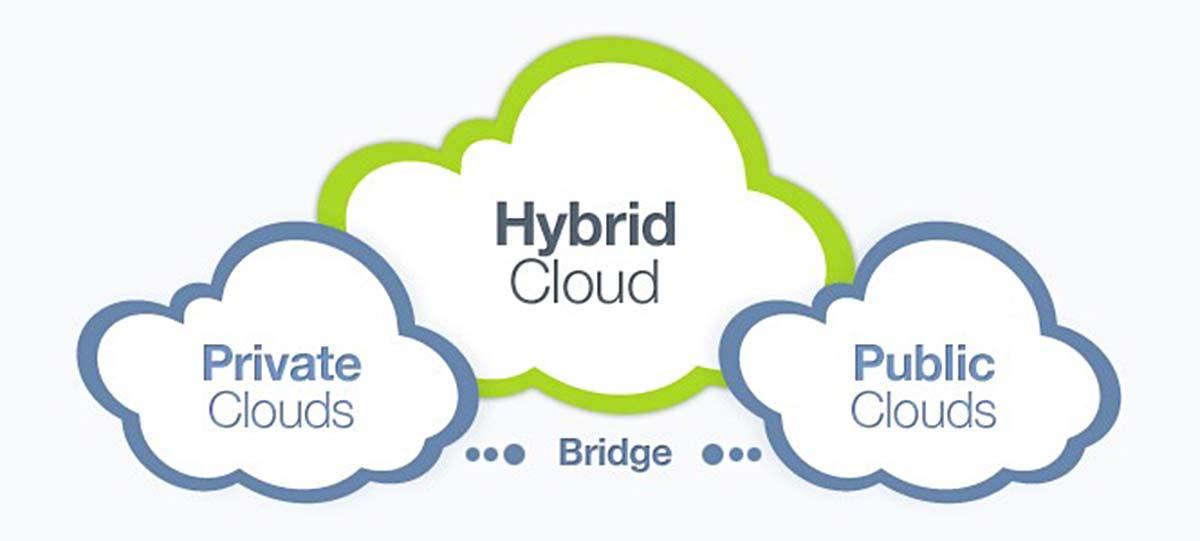
The fierce competition for Hybrid Cloud Market Share represents one of the most significant and strategic battlegrounds in the entire technology industry. The stakes are immense, as the vendors who dominate this space will effectively own the foundational platform for enterprise IT for the next decade and beyond. Market share in this context is not just about who sells the most public cloud services or on-premises hardware; it's about which vendor's platform becomes the primary control plane for managing the entirety of an organization's applications and infrastructure, wherever they reside. The landscape is a dynamic clash between the public cloud hyperscalers, who are aggressively pushing their cloud services into the data center, and the traditional enterprise IT incumbents, who are re-architecting their on-premises offerings to deliver a cloud-like experience and extend their management capabilities into the public cloud. This clash of titans is defining the market and shaping the technology choices available to every enterprise navigating its digital transformation journey.
The public cloud "big three"—Amazon Web Services (AWS), Microsoft Azure, and Google Cloud Platform (GCP)—are leveraging their massive scale and dominant positions in public cloud to capture a significant portion of the hybrid cloud market share. Their strategy is to make the on-premises environment look and feel like a seamless extension of their public cloud. Microsoft has arguably been the most successful in this arena with its Azure Arc platform. Leveraging its deep incumbency in the enterprise with Windows Server and other products, Azure Arc allows customers to manage their on-premises servers, Kubernetes clusters, and even infrastructure in other clouds (like AWS) from the familiar Azure control plane. AWS, the public cloud market leader, offers AWS Outposts, a fully managed service that provides AWS-designed hardware and software on-premises for a truly consistent hybrid experience. Google Cloud is competing with Anthos, a modern, Kubernetes-native platform that is designed from the ground up for hybrid and multi-cloud application management. These vendors are betting that customers will want a consistent experience rooted in their powerful public cloud ecosystems.
On the other side of the battle are the traditional enterprise IT giants, who are defending their turf in the data center and fighting to remain relevant in a cloud-first world. The most formidable player in this camp is IBM, which made a massive bet on hybrid cloud with its $34 billion acquisition of Red Hat. Red Hat OpenShift is a leading enterprise Kubernetes platform that can run on any infrastructure—on-premises or in any public cloud—providing a powerful, cloud-agnostic control plane. This strategy allows customers to avoid lock-in to a single public cloud provider. Similarly, VMware, a dominant force in on-premises virtualization, is extending its vSphere-based platform into the public clouds through partnerships like VMware Cloud on AWS, offering a consistent infrastructure layer for customers looking to migrate and manage their existing virtual machine-based workloads in a hybrid model. Dell Technologies and Hewlett Packard Enterprise (HPE) are also major players, offering their own hybrid cloud platforms (Dell APEX and HPE GreenLake) that combine their hardware with software and services to deliver an on-demand, cloud-like experience for on-premises infrastructure.
The distribution of market share is also influenced by the growing ecosystem of independent software vendors (ISVs) and open-source projects. While the major platform vendors provide the foundational layers, a vibrant ecosystem of third-party tools is emerging to address specific challenges in the hybrid cloud, such as observability, security, and cost management. Companies like Datadog, HashiCorp (with tools like Terraform and Vault), and a host of others are providing critical, cloud-agnostic solutions that are becoming essential components of many organizations' hybrid strategies. This creates a more complex but also a more flexible landscape, where customers are not limited to the tools provided by their primary platform vendor. Ultimately, the market share in the hybrid cloud space will not be won by a single vendor with a single solution. Instead, it will be a continuous battle fought across multiple layers of the technology stack, with the most successful vendors being those who embrace openness, support a broad ecosystem, and provide customers with the most flexibility and choice.
Explore More Like This in Our Reports:
Applied Ai In Cybersecurity Market

 Bangla