


Hair Transplant in Dubai After Rapid Hair Loss
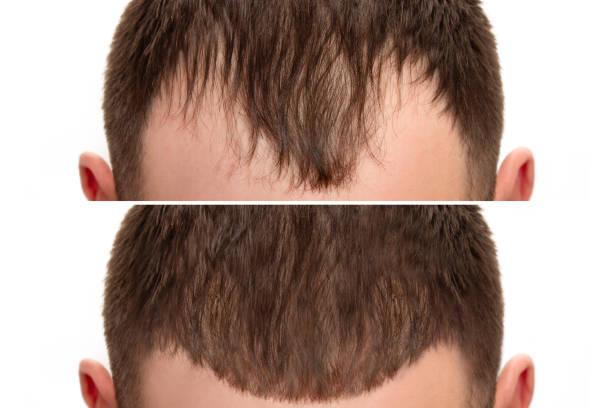
Rapid hair loss can make transplantation seem like an immediate solution, but the timing of surgery matters as much as the procedure itself. For suitable candidates, Hair Transplant in Dubai can restore strategically lost coverage, but a proper assessment should first determine whether the pattern has stabilized, whether the donor supply is adequate, and whether additional hair loss is likely.
When shedding or recession accelerates, transplant planning becomes more complex. Placing grafts into an actively changing pattern without understanding its progression can create an uneven result later as surrounding native hairs continue to thin.
Why Rapid Hair Loss Changes Hair Transplant Planning
Hair transplantation works by redistributing resistant follicles from a donor region to areas affected by permanent pattern loss.
It does not stop the underlying biological process that may be causing untreated hair loss elsewhere on the scalp.
This distinction becomes especially important after a noticeable acceleration in recession, thinning, or shedding.
Stable Loss Versus Active Progression
A relatively stable pattern allows a surgeon to estimate which areas require permanent coverage.
Rapid progression makes that prediction less certain.
For example, a person may currently have visible recession at the temples but still retain relatively dense mid-scalp hair. If the mid-scalp begins thinning soon afterward, graft placement planned only around the temples may no longer provide balanced coverage.
The assessment therefore needs to consider both the current pattern and its likely direction.
The Importance of Diagnosing the Pattern
Not every episode of rapid hair loss represents the same condition.
Changes can be associated with hereditary pattern loss, temporary shedding, nutritional problems, hormonal changes, inflammatory scalp disorders, medication-related effects, or other medical factors.
A transplant should not automatically be treated as the first response to unexplained rapid shedding.
A clinical assessment helps distinguish a stable surgical indication from a situation that requires further investigation or stabilization first.
Hair Transplant in Dubai Requires a Forward-Looking Assessment
A useful transplant plan is not based solely on how much scalp is visible today.
The surgeon needs to consider how the patient's hair pattern could develop over the coming years.
This is particularly relevant for younger patients or anyone experiencing recently accelerated recession.
Donor Hair Is a Limited Resource
The donor area contains a finite number of follicles that can potentially be harvested.
Using too many grafts early in the treatment journey can reduce the options available if additional loss occurs later.
That makes conservative planning especially valuable when the final extent of hair loss is not yet clear.
Recipient Areas May Continue Changing
A transplanted follicle can remain in the recipient area while neighboring native hairs become progressively thinner.
This can produce an unnatural contrast between transplanted and native regions.
The objective is therefore not simply to fill every visible gap. It is to create a distribution that remains visually coherent if the surrounding hair changes.
How Progression Influences Treatment Timing
There is no universal waiting period that applies to every patient with rapid hair loss.
The appropriate timing depends on the diagnosis, age, degree of progression, donor characteristics, recipient-area condition, and overall treatment plan.
A clinician may recommend monitoring the pattern before surgery when the loss is still changing significantly.
In other situations, transplantation may remain reasonable when the pattern is sufficiently understood and the donor supply is strong.
Clinical Factors to Review Before Surgery
| Assessment area | Why it matters | Planning implication |
|---|---|---|
| Recent rate of hair loss | Shows whether the pattern is still changing | May influence treatment timing |
| Donor density | Indicates available follicular reserve | Helps establish realistic graft limits |
| Hair caliber | Thicker hairs generally provide stronger visual coverage | Affects expected density |
| Scalp condition | Inflammation or other disorders can affect planning | May require medical evaluation |
| Existing native hair | Determines how much natural coverage remains | Helps avoid unnecessary extraction |
| Pattern of future loss | Helps anticipate additional thinning | Supports long-term graft allocation |
| Previous treatments | Reveals what has already been attempted | Helps coordinate the next strategy |
This assessment prevents a short-term improvement from becoming a long-term planning problem.
When Stabilization May Come Before Hair Transplantation
Stabilization does not necessarily mean that every patient must postpone transplantation for a fixed amount of time.
Instead, it means understanding whether the underlying hair-loss pattern is sufficiently predictable to justify permanent redistribution of follicles.
Signs That Further Assessment May Be Appropriate
Several situations deserve additional clinical attention before surgery:
- Hair loss has accelerated noticeably over a short period.
- Shedding is widespread rather than concentrated in a typical pattern.
- The scalp has persistent redness, scaling, pain, or irritation.
- Hair density is decreasing across several regions simultaneously.
- The donor area itself appears to be thinning.
- The cause of the recent change is uncertain.
- There is a history suggesting temporary or medically associated shedding.
These findings do not automatically rule out transplantation.
They simply make diagnosis and planning more important.
The Donor Area Deserves Equal Attention
Patients often focus heavily on the bald or thinning region.
From a surgical perspective, the donor area may be even more important because it determines how much can realistically be transferred.
If the donor region is strong, extraction can potentially be distributed conservatively.
If donor density is limited, aggressive harvesting may create visible depletion and reduce future options.
This is why a proper evaluation should examine the donor zone rather than estimating graft requirements from the recipient area alone.
Designing Hair Transplant in Dubai for Future Stability
A strong surgical plan should account for possible future progression rather than treating today's scalp as a fixed map.
This can involve prioritizing areas that contribute most to the overall appearance while preserving grafts for potential future needs.
Frontal Areas Often Require Precision
The frontal region strongly influences how the face frames the hair.
When progression is uncertain, excessively aggressive lowering or thickening may consume grafts that could become valuable later.
A more conservative distribution can sometimes provide a better balance between present improvement and future flexibility.
Mid-Scalp Planning Can Prevent Future Imbalance
Rapid progression does not always remain confined to the original recession zone.
If thinning expands toward the mid-scalp, the relationship between transplanted and native hair becomes important.
Planning therefore needs to consider how different scalp regions visually connect rather than treating each bald area as an isolated target.
Crown Progression Can Be Difficult to Predict
The crown presents another planning challenge because thinning can gradually expand around the original affected region.
Dense graft placement over a small crown area may look effective initially but may not remain balanced if the surrounding region continues to deteriorate.
For some patients, preserving donor resources for future progression may be more appropriate than attempting maximum crown density immediately.
How Dubai Conditions Can Affect the Patient Experience
Dubai's environment adds practical considerations to postoperative planning.
Strong sunlight, high temperatures, outdoor exposure, and extensive air-conditioning can influence how patients manage the scalp during recovery.
The issue is not that Dubai's climate prevents transplantation.
Rather, patients need to account for their daily routine when planning surgery and recovery.
Sun Exposure Requires Practical Planning
A healing scalp can be more sensitive to direct sunlight.
Patients who regularly commute outdoors, participate in outdoor sports, travel frequently, or spend time around pools and beaches may need to organize their schedule around postoperative precautions.
Air Conditioning Can Increase Dryness
Extended exposure to air-conditioned environments may contribute to a dry-feeling scalp for some patients.
Following the clinic's postoperative cleansing and scalp-care instructions is more important than introducing unnecessary products.
What Happens If Hair Loss Continues After Surgery
A transplant does not guarantee that existing native hair will never thin.
This is one of the most important distinctions patients should understand before treatment.
Transplanted follicles are selected for their expected resistance to pattern loss, while surrounding native follicles may continue following their original biological trajectory.
Long-Term Planning Can Protect the Result
A thoughtful treatment strategy considers potential future procedures without assuming they will definitely be required.
This means preserving donor capacity, avoiding unnecessary graft use, and designing the initial result so it remains compatible with possible future changes.
Patients should also understand that maintenance strategies may be discussed when appropriate.
Questions to Ask Before Hair Transplantation After Rapid Loss
Is rapid hair loss an automatic reason to delay surgery?
Not necessarily. The key issue is determining why the loss is occurring and whether the pattern is sufficiently understood for predictable surgical planning.
Why does donor assessment matter so much?
The donor area provides the follicles available for transplantation, so its density and long-term stability influence how many grafts can responsibly be used.
Can a transplant stop future hair loss?
No. Transplantation redistributes selected follicles but does not automatically prevent further thinning of untreated native hair.
Should every rapidly progressing case receive medical treatment first?
Not every case requires the same approach. The appropriate sequence depends on the underlying diagnosis, degree of progression, donor condition, and individual treatment plan.
Can future hair loss be planned for?
A good surgical strategy can account for possible progression by conserving donor resources and avoiding unnecessarily aggressive graft placement.
The Strategic Investment
When hair loss changes quickly, the most valuable decision is often not how many grafts can be transplanted today, but how intelligently those grafts are used for the years ahead. Anyone considering hair transplant in Dubai should prioritize diagnosis, donor preservation, realistic expectations, and a treatment plan that reflects the possibility of future progression. A personalized assessment at Tajmeels Clinic can help determine whether transplantation is appropriate now or whether additional evaluation and stabilization should come first.

 Bangla