

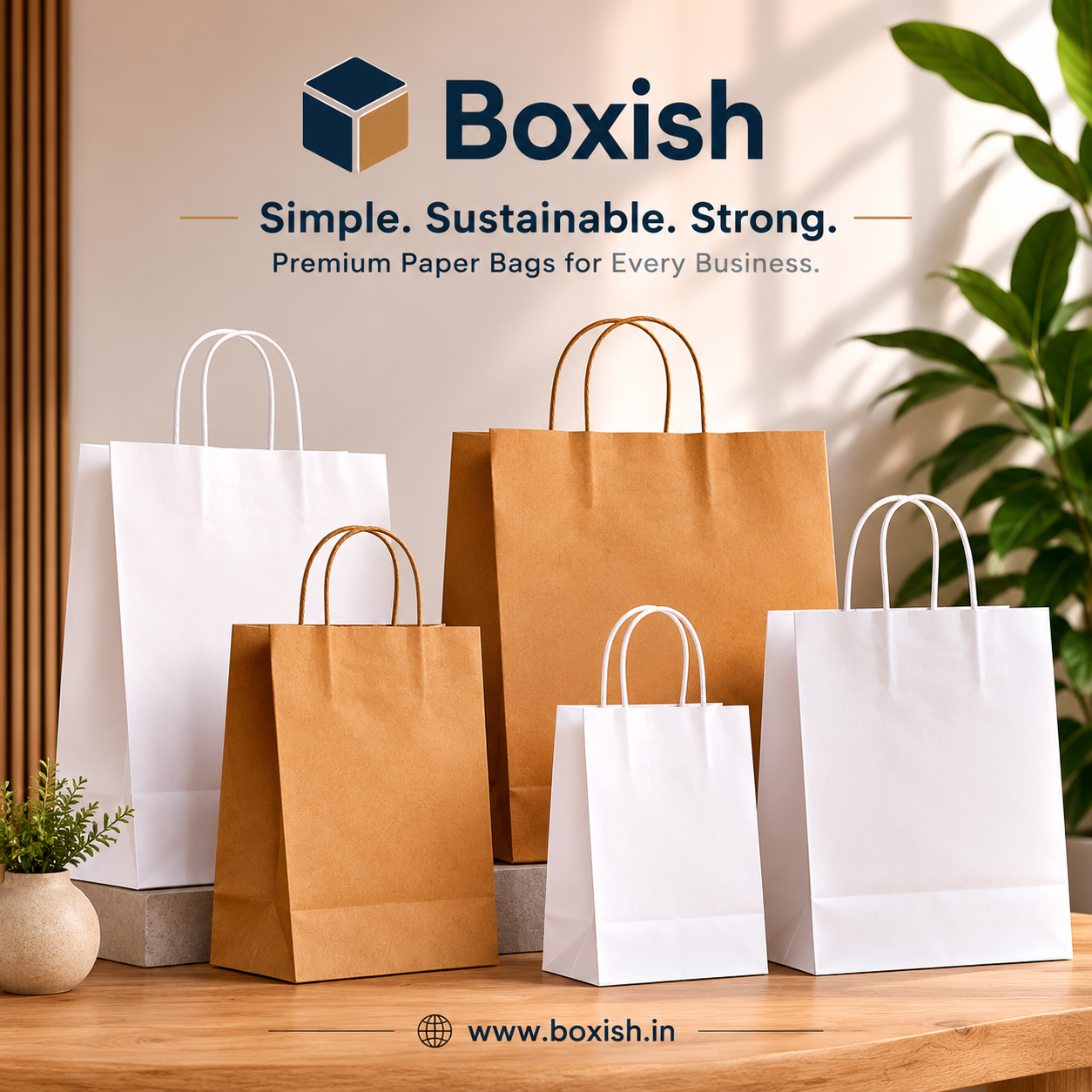
Brown Paper Bags vs White Paper Bags: Comparing Cost, Strength, and Branding

Choosing the right paper bag can affect packaging cost, product presentation, and customer experience. For many businesses, the decision often comes down to two common options: brown and white paper bags.
Both can be used for retail, food, gifting, bakery, and other business applications, but they offer different visual appearances and may suit different branding requirements. Paper quality, GSM, construction, size, handles, and printing also influence the final performance of the bag.
This guide compares Brown Paper Bags and white paper bags based on cost, strength, appearance, branding, and business applications to help businesses choose the more suitable option.
What Are Brown Paper Bags?
Brown Paper Bags are generally made from kraft paper and have a natural brown appearance. They are widely used for everyday packaging because of their simple appearance and practical construction.
They can be used by:
-
Retail stores
-
Grocery businesses
-
Bakeries
-
Cafes
-
Gift shops
-
Boutiques
-
Takeaway businesses
The natural appearance can work particularly well for businesses that prefer simple and understated packaging.
Brown bags are also available in different sizes and paper specifications, allowing businesses to select options according to their products.
What Are White Paper Bags?
White paper bags are made using paper with a white outer surface. Their lighter appearance provides a clean background for printed logos, graphics, and other branding elements.
They are commonly used by:
-
Fashion retailers
-
Cosmetic stores
-
Gift shops
-
Boutiques
-
Lifestyle brands
-
Premium retailers
The brighter surface can make colors and printed designs stand out more clearly, depending on the printing process and design.
Brown vs White Paper Bags at a Glance
| Factor | Brown Paper Bags | White Paper Bags |
|---|---|---|
| Appearance | Natural and simple | Clean and bright |
| Branding | Suitable for simple designs | Strong background for detailed designs |
| Cost | Often economical | May cost more depending on paper and finish |
| Strength | Depends on paper and construction | Depends on paper and construction |
| Printing | Suitable for many designs | Good surface for colorful printing |
| Common use | Everyday retail and food | Retail, gifting, fashion, premium products |
| Brand style | Natural and minimal | Modern and polished |
The actual performance and price can vary depending on the paper grade, GSM, dimensions, construction, printing, and quantity ordered.
Cost Comparison
Cost is one of the first factors businesses consider when purchasing bags in bulk.
Brown kraft paper is commonly used for practical packaging applications, which can make brown bags an economical choice for businesses that require large quantities.
White bags may have a higher cost depending on the paper used, printing requirements, finish, and manufacturing specifications.
However, businesses should not compare bags based only on color.
The total cost can also depend on:
-
Paper GSM
-
Bag dimensions
-
Handle type
-
Printing
-
Bottom construction
-
Order quantity
-
Customization
-
Manufacturing quality
A business ordering thousands of bags should compare the complete specification rather than selecting an option solely because it has a lower unit price.
Which One Is Stronger?
There is no simple rule that brown bags are stronger than white bags or vice versa.
Bag strength depends on the complete construction.
Important factors include:
Paper Quality
The quality and specification of the paper influence how the bag performs during normal handling.
GSM
GSM indicates the weight of paper per square meter. A higher GSM may contribute to a stronger construction, but GSM should not be treated as the only measure of bag strength.
Bag Size
Larger bags may require suitable paper and construction because they can hold more products.
Bottom Construction
The bottom of the bag needs to support the contents during lifting and carrying.
Handle Construction
For handled bags, the handle attachment and material are particularly important because the handles carry the load when customers lift the bag.
For this reason, businesses should test both brown and white options with their actual products before placing a large bulk order.
Brown Bags for Everyday Business Packaging
Brown bags are often a practical option when businesses want simple packaging without making appearance the main priority.
For example, a bakery may use brown bags for selected products, while a grocery store may choose them for everyday customer orders.
Their natural appearance can also suit businesses that prefer a straightforward packaging style.
Businesses can still add logos, labels, stickers, or printed designs when branding is required.
White Bags for Brand Presentation
White bags can provide a clean visual background for branding.
A White Paper Bag can be suitable for businesses that want logos, graphics, or brand colors to stand out against a lighter surface.
This can be particularly useful for fashion, cosmetics, gifting, and boutique businesses where packaging is closely connected with product presentation.
The final appearance will depend on the paper, printing method, artwork, and finish.
Branding: Brown or White?
Branding is one of the biggest differences businesses may consider.
Brown Bags
Brown bags can work well with:
-
Black printing
-
Dark logos
-
Minimal designs
-
Natural-looking branding
-
Simple typography
They can create a straightforward and understated appearance.
White Bags
White bags provide a lighter background that can work well with:
-
Full-color logos
-
Detailed graphics
-
Bright brand colors
-
Product illustrations
-
Promotional designs
For brands that depend heavily on visual presentation, a white surface may provide more flexibility.
However, good branding does not necessarily require a white bag. A simple design can also work effectively on brown paper.
Which Option Is Better for Retail?
Retail businesses should consider their products and customer experience before choosing.
Clothing stores, boutiques, gift shops, and cosmetic retailers may prefer white bags when presentation is an important part of the shopping experience.
Businesses selling everyday merchandise may prefer brown bags because they offer a practical and simple packaging appearance.
The required size and strength should still be determined by the products being carried.
Brown vs White for Food Businesses
Food businesses have different requirements from fashion or gift retailers.
Cafes, bakeries, restaurants, and takeaway businesses should consider:
-
Product weight
-
Food container dimensions
-
Moisture
-
Grease
-
Carrying distance
-
Packing speed
-
Storage
Brown paper can provide a practical appearance for many food applications, while white paper may be preferred when a cleaner visual presentation is desired.
The paper specification should always be selected according to the actual application.
Customer Experience and Carrying Convenience
The color of a bag is only one part of the customer experience.
Businesses should also consider the construction and carrying method.
Suitable carry bags should provide enough space for the products and be comfortable to handle.
For heavier products, businesses should pay particular attention to paper strength, bottom construction, and handle attachment.
A well-designed bag can make it easier for customers to take their purchases home without damaging the packaging.
Storage and Handling
Both brown and white paper bags should be stored properly before use.
Businesses should keep them:
-
Away from excessive moisture
-
Protected from dust
-
Stored on clean surfaces
-
Organized by size
-
Protected from crushing
-
Away from direct water exposure
White bags may show dirt and marks more easily because of their lighter surface, so storage and handling can be particularly important when appearance is a priority.
How to Choose the Right Paper Bag
Businesses can use a simple checklist before ordering.
1. Consider the Product
Determine the size, shape, and weight of the products that will be placed inside.
2. Decide the Required Appearance
Choose brown if a natural and simple appearance suits the brand, or white if a brighter presentation is preferred.
3. Check Paper Specification
Evaluate GSM and overall paper quality according to the application.
4. Select the Right Size
The bag should provide sufficient room without excessive unused space.
5. Evaluate Handles
For products that customers need to carry, handle strength and comfort are important.
6. Consider Printing
Decide whether the business needs a simple logo, detailed artwork, or more extensive branding.
7. Test Samples
Before purchasing large quantities, test samples with actual products and normal handling conditions.
Common Mistakes Businesses Should Avoid
Choosing Only by Color
Color does not determine the complete performance of a paper bag.
Selecting Based Only on Price
The cheapest option may not provide the required strength or appearance.
Ignoring Product Weight
A bag should be selected according to the load it needs to carry.
Using One Size for Every Product
Different products often require different bag dimensions.
Skipping Sample Testing
Testing can help identify issues with size, handles, construction, or printing before a bulk purchase.
Which Is Better: Brown or White Paper Bags?
The better option depends on the business's priorities.
Choose Brown Paper Bags when:
-
Cost efficiency is important
-
A natural appearance suits the brand
-
Simple packaging is preferred
-
Large quantities are required
-
Everyday retail use is the priority
Choose white paper bags when:
-
Visual presentation is important
-
Detailed branding is required
-
Bright printed colors are preferred
-
The business has a premium retail image
-
Packaging is part of the customer experience
Neither option is universally better. The right choice depends on the product, budget, brand identity, and intended use.
Final Thoughts
Brown and white paper bags can both provide practical packaging solutions for modern businesses. Brown bags can be a cost-conscious and straightforward choice for everyday applications, while white bags can provide a clean surface for stronger visual branding.
Strength should not be judged by color alone. Paper quality, GSM, size, bottom construction, handles, and manufacturing quality all contribute to how a bag performs.
Businesses should therefore compare the complete specifications before ordering. Testing samples with actual products can also help ensure that the selected bag provides the right balance of cost, strength, appearance, and customer convenience.
Frequently Asked Questions
1. Are brown paper bags cheaper than white paper bags?
Brown bags can often be an economical option, but the actual price depends on paper quality, GSM, size, printing, handles, order quantity, and other specifications.
2. Are white paper bags stronger than brown bags?
Not necessarily. Strength depends on paper quality, GSM, construction, bottom design, handles, and manufacturing quality rather than color alone.
3. Which paper bag is better for branding?
White bags can provide a clean background for colorful or detailed designs, while brown bags can work well for simple and minimal branding.
4. Which type is better for retail businesses?
Both can work for retail. Brown bags may suit everyday merchandise, while white bags can be useful for fashion, gifting, cosmetics, and businesses where visual presentation is important.
5. How should businesses choose between brown and white bags?
Consider product weight, dimensions, budget, branding requirements, printing, storage, and customer handling before making a decision. Testing samples is recommended before placing a bulk order.
