


Hybrid Hair Transplant in Dubai for Limited Donor Supply
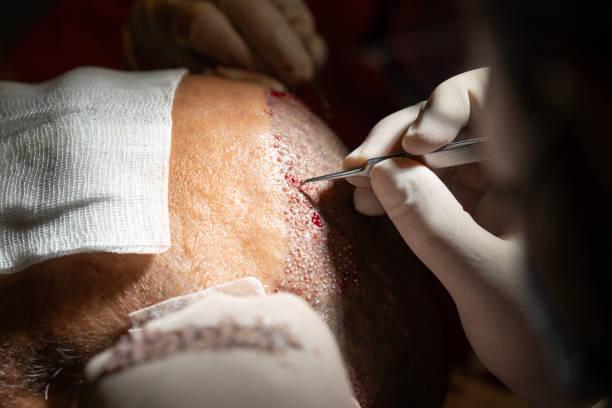
When donor hair is limited, the central challenge is not simply finding more grafts but using the available follicles without compromising the donor area's appearance or future restoration options. Hybrid Hair Transplant in Dubai may be considered in selected patients when combining FUE and FUT can improve graft-harvesting flexibility while maintaining a carefully controlled donor strategy.
Why Limited Donor Supply Changes the Treatment Plan
The donor area provides the follicular units used for transplantation, but it is not an unlimited source of hair. Once a follicle has been removed, it cannot be harvested again.
This makes donor management particularly important for patients with advanced hair loss, low donor density, previous transplants, or naturally restricted donor reserves.
A Small Donor Area Is Not the Same as Poor Donor Quality
Donor limitations can occur for different reasons.
A patient may have a relatively small permanent donor zone but good follicular-unit quality. Another may have a normal-sized donor region with low density, fine hair, or significant previous harvesting.
These situations require different strategies.
Donor Density Must Be Measured
Visual inspection alone can overestimate usable donor supply. Density should be assessed across representative areas to determine how many follicular units are available and how evenly they are distributed.
The composition of those units is equally important because one follicular unit may contain one hair while another contains several.
The First Priority Is Donor Preservation
A limited donor area requires conservative extraction.
The objective is to obtain useful grafts while avoiding visible depletion, excessive clustering of extraction sites, or unnecessary removal from areas that may become unstable in the future.
Why Aggressive FUE Can Be a Problem
FUE allows individual follicles to be removed from different parts of the donor zone. However, extensive extraction can reduce density across the harvested area.
If the donor reserve is already limited, aggressive FUE may create visible thinning that becomes more noticeable with short hairstyles.
Why FUT Can Change the Equation
FUT removes a strip rather than individual follicular units. The strip is then dissected into grafts under magnification.
For some patients, this can provide a substantial graft yield without distributing thousands of individual extraction sites across the donor region.
However, FUT creates a linear scar and depends on adequate scalp laxity and appropriate closure planning.
How a Hybrid Approach Can Help
A hybrid procedure uses the different characteristics of FUE and FUT as complementary tools.
The objective is not to automatically perform both techniques. Instead, the surgeon determines whether combining them offers a better balance between graft yield and donor preservation.
FUE Provides Selective Harvesting
Individual graft extraction can allow the team to target suitable follicular units according to their location and characteristics.
This can be particularly useful when certain graft types are needed for specific recipient zones.
FUT Provides Strip-Based Harvesting
A donor strip can provide a concentrated supply of follicular units while limiting the number of individual punch extraction sites.
For a patient with restricted donor density, that distinction can be important when considering the visual appearance of the donor region.
The Two Techniques Have Different Trade-Offs
| Factor | FUE | FUT | Hybrid consideration |
|---|---|---|---|
| Harvesting method | Individual units | Donor strip | Uses both approaches |
| Visible scarring pattern | Multiple small sites | Linear scar | Depends on both methods |
| Donor distribution | Distributed | Concentrated | Can balance extraction patterns |
| Graft selection | Highly selective | Strip-derived | Different graft sources |
| Scalp laxity | Less central | Important | Assessed before combining |
| Large graft demand | Can require extensive harvesting | Strong graft yield potential | May increase harvesting flexibility |
The appropriate option depends on anatomy, not on the assumption that one technique is universally superior.
Mapping a Limited Donor Zone
A detailed donor map can divide the scalp into areas based on density, follicular-unit composition, hair caliber, and expected long-term stability.
Identifying the Stable Donor Region
Hair around the traditional donor zone is not necessarily equally resistant to future miniaturization.
A conservative plan focuses on follicles considered suitable for long-term transplantation rather than treating every growing hair as permanently available.
Measuring Hair Caliber
Fine donor hair provides less optical coverage per graft than thicker hair.
This means two patients with the same donor density can have different effective restoration potential.
Evaluating Follicular-Unit Composition
A donor area with a greater proportion of multi-hair units can potentially provide stronger coverage from the same number of grafts.
That makes graft selection an important part of donor conservation.
Allocating Limited Grafts Across the Scalp
When donor supply is restricted, every recipient zone competes for the same finite resource.
A surgeon may therefore need to establish priorities before extraction begins.
Frontal Hairline
The hairline is highly visible and requires carefully selected grafts. Fine single-hair units can be valuable for creating a soft leading edge.
Frontal and Mid-Scalp
Behind the hairline, grafts can be distributed more efficiently to establish useful visual density and continuity.
Crown
The crown can consume substantial donor resources because of its surface area and rotating growth pattern.
For some patients, crown coverage may need to be moderated so that frontal restoration remains adequately supported.
Why Graft Allocation Is More Important With Limited Donor Supply
A patient with abundant donor hair has more flexibility. A patient with restricted donor resources must decide where each follicular unit can have the greatest visual impact.
A useful planning framework is:
- Define the stable donor region.
- Estimate realistic harvestable grafts.
- Determine the areas of greatest cosmetic importance.
- Select graft types for each recipient zone.
- Establish density gradients rather than uniform density.
- Reserve donor resources for future progression.
- Reassess whether a hybrid technique provides a meaningful advantage.
This prevents the procedure from becoming an attempt to “fill everything” regardless of donor limitations.
When Limited Donor Supply May Still Support Hybrid Surgery
A limited donor reserve does not automatically rule out a hybrid approach.
It may be considered when:
- FUE alone would require excessive distributed extraction.
- FUT could provide useful graft yield from an appropriate strip.
- The patient has sufficient scalp laxity for FUT.
- Previous procedures have altered the donor area.
- The recipient area is large relative to donor availability.
- Graft selection can improve optical coverage.
- The patient's expectations are compatible with the available donor supply.
The final decision requires individual examination.
Previous Transplants Make Donor Planning More Complex
Patients who have already undergone hair transplantation may have fewer available grafts than their current donor appearance suggests.
Previous FUE
Earlier punch extraction can reduce density and leave a pattern of previous harvesting that needs to be considered before additional extraction.
Previous FUT
A previous strip scar may affect where another strip can safely be considered. Scalp laxity and scar characteristics become particularly important.
Mixed Previous Procedures
Patients who have undergone both techniques may have an irregular donor landscape. A hybrid revision plan therefore requires detailed mapping rather than relying on the original procedure records alone.
Recipient Planning When Grafts Are Scarce
Limited donor supply makes recipient-site precision especially important.
Protecting Existing Native Hair
If the recipient area contains miniaturized but viable follicles, transplantation should be planned around them whenever clinically appropriate.
Destroying useful native coverage would increase the patient's future dependence on donor grafts.
Using Density Gradients
Maximum density throughout a large bald area may be unrealistic with restricted donor supply.
A graduated strategy can concentrate grafts where they create the greatest visual improvement while maintaining continuity across broader areas.
Choosing the Right Grafts
Single-hair units can refine the hairline, while multi-hair units may provide more efficient coverage behind it.
Strategic graft matching can therefore improve the visual result without increasing the total number of harvested follicles.
Donor Scar Considerations
Patients with limited donor supply may be particularly concerned about visible depletion or scarring.
FUE generally produces numerous small extraction sites, while FUT produces a linear scar. The visibility of either pattern depends on factors including hair length, skin characteristics, punch size, extraction distribution, closure technique, and individual healing.
A hybrid plan must account for both scar patterns before treatment begins.
Dubai Lifestyle Considerations
Postoperative donor management matters in Dubai because high temperatures, strong sunlight, outdoor activity, and frequent sweating can make the early recovery period less comfortable.
Patients should plan adequate time away from strenuous activity and follow individualized instructions for scalp protection.
Sun Exposure
Freshly healing donor and recipient areas should be protected from direct sunlight according to medical instructions.
This is particularly important for patients who regularly spend time outdoors.
Exercise and Sweating
Heavy exercise can increase sweating and physical contact with the scalp. Temporary restrictions may therefore be recommended during early healing.
Work and Social Planning
Patients may prefer to schedule treatment around professional commitments and social events because redness, swelling, or scabbing can remain temporarily visible.
What Happens When Donor Supply Is Too Limited
A responsible consultation should include the possibility that transplantation cannot provide the level of coverage a patient initially expects.
In some cases, the appropriate recommendation may be a more conservative hairline, reduced crown coverage, staged restoration, or non-surgical management of remaining native hair.
A surgeon should not treat the patient's desired graft number as proof that the donor area can safely provide it.
Frequently Asked Questions
Can Hybrid Hair Transplant Work With Limited Donor Hair?
It can be considered in selected cases, but combining FUE and FUT does not create additional biological donor hair. The purpose is to use the available donor resources strategically through complementary harvesting methods.
Is FUT Better Than FUE for a Weak Donor Area?
Not automatically. FUT may provide useful graft yield in certain anatomies, while FUE may offer greater individual graft selection. Scalp laxity, density, scar history, hairstyle, and recipient requirements all influence the decision.
Can Limited Donor Hair Still Produce Natural Results?
Yes, if expectations and graft allocation are realistic. Naturalness depends heavily on hairline design, graft selection, emergence direction, density transitions, and how well the available follicles are distributed.
Should the Crown Be Treated When Donor Supply Is Limited?
Not always. The crown may require substantial graft resources, so some patients may benefit from prioritizing the frontal region and using donor resources conservatively.
Can Previous FUE Reduce Future Donor Options?
Yes. Previous extraction permanently removes follicular units and can reduce the density available for subsequent procedures.
Does Hybrid Surgery Guarantee More Grafts?
No. The technique does not create new follicles. It can provide additional harvesting flexibility when both FUE and FUT are anatomically appropriate.
What Happens if There Are Not Enough Grafts for Full Coverage?
The restoration can be designed around the areas that provide the greatest cosmetic benefit. A conservative hairline, strategic density, staged treatment, and protection of native hair can help make limited donor resources more effective.
The Strategic Investment
When donor supply is limited, the quality of the strategy matters more than the size of the graft number. Patients considering comprehensive hair restoration can explore Tajmeels Clinic for an assessment focused on donor mapping, graft allocation, technique selection, recipient priorities, and long-term preservation.
The strongest outcome is not achieved by exhausting every available follicle. It comes from using a finite donor reserve intelligently so that the restoration looks natural now while retaining as much flexibility as possible for the years ahead.

 Bangla