

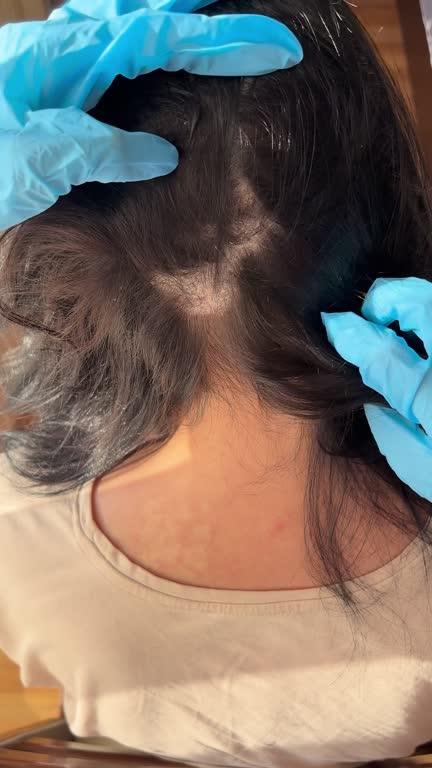

Hair loss in a child should be assessed differently from routine adult hair thinning because age, development, scalp condition, and the underlying cause all influence treatment decisions. Alopecia Areata Treatment in Dubai may be considered when a child's hair loss appears as smooth, localized patches that are consistent with an immune-mediated follicular condition.
A visible bald patch can be alarming for both the child and family, particularly when it develops quickly. The first priority is establishing whether the pattern actually represents alopecia areata or another childhood hair-loss disorder requiring a different approach.
Understanding Alopecia Areata in Children
Alopecia areata can occur during childhood and may present with localized areas of hair loss on the scalp or other hair-bearing regions.
How Childhood Patches Can Appear
A child may develop one smooth bald area with otherwise normal-looking surrounding hair. In other cases, several patches may appear over time.
The affected skin may remain relatively normal in appearance, without the scaling or crusting that can accompany certain scalp infections.
Hair Loss Can Change Over Time
Childhood alopecia areata does not always follow a predictable pattern. A patch may begin to regrow while another area develops.
For this reason, the initial examination is only one part of the management process. Follow-up can help determine whether the condition is stable, improving, or becoming more extensive.
Scalp Hair Is Not the Only Area to Consider
Alopecia areata can also affect eyebrows, eyelashes, and other body hair.
When a child has hair loss in more than one location, documenting each area helps the clinician understand the overall pattern rather than treating one patch in isolation.
Why Childhood Bald Patches Need a Differential Diagnosis
Several pediatric conditions can resemble alopecia areata.
Alopecia Areata
Alopecia areata commonly produces smooth, defined areas of hair loss with preservation of the follicular openings.
The condition involves an immune response directed toward hair follicles, but the follicles themselves are not necessarily permanently destroyed.
Scalp Ringworm
Tinea capitis is an important alternative diagnosis in children. It can cause hair loss along with scaling, broken hairs, inflammation, or other scalp changes.
Because fungal infection requires antifungal treatment, confusing it with alopecia areata can delay appropriate care.
Hair Pulling
Repeated pulling or twisting of the hair can create areas of uneven loss. Broken hairs of different lengths may be present rather than a uniformly smooth bald patch.
Understanding the child's grooming or hair-manipulation habits can therefore be relevant.
Nutritional or Systemic Causes
Generalized thinning can sometimes be associated with nutritional deficiencies, illness, endocrine disorders, or other systemic factors.
Diffuse thinning does not have the same clinical pattern as a clearly defined alopecia areata patch.
How a Child's Hair Loss Is Evaluated
The assessment should be age-appropriate, careful, and focused on identifying the actual pattern.
Medical History
The clinician may ask when the hair loss started, how quickly it developed, whether new patches have appeared, and whether similar episodes occurred previously.
Family history and relevant medical information may also be reviewed.
Examination of the Scalp
The scalp is inspected for smooth patches, scaling, redness, inflammation, broken hairs, follicular changes, and signs of scarring.
The surrounding hair is also examined because differences between affected and unaffected areas can provide useful diagnostic information.
Magnified Examination
A magnified or dermoscopic assessment can provide additional information about individual hairs and follicles.
This may help distinguish alopecia areata from infection, mechanical hair loss, or other causes when the diagnosis is not immediately obvious.
Further Testing When Indicated
Additional investigations may be considered when the examination suggests another underlying condition.
Testing should be guided by the child's clinical history and examination rather than performed simply because hair loss is present.
Choosing Treatment for a Child
Treatment selection in childhood requires particular attention to age, disease extent, duration, and the potential benefits and risks of intervention.
Observation May Be Appropriate
Some children with limited alopecia areata experience spontaneous hair regrowth.
When the disease is limited and clinically appropriate for observation, the focus may be on monitoring the affected areas rather than immediately pursuing intensive treatment.
Localized Treatment Options
When active treatment is appropriate, the clinician considers options suitable for the child's age and specific presentation.
Treatment may involve topical approaches or other medically supervised therapies. The method, concentration, application area, and follow-up schedule should be determined by a qualified clinician.
More Extensive Disease
Widespread or persistent childhood alopecia areata requires a more specialized treatment discussion.
The management plan may differ substantially from that used for a small isolated patch. Extensive disease should be evaluated carefully before systemic treatment is considered.
Why Treatment Should Not Be Based on Patch Size Alone
Two children can have similarly sized bald patches but very different disease patterns.
Duration Matters
A recently developed patch may behave differently from an area that has remained unchanged for a prolonged period.
The duration of hair loss provides context when discussing whether observation or treatment is appropriate.
New Patches Change the Picture
If additional areas develop, the condition may be considered more active than an isolated stable patch.
The number and distribution of affected areas should therefore be documented over time.
Previous Episodes Matter
A child who has experienced previous episodes may require a different monitoring strategy from a child experiencing the first localized patch.
The clinical history helps establish whether the current episode represents a new presentation or recurrence.
Hair Regrowth in Childhood Alopecia Areata
Families often want to know what happens after treatment begins.
Regrowth Can Be Gradual
Hair may initially return as fine, soft, or lightly pigmented strands.
Over time, these hairs may become thicker and more closely resemble the child's surrounding hair.
Different Patches May Behave Differently
One area can begin regrowing while another remains inactive.
This does not necessarily mean that treatment has failed. The overall disease pattern needs to be evaluated across multiple follow-up visits.
Regrowth Does Not Always Mean the Condition Has Ended
Alopecia areata can fluctuate. New areas can occasionally appear after another patch has started to recover.
Ongoing observation is therefore useful, particularly when previous episodes have occurred.
Supporting a Child During Hair Loss
The medical plan is only one aspect of managing visible childhood hair loss.
Avoid Blaming the Child
A child should not be made to feel responsible for developing a bald patch. Alopecia areata is not simply the result of poor hair care or inadequate hygiene.
Keep Hair Care Gentle
Normal washing can generally continue unless another scalp condition has been diagnosed. Excessive pulling, tight hairstyles, and aggressive brushing should be avoided.
Avoid Unnecessary Home Treatments
Children should not be exposed to strong topical products, supplements, or medications simply because hair loss is visible.
An unexplained bald patch should first be assessed so that treatment is directed toward the actual condition.
Protect Exposed Scalp
When a bald area leaves the scalp exposed, practical protection from strong sunlight can become more important, particularly during outdoor activities.
Dubai Considerations for Children With Visible Hair Loss
Dubai's climate can influence practical scalp care even though environmental exposure is not considered the underlying immune mechanism of alopecia areata.
Outdoor Sun Exposure
Children who spend time outdoors may have greater direct exposure on areas where hair coverage has been lost.
Hats, shade, and appropriate scalp sun protection can be useful practical measures when suitable for the child.
Heat and Daily Activities
Sports, swimming, school activities, and outdoor recreation can make a visible patch more noticeable.
The child should generally be able to maintain normal activities unless a separate medical condition requires restrictions.
School and Social Confidence
A bald patch can attract questions from classmates or become a source of self-consciousness.
Families can work with children on simple, age-appropriate explanations while keeping the focus on normal activities and emotional support.
When Parents Should Arrange an Assessment
A new patch does not always indicate a serious underlying problem, but several patterns justify professional evaluation.
A Smooth Bald Patch Appears Suddenly
A rapidly noticed area of hair loss should be examined rather than automatically attributed to stress, diet, or hair products.
Several Patches Develop
Multiple areas can provide important information about disease activity and should be documented.
Eyebrows or Eyelashes Become Sparse
Facial-hair involvement can occur with alopecia areata and should be reported during assessment.
The Scalp Is Scaly or Inflamed
Scaling, redness, crusting, tenderness, or broken hairs may point toward a different diagnosis, including infection.
Hair Loss Continues to Expand
Increasing patch size or the development of new areas warrants reassessment so the treatment strategy can be adjusted if necessary.
What Parents Can Document at Home
A few simple observations can make the medical history more useful.
Photograph the Patch
Take periodic photographs using similar lighting and angles. This can make subtle changes easier to compare.
Record When It Was First Noticed
The approximate date of the first visible loss helps establish duration.
Watch for New Areas
Check the scalp and other hair-bearing regions periodically without repeatedly disturbing the hair.
Note Relevant Recent Events
Recent illness, medications, significant dietary changes, or other health events should be mentioned during consultation when relevant.
Common Questions About Childhood Alopecia Areata
Is alopecia areata common in children?
It can occur during childhood and may present as localized or more extensive hair loss.
Does a bald patch mean a child will lose all their hair?
No. A localized patch does not automatically mean that hair loss will become widespread.
Can childhood alopecia areata regrow without treatment?
Yes. Some children experience spontaneous regrowth, although the course varies between individuals.
Is childhood alopecia areata caused by poor hygiene?
No. Alopecia areata is associated with an immune response involving hair follicles and should not be attributed to inadequate hygiene.
Can children with alopecia areata wash their hair?
Hair washing can generally continue normally unless another scalp disorder or specific treatment plan requires different care.
Can a child have both alopecia areata and another type of hair loss?
Yes. Different causes of hair loss can coexist, which is why a complete assessment is valuable.
A Careful Approach to Pediatric Hair Loss
Childhood hair loss should be approached through diagnosis rather than assumptions. A smooth bald patch may represent alopecia areata, but infection, mechanical hair loss, inflammatory disease, and systemic factors can produce different patterns.
The most appropriate management depends on the child's age, the location and extent of hair loss, how long the condition has been present, whether new areas are appearing, and whether other hair-bearing regions are affected.
Book a Childhood Hair-Loss Assessment in Dubai
Tajmeels Clinic in Dubai provides individualized assessment for children experiencing unexplained patchy hair loss. A professional evaluation can help distinguish alopecia areata from other causes and establish an age-appropriate plan for treatment and monitoring.
