


Best Road Trip Routes in Europe: A Practical Guide for UK Motorhome Travellers
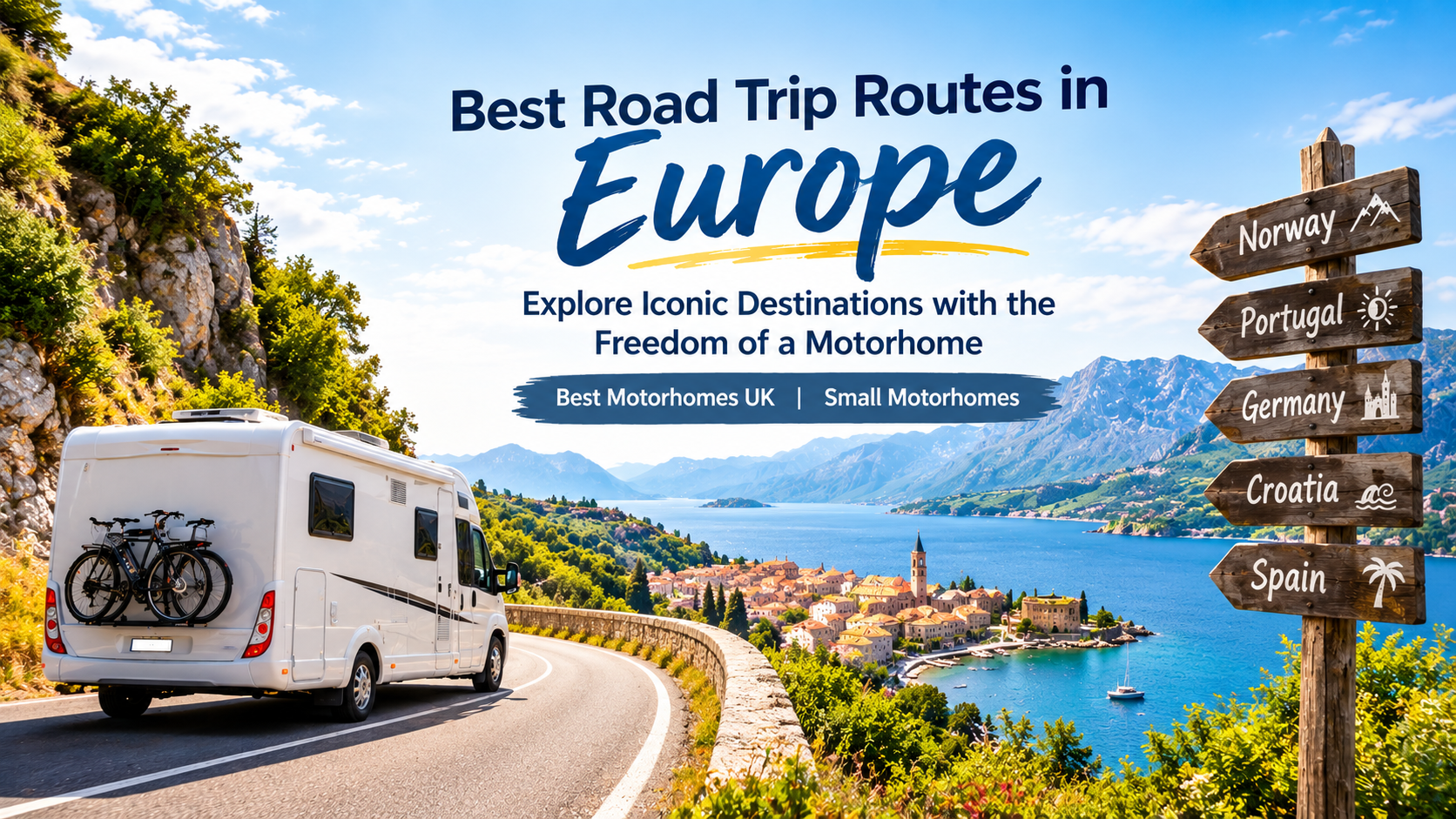
A European road trip offers something that a conventional city break often cannot: the freedom to change your plans as you travel. One morning you can be beside a mountain lake, and a few days later you could be exploring a historic coastal town. For UK travellers, taking a motorhome can make the journey even more flexible because accommodation, cooking facilities and everyday essentials travel with you.
However, choosing between the best road trip routes in Europe is not simply about finding the most beautiful scenery. Vehicle size, driving distances, overnight parking, road conditions, tolls and ferry connections can all influence whether a route is practical.
For travellers starting their adventure in the UK, selecting the right motorhome before departure can therefore be just as important as selecting the destination.
What Makes a European Road Trip Suitable for a Motorhome?
The best routes combine attractive scenery with sensible driving distances, reliable overnight facilities and interesting places to stop along the way.
Motorhome travellers should consider:
- Total route distance
- Average driving time per day
- Road widths and mountain sections
- Campsites and authorised overnight locations
- Tolls, vignettes and ferry costs
- Availability of water and waste facilities
- Seasonal weather conditions
- Vehicle dimensions and payload
A compact vehicle can be particularly useful when exploring historic towns, narrow coastal roads and smaller villages. This is one reason small motorhomes continue to appeal to couples and travellers who prioritise easy driving and parking.
1. Norwegian Fjords: Bergen to the Atlantic Road
Norway is one of Europe's standout destinations for scenery. A route beginning around Bergen can take travellers towards famous fjords, mountain landscapes and eventually the Atlantic Road.
Geirangerfjord, Ålesund and the Atlantic Road provide plenty of opportunities for scenic stops. The journey works particularly well when travellers avoid trying to cover too much distance each day.
Mountain roads can require greater concentration, while ferry crossings may form part of the itinerary. During busy summer periods, checking ferry arrangements and campsites in advance can make the journey considerably easier.
For travellers seeking dramatic scenery rather than busy cities, this is a route worth considering.
2. Portugal: Lisbon to the Algarve
Portugal provides a completely different European road-trip experience.
Starting in Lisbon, travellers can gradually head south towards the Algarve, combining historic towns with Atlantic beaches, cliffs and smaller coastal communities.
A motorhome allows travellers to stay outside the busiest tourist centres and explore at a more relaxed pace. Spring, early summer and autumn can be attractive periods for touring, depending on the type of experience you want.
This route can also work well for travellers who prefer moderate driving distances and a mixture of sightseeing and outdoor activities.
3. Germany's Romantic Road
Germany's Romantic Road provides an excellent combination of history, architecture and countryside.
The route between Würzburg and Füssen passes through medieval towns, castles and traditional Bavarian landscapes. Rothenburg ob der Tauber is particularly well known for its historic character, while Neuschwanstein Castle provides a memorable finale.
Germany also has an established network of motorhome stopping places, making route planning easier for travellers who prefer organised overnight facilities.
For a first European motorhome adventure, a route such as this can be appealing because the focus is not solely on long-distance driving. Travellers can build several shorter stops into the itinerary.
4. Croatia's Adriatic Coast
Croatia is another option for travellers looking for a combination of coastal scenery and historic destinations.
A journey along the Adriatic can connect places such as Split, Zadar and Dubrovnik, while additional time can be spent exploring islands and smaller coastal communities.
Recent travel coverage has highlighted the appeal of exploring Croatia by motorhome, particularly because the route combines historic towns, beaches, national parks and coastal scenery.
The important consideration is planning. Some coastal roads can become busy, and larger vehicles may require additional care on narrower sections.
Choosing a vehicle that matches the route is therefore essential.
5. Northern Spain's Atlantic Coast
Northern Spain is an interesting alternative to the better-known Mediterranean routes.
Travellers can explore the coastline around Bilbao and continue westwards through areas of northern Spain known for beaches, green landscapes and distinctive regional food.
Compared with a tightly scheduled sightseeing holiday, a motorhome trip gives travellers more flexibility to stop at viewpoints, markets and coastal towns.
It is also a useful reminder that the best European road trip does not necessarily have to follow the most famous tourist route.
Choosing Between Large and Small Motorhomes
Vehicle selection can have a significant impact on a European touring holiday.
Larger motorhomes provide more interior living space and can be particularly useful for families or longer trips. However, their dimensions can become a consideration on narrow roads, in historic centres and at smaller parking areas.
Small motorhomes, meanwhile, can provide a practical balance between comfort and manoeuvrability.
They can be particularly suitable for:
- Couples travelling together
- Short European breaks
- Drivers who prefer easier handling
- Coastal and mountain routes
- Travellers visiting historic towns
- Trips where parking flexibility matters
When researching the best motorhomes UK travellers can use for European adventures, it is worth looking beyond interior appearance. Consider the number of berths, storage capacity, driving dimensions, kitchen facilities, heating, bathroom layout and overall practicality.
How to Prepare a UK Motorhome for Europe
Before leaving Britain, create a checklist rather than relying on last-minute preparation.
Check your insurance
UK vehicle insurance normally provides the minimum third-party cover for driving in EU countries and several other European countries, including Norway and Switzerland. However, travellers should check their individual policy for additional cover and destination-specific requirements.
Research road requirements
European countries can have different motorway tolls, environmental zones, speed limits and equipment requirements.
Do not assume that rules are identical across borders.
Plan overnight stops
A campsite, authorised motorhome area or designated parking location should form part of your itinerary.
Avoid assuming that you can simply park overnight wherever you find a scenic viewpoint. Local regulations can vary considerably.
Consider your vehicle dimensions
Before selecting a route, check restrictions relating to height, width and weight.
This is particularly important when travelling through historic centres, mountain areas and smaller villages.
Why Smaller Vehicles Can Make European Touring Easier
The attraction of a compact motorhome becomes particularly obvious once a journey leaves major motorways.
A smaller vehicle can be easier to manoeuvre through village streets, access smaller parking areas and handle unfamiliar roads.
That does not mean a large motorhome is unsuitable. Instead, the right choice depends on the travellers, route and duration.
This is where planning your vehicle around your itinerary makes more sense than choosing a motorhome first and attempting to fit the route around it.
Building a Better European Motorhome Itinerary
A common mistake is trying to see too much.
Instead of driving hundreds of kilometres every day, choose several key destinations and allow time for unexpected discoveries.
A practical itinerary might include:
Day 1–2: UK departure and European crossing
Day 3–5: First major destination
Day 6–8: Scenic countryside or coastal section
Day 9–11: Historic towns and attractions
Day 12–14: Return journey
The exact schedule will depend on the countries involved, but allowing breathing room can make a significant difference.
Current European motorhome route guides similarly emphasise realistic distances, seasonal planning and vehicle suitability rather than simply maximising the number of destinations visited.
Also Read:https://www.jepsonsribblevalleymotorhomehire.co.uk/motorhome-route-planner-uk-discover-the-top-motorhome-friendly-routes/
Choosing a Motorhome in the UK Before Your Trip
For UK travellers planning a European adventure, Jepson's Motorhome can be part of the research process when comparing available motorhome options.
The important point is to choose a vehicle around your travel plans.
A couple planning a coastal route may value a compact layout, while a family travelling for several weeks may prioritise additional sleeping space and storage.
Think about where you will drive, how long you will stay away and how much equipment you genuinely need before deciding between different motorhome sizes.
Final Thoughts
The best road trip routes in Europe are not necessarily the longest or most famous. The most enjoyable journeys are often those that give travellers enough time to appreciate the places between major attractions.
Norway offers fjords and mountain roads, Germany provides historic towns and castles, Portugal combines cities with Atlantic coastline, Croatia delivers Adriatic scenery, while northern Spain offers a quieter alternative for coastal touring.
For UK travellers, the key is preparation. Choose a suitable vehicle, understand the driving requirements of each country, plan authorised overnight stops and leave enough flexibility for the unexpected.
Whether you choose one of the best motorhomes UK has available or prefer the manoeuvrability of small motorhomes, the right vehicle can help turn a European driving holiday into a comfortable and memorable adventure.
FAQs
What are some of the best road trip routes in Europe for motorhomes?
Popular options include the Norwegian fjords, Germany's Romantic Road, Portugal's Atlantic coast, Croatia's Adriatic coast and northern Spain. The ideal choice depends on season, available time, driving experience and vehicle size.
Are small motorhomes suitable for European road trips?
Yes. Small motorhomes can be particularly practical for couples and travellers visiting coastal roads, villages and historic towns where larger vehicles may be more difficult to manoeuvre or park.
What should UK travellers check before driving a motorhome in Europe?
Check insurance, driving licence requirements, tolls, road regulations, overnight parking rules and any country-specific vehicle requirements before departure. GOV.UK recommends checking your insurance and destination requirements before travelling.

 Bangla