


Why Businesses Are Moving From Spreadsheets to Digital Timesheets
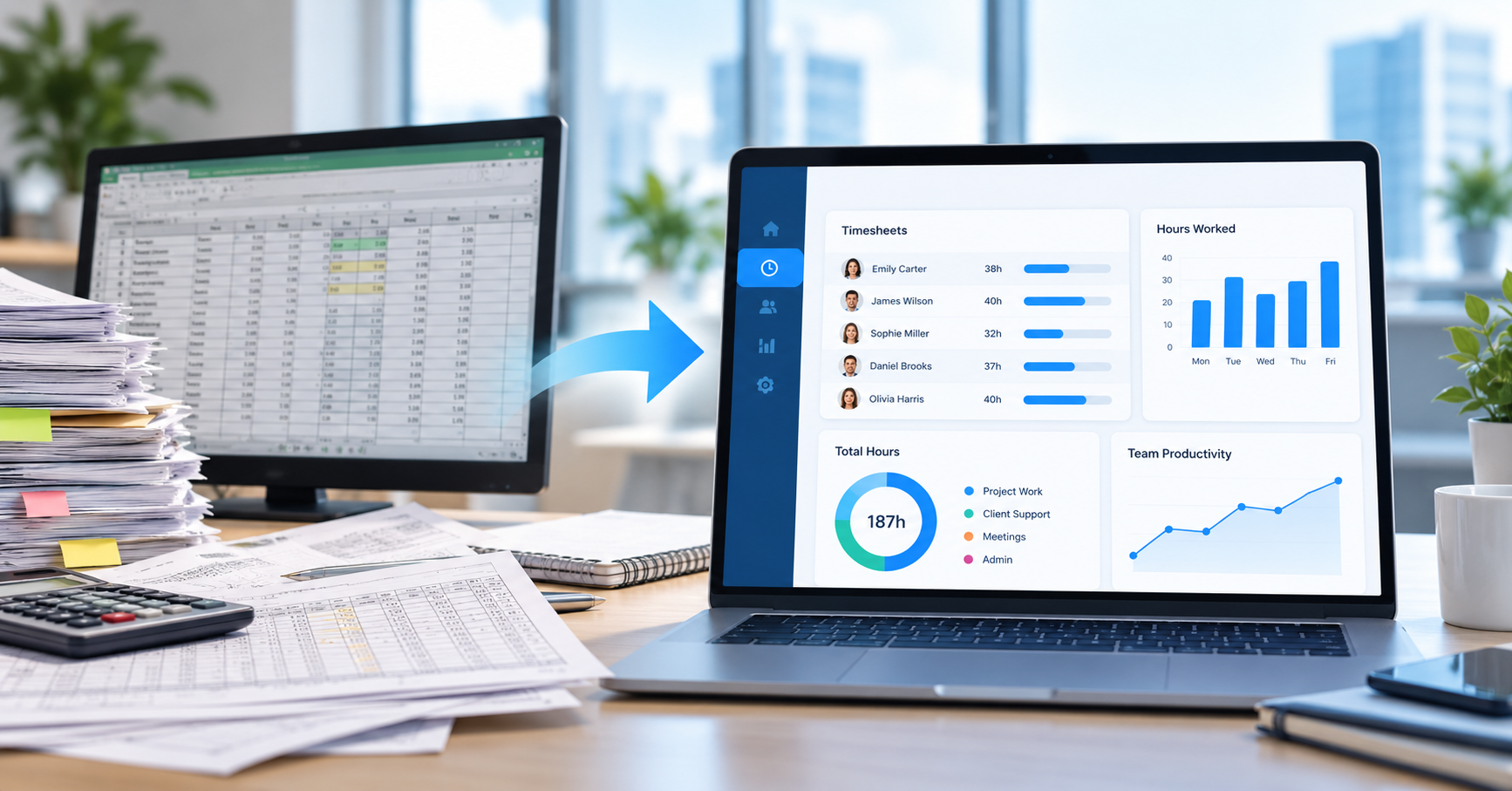
For many years, businesses used spreadsheets to record employee working hours, attendance, and project time. While spreadsheets can work for small teams, they often become difficult to manage as businesses grow.
Multiple files, manual updates, calculation errors, and missing information can make time tracking complicated.
Today, many organisations are moving towards online timesheet management solutions to simplify time tracking, improve accuracy, and gain better visibility into workforce activity.
This article explains why businesses are replacing traditional spreadsheets with digital timesheets and how modern tools support better workforce management.
What Are Digital Timesheets?
Digital timesheets are online systems that allow employees and managers to record, review, and manage working hours electronically.
Unlike spreadsheets, digital timesheets can automatically organise information such as:
- Employee working hours
- Project time
- Attendance records
- Leave information
- Overtime hours
- Productivity insights
Businesses can access this information through a central dashboard instead of managing multiple files.
Why Did Businesses Previously Use Spreadsheets?
Spreadsheets became popular because they were:
- Easy to create
- Low-cost
- Familiar to most employees
- Flexible for basic calculations
For very small teams, a spreadsheet may be enough.
However, as teams expand, spreadsheet-based time tracking creates several challenges.
Problems With Spreadsheet-Based Timesheets
1. Manual Data Entry Errors
Employees need to manually enter working hours, which can lead to:
- Incorrect time records
- Missing entries
- Calculation mistakes
- Duplicate information
Even small errors can affect payroll, reporting, and project tracking.
2. Difficult Team Management
Managing multiple spreadsheet files becomes challenging when businesses have:
- Different departments
- Remote employees
- Multiple projects
- Flexible schedules
Managers may spend unnecessary time collecting and checking timesheets.
3. Limited Real-Time Visibility
Spreadsheets usually provide historical information but limited live insights.
Managers may struggle to quickly understand:
- Who is working on what
- How much time projects require
- Where resources are being used
4. Poor Collaboration
Sharing spreadsheet files between employees and managers can create problems.
Common issues include:
- Different file versions
- Accidental edits
- Missing updates
- Delayed approvals
How Online Timesheet Management Solves These Problems
Online timesheet management platforms provide a central system where employees and managers can track working hours more efficiently.
Key advantages include:
1. Automated Time Tracking
Digital systems reduce manual work by allowing businesses to capture working hours automatically.
This helps improve:
- Accuracy
- Record keeping
- Time reporting
- Employee accountability
2. Easy Access From Anywhere
With online timesheets, employees can update their working hours from different locations.
This is especially useful for:
- Remote teams
- Hybrid workplaces
- Field employees
- Distributed businesses
3. Accurate Project Tracking
Digital timesheets help businesses understand how much time goes into different projects.
Managers can identify:
- Project costs
- Resource requirements
- Time-consuming tasks
- Productivity trends
4. Better Attendance Management
Online timesheet systems can connect working hours with attendance records.
Businesses can monitor:
- Start and finish times
- Working schedules
- Absences
- Overtime
5. Faster Reporting
Generating reports manually from spreadsheets can take hours.
Digital timesheet platforms can provide reports for:
- Employee hours
- Project performance
- Team productivity
- Workforce trends
Spreadsheet vs Digital Timesheets: Key Differences
| Spreadsheets | Digital Timesheets |
|---|---|
| Manual data entry | Automated tracking options |
| Multiple files | Centralised dashboard |
| Higher risk of errors | More accurate records |
| Limited reporting | Real-time insights |
| Difficult for remote teams | Accessible anywhere |
| Time-consuming management | Easier administration |
Who Benefits From Digital Timesheets?
Small Businesses
Small businesses can reduce administrative work and maintain accurate employee records.
Growing Companies
Growing teams need better systems to manage increasing employee and project data.
Remote Teams
Remote businesses benefit from better visibility into working hours and project progress.
Service-Based Businesses
Companies that bill clients by hours can improve time accuracy and reporting.
How Staff Time Tracker Helps Businesses Manage Timesheets
Staff Time Tracker provides businesses with a simple way to move beyond spreadsheet-based time tracking.
The platform helps teams manage:
- Online timesheets
- Employee working hours
- Attendance records
- Project time tracking
- Productivity reports
- Workforce analytics
By replacing manual spreadsheets with a structured system, businesses can save administrative time and improve workforce visibility.
Learn more about improving your workflow with online timesheet management.
How to Choose the Right Digital Timesheet Solution
Before choosing a timesheet platform, businesses should consider:
1. Ease of Use
Employees should be able to record time without complex processes.
2. Reporting Features
Look for tools that provide useful insights instead of only storing hours.
3. Integration Options
The system should support existing business workflows.
4. Security
Employee data should be stored and managed securely.
5. Scalability
The solution should support business growth.
Frequently Asked Questions (AEO)
What is online timesheet management?
Online timesheet management is a digital system that allows businesses to record, manage, and analyse employee working hours through an online platform.
Why are companies replacing spreadsheets with digital timesheets?
Companies are moving away from spreadsheets because digital timesheets reduce manual errors, improve reporting, support remote teams, and provide better visibility.
Are digital timesheets better than Excel?
Digital timesheets offer more automation, reporting, collaboration, and accuracy compared with traditional Excel-based tracking.
Can online timesheets help remote employees?
Yes. Online timesheets allow remote employees to record working hours and help managers understand team availability and project progress.
Do digital timesheets improve payroll accuracy?
Yes. Accurate time records can help businesses reduce calculation mistakes and maintain better payroll information.

 Bangla