


Nepal Mountain Climbing: Mera Peak, Lobuche East and Island Peak Base Camp Adventure
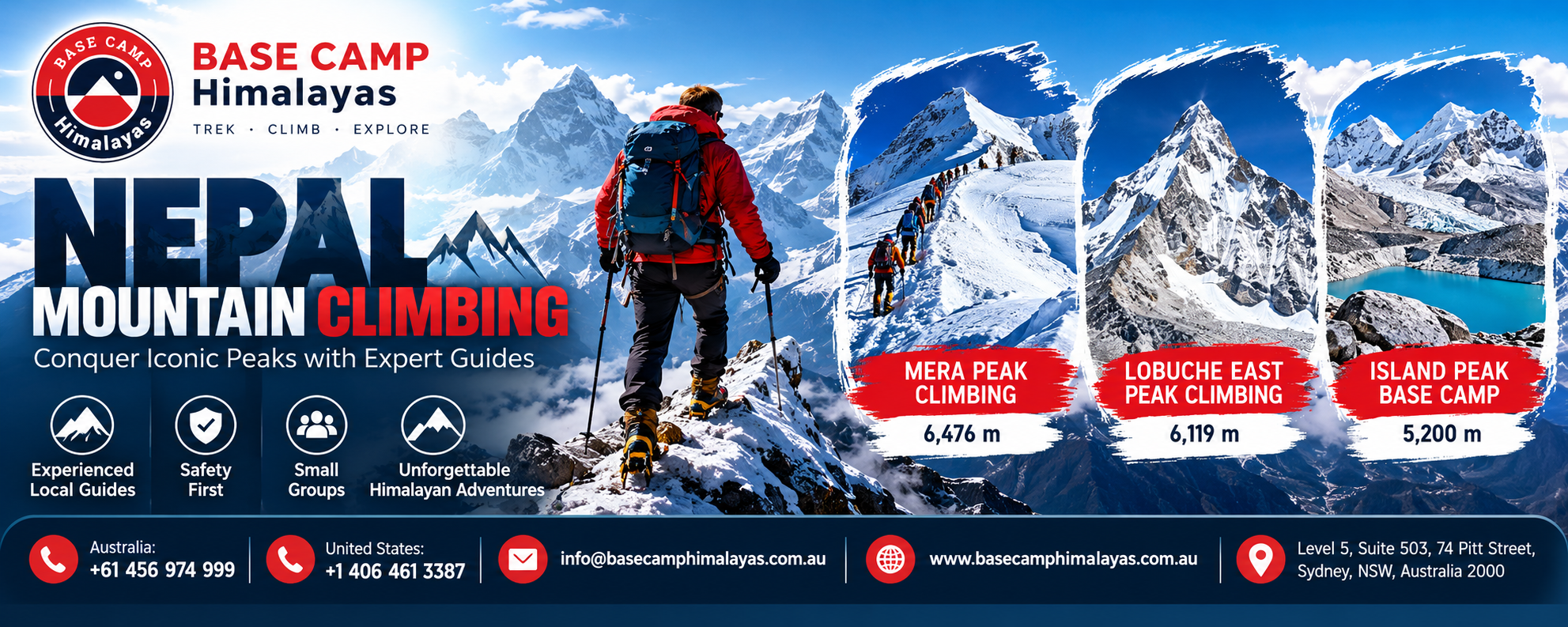
Nepal is one of the world's most compelling destinations for high-altitude adventure, offering everything from classic Himalayan trekking to demanding summit experiences. For trekkers who want to move beyond ordinary trails, nepal mountain climbing provides an opportunity to experience glaciers, high mountain passes, Sherpa culture and some of the world's most spectacular Himalayan landscapes.
Among the popular climbing objectives are Mera Peak, Lobuche East Peak, and Island Peak. Each offers a different combination of altitude, terrain, endurance and mountaineering skills. Choosing between them should depend on your experience, preparation, acclimatisation strategy and personal climbing goals rather than simply the height of the mountain.
Nepal Tourism Board confirms that Nepal's mountains are open across four climbing seasons, while permits for trekking peaks are administered through the relevant authorities.
Why Nepal Mountain Climbing Attracts Adventure Seekers
The appeal of Himalayan climbing goes far beyond reaching a summit. A climbing expedition combines physical preparation, high-altitude trekking, technical skills, cultural experiences and careful decision-making.
The journey can take climbers through traditional mountain villages, suspension bridges, rhododendron forests, glacial valleys and high-altitude landscapes. In the Everest region, routes also pass through renowned Sherpa settlements and landscapes dominated by peaks such as Everest, Lhotse and Ama Dablam.
For first-time Himalayan climbers, preparation is particularly important. High altitude can affect even experienced hikers, so a sensible itinerary should include adequate acclimatisation, rest days and flexibility for changing mountain conditions.
Mera Peak Climbing: High Altitude and Himalayan Views
Mera Peak climbing is an attractive option for experienced trekkers looking to attempt a high Himalayan summit. At approximately 6,476 metres, Mera is widely recognised as Nepal's highest trekking peak.
One of Mera's defining characteristics is its combination of high altitude and comparatively straightforward summit terrain. However, "less technical" should never be interpreted as "easy". Climbers still need appropriate mountaineering equipment, glacier-travel skills, physical conditioning and strong altitude awareness.
The Mera route also provides a quieter Himalayan experience through the Hinku Valley. The approach itself becomes an important part of the expedition, with gradual altitude gain helping climbers prepare for the summit attempt.
A typical Mera Peak expedition requires more than simply walking to base camp. Climbers should understand how to use crampons, an ice axe, climbing harness and ropes where required, while following instructions from qualified mountain guides.
Lobuche East Peak Climbing: A Technical Himalayan Challenge
Lobuche East Peak climbing provides another route into Nepal's high-altitude mountaineering environment. Standing at approximately 6,119 metres, Lobuche East combines demanding altitude with sections of snow, ice and exposed mountain terrain.
The peak is located in the Everest region, making it possible to combine the climbing experience with sections of the famous Everest trekking route.
For climbers considering Lobuche East, preparation should focus on both endurance and technical competence. Training should include long uphill walks, strength conditioning, cardiovascular fitness and practice with essential mountaineering equipment.
The approach also provides valuable acclimatisation opportunities. The Everest region's established trekking infrastructure can make logistical planning more manageable, but the summit itself remains a serious high-altitude undertaking.
Island Peak Base Camp and Summit Experience
Island Peak base camp is another popular destination for adventure travellers exploring the Khumbu region. Island Peak, also known as Imja Tse, is situated near Chhukung and can be incorporated into an Everest-region itinerary. The mountain is commonly associated with glacier travel, fixed ropes and steep summit terrain.
Reaching Island Peak Base Camp is itself a memorable Himalayan experience. The surrounding landscape provides views of dramatic peaks while giving climbers an opportunity to rest, prepare equipment and receive climbing instruction before attempting the summit.
For people combining an Everest Base Camp itinerary with climbing, the Island Peak route can provide a natural progression from trekking to mountaineering. However, summit success should never be guaranteed because weather, snow conditions, altitude and individual health can change the outcome of an expedition.
Mera Peak vs Lobuche East vs Island Peak
Although these mountains are often discussed together, they offer different experiences.
| Peak | Approx. altitude | Main consideration | Suitable preparation |
|---|---|---|---|
| Mera Peak | 6,476 m | High altitude and endurance | Strong trekking fitness + glacier skills |
| Lobuche East | 6,119 m | Mixed terrain and technical climbing | Fitness + snow/ice climbing skills |
| Island Peak | Around 6,189 m | Glacier travel and steep climbing sections | Fitness + rope/crampon/ice-axe skills |
The right expedition depends on the individual's previous trekking experience, technical ability, fitness, acclimatisation plan and preferred style of climbing. Recent comparisons of these three peaks similarly highlight differences in altitude, technical terrain and endurance requirements.
Preparing for a Safe Himalayan Climb
Successful nepal mountain climbing requires preparation well before arriving in Kathmandu.
Start with cardiovascular training such as hiking, stair climbing, running or cycling. Add strength training for the legs and core, and gradually introduce longer hikes carrying a realistic backpack.
Technical preparation is equally important. Depending on the chosen peak and itinerary, climbers may need experience with:
- Crampons
- Ice axe
- Climbing harness
- Carabiners
- Ascender and descender systems
- Fixed ropes
- Glacier travel
- Basic rope techniques
Altitude acclimatisation should also be built into the itinerary rather than treated as an optional extra. Nepal Tourism Board specifically highlights the importance of allowing time to acclimatise on the Everest Base Camp route.
Climbers should also arrange appropriate travel and evacuation insurance and understand the permits required for their specific route. Regulations and permit requirements can change, so current requirements should be confirmed before departure.
Why Choose Base Camp Himalayas?
A Himalayan climbing expedition involves much more than booking accommodation and following a trekking route. It requires route planning, acclimatisation management, equipment preparation, experienced mountain support and responsible decision-making in changing conditions.
Base Camp Himalayas focuses on creating carefully planned Himalayan adventure experiences for travellers who want to explore Nepal's mountains with appropriate preparation and professional support.
Whether your goal is Mera Peak climbing, Lobuche East Peak climbing, or an Island Peak Base Camp adventure, the planning process should begin with understanding the mountain, assessing your experience and preparing realistically for the environment.
A quality expedition should prioritise safety, responsible trekking practices, local knowledge and a realistic approach to summit objectives.
Start Your Himalayan Adventure
The mountains of Nepal offer far more than spectacular photographs. They challenge your endurance, reward careful preparation and introduce you to extraordinary landscapes and mountain communities.
If you are considering nepal mountain climbing, Mera Peak, Lobuche East or Island Peak, start by choosing an itinerary that matches your experience and preparation level.
Ready to plan your Himalayan adventure?
Contact Base Camp Himalayas to discuss your preferred peak, itinerary, climbing requirements and preparation needs. Your next Himalayan experience can begin with the right plan.

 Bangla