

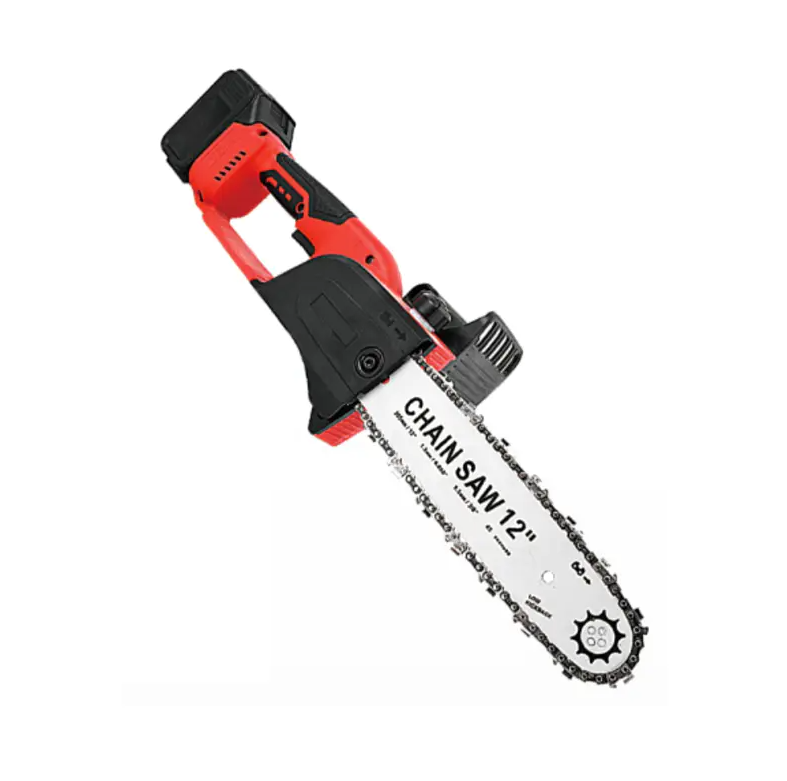
A lithium chain saw changes the rhythm of cutting work by swapping the roar of a gas engine for the steady pull of a battery pack. The tool still carries a bar and chain that bite into wood, yet the power arrives from a lithium-ion cell that sits either in the handle or along the rear housing. This arrangement removes the need for mixed fuel and the weight of a traditional tank, leaving a machine that feels lighter from the first lift.
The battery itself determines how long the saw can run before a pause. Capacity is measured in amp-hours, and the voltage rating shapes the torque delivered to the chain. A higher voltage pack pushes the motor harder, letting the chain keep speed even when the bar meets denser wood. The motor is usually brushless, converting electrical energy into rotational force with less heat and fewer moving parts. That efficiency shows up in longer run times and a quieter working note than older designs.
Bar length still matters. Shorter bars suit pruning and limbing, while longer ones handle thicker trunks. The chain rides the bar on a sprocket driven directly by the motor, and tension is set with a simple side screw or tool-free knob. Once the chain is snug, the lithium chain saw is ready for the first cut. The trigger responds with instant power; there is no warm-up period or choke to manage. The chain begins moving the moment the switch closes, giving the user precise control over each pass.
Balance plays a quiet but important role. Because the battery pack replaces the fuel tank, designers place the weight closer to the center of the tool. The result is a saw that hangs more naturally in the hands during overhead work or when reaching into a tangle of branches. Anti-vibration mounts further isolate the handle from the rapid motion of the chain, reducing the buzz that travels into the wrists and arms.
Safety features travel with the design. A chain brake stops the bar almost at once if kickback occurs, and a trigger lock prevents accidental starts. Some models add a battery management system that monitors temperature and charge level, protecting both the cells and the motor. These elements work together so the user can focus on the cut rather than the machine.
In everyday yard or small woodland tasks the lithium chain saw shows its practical side. Clearing storm-fallen limbs, cutting firewood into stove lengths, or shaping a rough post becomes a matter of selecting the right bar and letting the battery supply steady power. The absence of exhaust fumes means the tool can be used closer to open windows or in more enclosed outdoor spaces without the same concern for air quality. Noise levels drop enough that conversation remains possible a short distance away.
The chain itself still needs proper filing and oiling for clean cuts, yet the overall experience stays simpler than a gas counterpart. No spark plug to check, no carburetor to adjust. The user attaches a charged pack, tensions the chain, and begins. When the battery runs low, a second pack can take its place, keeping the work continuous. This straightforward approach keeps the lithium chain saw useful for anyone who values reliable cutting without the added complexity of fuel systems.
