

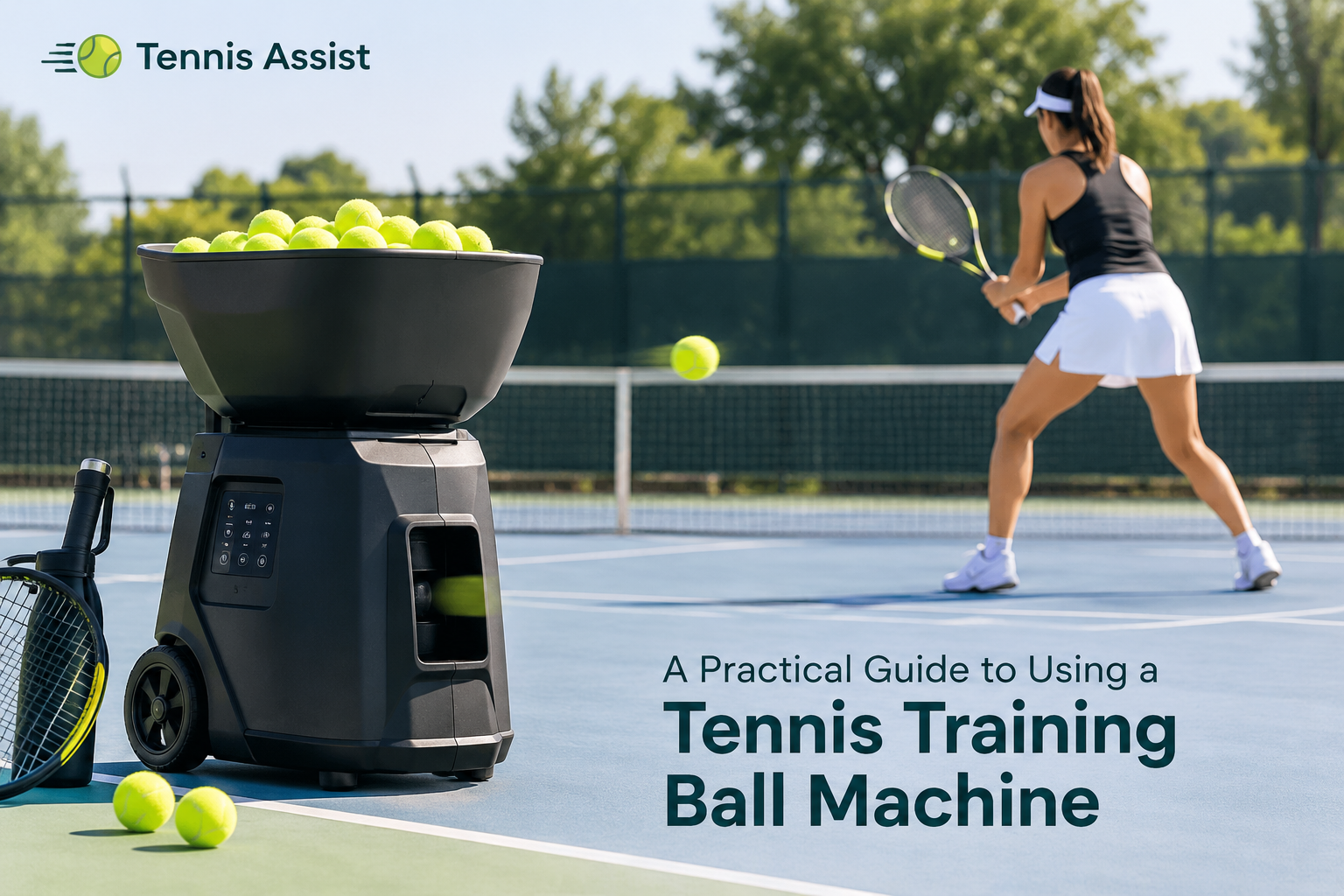

Tennis Training Ball Machine: A Practical Guide to Better Practice at Home
A consistent tennis routine is easier to maintain when you do not have to wait for a partner to become available. A tennis training ball machine can give players another way to practise strokes, movement, timing, and repetition on their own schedule.
The goal is not to replace coaching or match play. Instead, a ball machine can add more focused repetitions to your weekly routine. With the right drills and a suitable practice area, players can use solo sessions to work on specific parts of their game.
Why Use a Tennis Training Ball Machine?
One of the biggest challenges in tennis practice is getting enough useful repetitions. When training with a partner, the ball can arrive at different heights, speeds, and locations. That is useful for match preparation, but sometimes you want a more controlled practice session.
A tennis training ball machine can help create repeated feeds so you can focus on one particular skill.
For example, you might spend a session working only on:
- Forehand consistency
- Backhand preparation
- Contact point
- Footwork
- Recovery position
- Directional control
- Reaction and movement
Instead of changing the drill every few minutes, you can repeat one movement and pay closer attention to your technique.
How It Supports Tennis Practice at Home
For many players, tennis practice at home is about making better use of the space and time they already have.
A suitable setup can allow you to practise without arranging a hitting partner for every session. This can be useful for players with busy schedules, parents helping juniors practise, or anyone who wants extra repetitions between regular court sessions.
Before setting up a machine, check the available space carefully. Make sure there is enough room for safe movement, racquet swings, and ball travel. Remove obstacles and avoid areas where stray balls could create a safety problem.
The equipment should fit your practice area rather than forcing you to train in an unsuitable space.
Build Simple Drills Around One Skill
A ball machine becomes more useful when you have a clear purpose for the session.
Forehand Consistency Drill
Start with a comfortable feed and focus on making clean contact. Pay attention to your preparation, spacing, balance, and follow-through.
Do not worry about hitting every ball as hard as possible. Controlled repetitions can help you concentrate on the movement.
Backhand Repetition Drill
Use a similar approach with your backhand. Begin with a manageable feed and gradually introduce more movement when you feel comfortable.
Try returning to a balanced position after each shot instead of remaining beside the ball machine.
Movement and Recovery Drill
Once basic strokes feel comfortable, introduce movement.
Have the feeds arrive to different areas so you need to move, set your feet, hit, and recover. This makes the drill more similar to the movement demands of a point.
Tennis Drills at Home for Juniors
A ball machine can also be included in tennis drills at home for juniors, provided the setup is suitable for the child's age, ability, and available space.
Junior sessions should focus on control and learning rather than simply increasing speed.
Useful drills can include:
- Simple forehand repetitions
- Backhand repetitions
- Moving between two positions
- Catch-and-hit coordination exercises
- Short movement patterns
- Target-hitting challenges
Keep junior sessions manageable and supervise younger players where appropriate. The machine settings, ball type, distance, and training area should all be appropriate for the player.
Use a Smart Tennis Training Aid With a Plan
A smart tennis training aid is most useful when it supports a specific training goal.
Before switching on the machine, decide what you want to achieve during the session.
For example:
Goal: Improve forehand consistency
Practice: Controlled forehand feeds
Focus: Contact point and balance
Target: A set number of successful repetitions
You can then record what felt comfortable and what needs more attention next time.
Some modern tennis training systems also combine feeding equipment with feedback or smartphone-based training features. These options can make it easier to review your practice and keep sessions structured.
Combine Ball Machine Training With Footwork
Standing in one position and hitting balls can become too predictable.
After working on basic technique, add movement. Use feeds that require you to move slightly to either side before hitting.
A simple sequence can be:
Split step → Move → Set feet → Hit → Recover
Repeat this pattern at a comfortable pace. As your movement improves, you can gradually make the drill more demanding.
This type of practice can help connect your stroke technique with the movement required before and after the shot.
Don't Forget Court and Match Practice
A tennis training ball machine is useful for repetition, but it should not be your only form of training.
Match play teaches skills that a controlled machine cannot fully reproduce, including:
- Reading an opponent
- Choosing where to hit
- Responding to unexpected shots
- Point construction
- Serving and returning
- Managing pressure
Use machine sessions for repetition and technical practice, then take those skills onto the court during coaching, practice matches, and competitive play.
Choose Equipment Based on Your Training Needs
When comparing tennis training equipment, consider more than the machine itself.
Look at:
- Available practice space
- Portability
- Feed options
- Ball compatibility
- Battery or power requirements
- Ease of setup
- Your playing level
- The drills you actually want to practise
A smaller and simpler setup may be more useful than a larger machine if it fits your routine better.
Make Solo Training Part of Your Weekly Routine
You do not need to use a ball machine every day.
For example, you could schedule one or two solo sessions during the week and use your other training days for coaching, fitness, match play, or recovery.
A simple weekly structure might look like this:
| Day | Focus |
|---|---|
| Monday | Ball machine stroke practice |
| Tuesday | Coaching or court practice |
| Wednesday | Rest or light movement |
| Thursday | Ball machine movement drills |
| Friday | Fitness or footwork |
| Saturday | Match play |
| Sunday | Recovery |
Adjust the schedule around your age, playing level, coaching plan, and available time.
Final Thoughts
A tennis training ball machine can be a practical addition to a player's training routine when it is used with a clear purpose. It can provide repeated feeds for stroke work, movement practice, and controlled solo sessions.
The best results come from combining machine training with coaching, court practice, fitness, and match play. Start with simple drills, focus on one skill at a time, and gradually make the practice more challenging.
For players looking to create a more flexible solo setup, Tennis Assist offers tennis training options designed around independent practice and home training.
FAQs
Can beginners use a tennis training ball machine?
Yes. Beginners can start with slower, predictable feeds and focus on basic contact, balance, and racquet control.
Can I use a ball machine for tennis practice at home?
Yes, provided you have enough safe space and the equipment is suitable for the area.
Are ball machines useful for juniors?
They can support junior practice when the settings, distance, balls, and drills are appropriate for the player's age and ability.
How often should I use a tennis ball machine?
There is no single schedule for every player. One or two focused sessions per week can be included alongside coaching, court practice, fitness, and recovery.
Can a ball machine replace a tennis coach?
No. A machine can provide repetition, but a coach can assess technique, explain adjustments, and adapt training to the individual player.
What should I practise first with a ball machine?
Start with one basic skill, such as forehand or backhand consistency. Once you are comfortable, add movement, direction, and recovery drills.
