

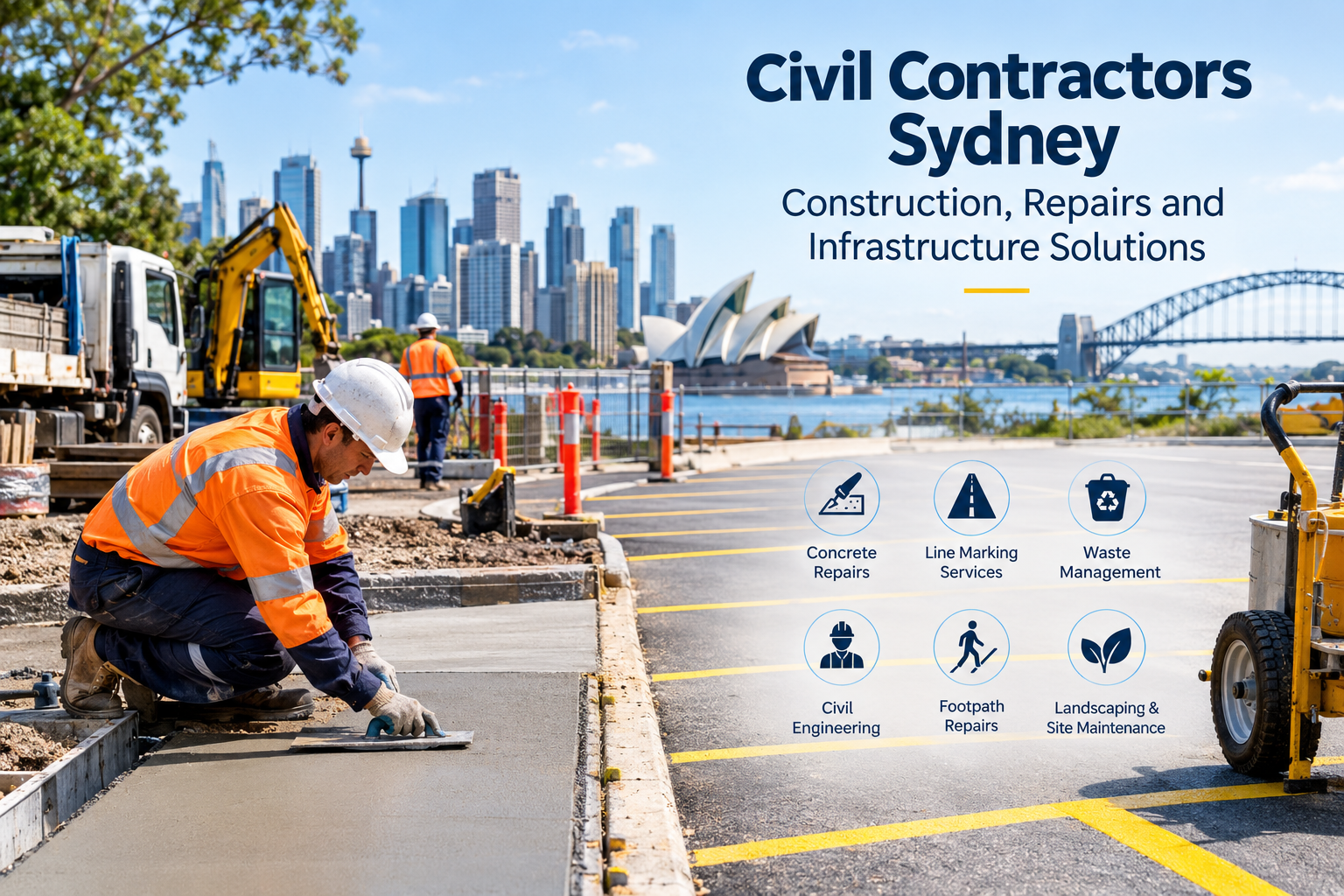
Civil Contractors Sydney: Complete Guide for Commercial and Infrastructure Projects
Civil Contractors Sydney: A Practical Guide to Civil Construction and Maintenance
Civil construction plays an important role in keeping commercial properties, roads, pedestrian areas, industrial sites, and public infrastructure functional. From repairing damaged concrete to improving drainage and maintaining access roads, many projects require a combination of construction, repair, and ongoing maintenance.
For businesses searching for civil contractors Sydney, the first step is understanding what the project actually requires. A small pavement repair, for example, will have very different requirements from a commercial development involving excavation, drainage, concrete construction, and road access.
A clear understanding of the work can make it easier to plan the project, estimate costs, manage access, and coordinate different trades.
What Are Civil Construction Services?
Civil construction generally covers infrastructure and external works that support buildings, properties, transportation, and public spaces.
Depending on the project, civil construction may include:
-
Earthworks and excavation
-
Road construction and repairs
-
Concrete construction
-
Asphalt maintenance
-
Drainage installation
-
Stormwater works
-
Footpath construction
-
Car park maintenance
-
Landscaping
-
Retaining structures
-
Line marking
-
Site cleanup
-
Infrastructure repairs
The scope can range from a small maintenance job to a large-scale infrastructure project.
Common Reasons Businesses Need Civil Contractors
Commercial and industrial properties are exposed to continuous vehicle movement, weather, drainage issues, and general wear. Over time, these conditions can affect roads, parking areas, concrete surfaces, footpaths, and drainage systems.
A business may require civil work because of:
-
Cracked or deteriorated concrete
-
Potholes or damaged asphalt
-
Uneven pedestrian areas
-
Poor surface drainage
-
Damaged kerbs
-
Parking-area deterioration
-
Construction requirements
-
Access-road problems
-
Failing retaining structures
-
Faded traffic markings
Addressing these issues early can help prevent a relatively limited maintenance problem from becoming a larger repair project.
Understanding Concrete Damage
Concrete can deteriorate for several reasons, so identifying the cause is important before deciding how to repair it.
Businesses searching for concrete repair cracks may be dealing with anything from minor surface cracking to more significant movement or settlement.
Possible causes include:
-
Concrete shrinkage
-
Ground movement
-
Settlement
-
Water penetration
-
Heavy loading
-
Poor drainage
-
Incorrect installation
-
Repeated vehicle traffic
A repair method should be selected according to the type and cause of the defect. Simply filling a visible crack without considering why it developed may not address the underlying issue.
Footpath Repairs and Pedestrian Areas
Footpaths experience regular pedestrian traffic, weather exposure, tree-root movement, drainage issues, and ground settlement.
Footpath repairs may involve replacing damaged sections, correcting uneven areas, improving drainage, or restoring the surface after other construction work.
For commercial properties, pedestrian areas also need to work alongside vehicle access, entrances, parking spaces, loading zones, and landscaping.
Before repair work begins, the surrounding area should be considered so that the repaired section connects properly with existing surfaces.
Why Drainage Should Be Considered
Water can have a major effect on civil infrastructure.
Poor drainage can contribute to standing water, soil erosion, pavement deterioration, settlement, and damage to concrete or landscaped areas.
Civil projects may therefore involve:
-
Stormwater pits
-
Drainage channels
-
Surface grading
-
Underground drainage
-
Kerb and gutter systems
-
Water-flow improvements
Drainage should be considered during repair and construction rather than only after water-related problems become visible.
Line Marking for Commercial Properties
Clear markings help businesses organize how vehicles and pedestrians move through a site.
Line marking services may be required for:
-
Parking spaces
-
Loading zones
-
Traffic lanes
-
Pedestrian paths
-
Accessible parking
-
Warehouse areas
-
Safety zones
-
Directional markings
Surface preparation is an important part of the process. Dirt, damaged pavement, old markings, or surface deterioration may need to be addressed before new markings are applied.
Waste Management During Civil Work
Construction and repair projects can produce concrete fragments, asphalt, soil, packaging, timber, vegetation, and other materials.
This makes waste management Sydney an important consideration for civil projects.
A project plan should consider where waste will be stored, how materials will be separated, how they will be transported, and whether suitable materials can be recycled or recovered.
Waste planning also helps prevent construction debris from interfering with workers, pedestrians, vehicles, and ongoing commercial operations.
The Role of Civil Engineering Sydney Projects
Construction is often supported by engineering and technical planning.
Civil engineering Sydney projects can involve site investigation, drainage design, pavement design, earthworks, structural considerations, infrastructure planning, and construction documentation.
Engineering requirements depend on the size and complexity of the project. A straightforward repair may require limited technical input, while a larger development or infrastructure project may involve multiple engineering disciplines.
How to Compare Civil Contractors
When comparing Civilcraft with other Sydney providers, businesses should use the same criteria for every quotation.
Look at:
-
Relevant project experience
-
Understanding of site conditions
-
Construction methodology
-
Drainage considerations
-
Safety procedures
-
Waste management
-
Project scheduling
-
Preparation and cleanup
-
Communication
-
Total project scope
A quotation should be reviewed based on what it actually includes. A cheaper proposal may not cover the same preparation, materials, disposal, restoration, or cleanup as another quotation.
Conclusion
Civil construction covers a wide range of work, from small repairs to complex infrastructure projects. For businesses searching for civil contractors Sydney, understanding the full scope of the project can help with planning and contractor comparison.
Concrete defects, footpath damage, drainage problems, waste generation, and worn line markings can all become part of a broader property maintenance program. Considering these issues together can help businesses plan work more efficiently and avoid treating connected infrastructure problems as completely separate tasks.
FAQs
What do civil contractors Sydney businesses commonly hire for?
Businesses commonly hire civil contractors for roads, concrete, asphalt, drainage, footpaths, car parks, excavation, landscaping, line marking, repairs, and infrastructure maintenance.
What causes cracks in concrete?
Concrete cracking can result from shrinkage, settlement, ground movement, water problems, heavy loading, poor installation, or other site conditions.
How do I know when footpath repairs are needed?
Cracks, uneven surfaces, settlement, damaged sections, drainage problems, or difficult pedestrian access can indicate that repairs may be necessary.
Why is waste management important during civil construction?
Civil projects can generate significant quantities of soil, concrete, asphalt, timber, vegetation, and other materials. Proper planning helps manage these materials safely and efficiently.
When are line marking services needed?
They may be required when parking spaces, traffic routes, loading areas, pedestrian paths, or safety zones need to be created, reorganized, or restored.
