

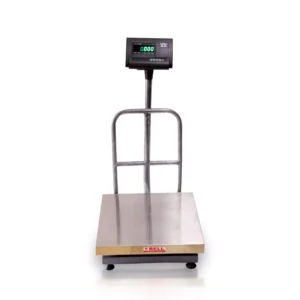

Accurate weighing plays an important role in modern agriculture. From measuring harvested crops to handling grains, vegetables, fruits, seeds, and other bulk produce, reliable weighing equipment helps farmers and agricultural businesses maintain accuracy at every stage. An agricultural weighing scale is designed to provide precise measurements for farms, agricultural markets, warehouses, collection centres, and bulk produce handling operations.
What Is an Agricultural Weighing Scale?
An agricultural weighing scale is a weighing system specifically designed for agricultural applications. It can be used to measure different types of farm produce, including grains, cereals, pulses, fruits, vegetables, animal feed, and other bulk materials.
Depending on the application, agricultural weighing scales are available in different capacities and configurations. Platform scales, floor scales, livestock scales, and heavy-duty weighing systems can all support different farming and produce-handling requirements.
These scales are built to provide dependable measurements even in demanding agricultural environments where dust, moisture, frequent use, and heavy loads may be common.
Why Accurate Weighing Matters in Agriculture
Accurate weight measurement is essential for fair transactions and efficient farm management. When crops are sold by weight, even a small measurement error can affect the final value of a transaction.
An accurate agricultural weighing scale can help farmers and businesses:
-
Measure harvested produce precisely
-
Improve accuracy during buying and selling
-
Reduce weighing errors and disputes
-
Monitor crop quantities
-
Manage inventory more effectively
-
Support accurate billing and record keeping
-
Improve efficiency during bulk produce handling
Reliable weighing also helps agricultural businesses understand how much produce is being stored, transported, or sold.
Applications of Agricultural Weighing Scales
Agricultural weighing equipment can be used across many areas of the farming and food supply chain. Farmers can use weighing scales after harvesting to determine crop quantities before storage or transportation.
Agricultural markets and collection centres can also use these systems to weigh produce received from multiple farms. Warehouses may use heavy-duty scales for monitoring stored grains and other bulk commodities.
Common applications include weighing:
-
Wheat, rice, maize, and other grains
-
Pulses and seeds
-
Fruits and vegetables
-
Animal feed
-
Fertiliser and agricultural materials
-
Bags, sacks, and containers
-
Bulk farm produce
The right scale depends on the type, size, and weight of the material being measured.
Features to Look For
When choosing an agricultural weighing scale, it is important to consider accuracy, capacity, durability, and ease of operation. A strong platform should be capable of handling the expected load without compromising measurement performance.
A clear digital display can make readings easier to view, while a durable construction can help the scale perform reliably in busy agricultural environments. Depending on operational requirements, additional features such as tare functions, weight indicators, data recording, and connectivity may also be useful.
It is also important to select a scale that suits the available space and weighing process. Choosing the correct capacity can help prevent overloading and support consistent performance.
Benefits for Farms and Agricultural Businesses
Investing in a quality agricultural weighing scale can improve both operational accuracy and productivity. Precise measurements help businesses maintain better control over inventory and reduce unnecessary losses caused by incorrect weighing.
For farmers, accurate weighing can provide greater confidence when selling crops. For agricultural traders and market operators, dependable measurements can help create transparent transactions and improve workflow efficiency.
A suitable weighing system can also save time by making the weighing process faster and easier, particularly when handling large quantities of produce.
Choosing the Right Agricultural Weighing Scale
Before purchasing an agricultural weighing scale, consider the maximum load, platform size, weighing environment, type of produce, required accuracy, and frequency of use. Heavy-duty applications may require robust platforms, while smaller farming operations may benefit from compact weighing solutions.
It is equally important to choose equipment from a reliable weighing solution provider that offers quality products and appropriate technical support.
Conclusion
An agricultural weighing scale is an essential tool for accurate crop measurement and efficient produce management. From farms and collection centres to agricultural markets and warehouses, reliable weighing equipment helps improve transaction accuracy, inventory control, and operational efficiency.
