


How to Use a Tennis Rebounder Wall for Solo Tennis Training
How to Use a Tennis Rebounder Wall for Solo Tennis Training
Finding a tennis partner every time you want to practise is not always realistic. Work, school, family commitments, weather, and court availability can all interrupt a regular schedule.
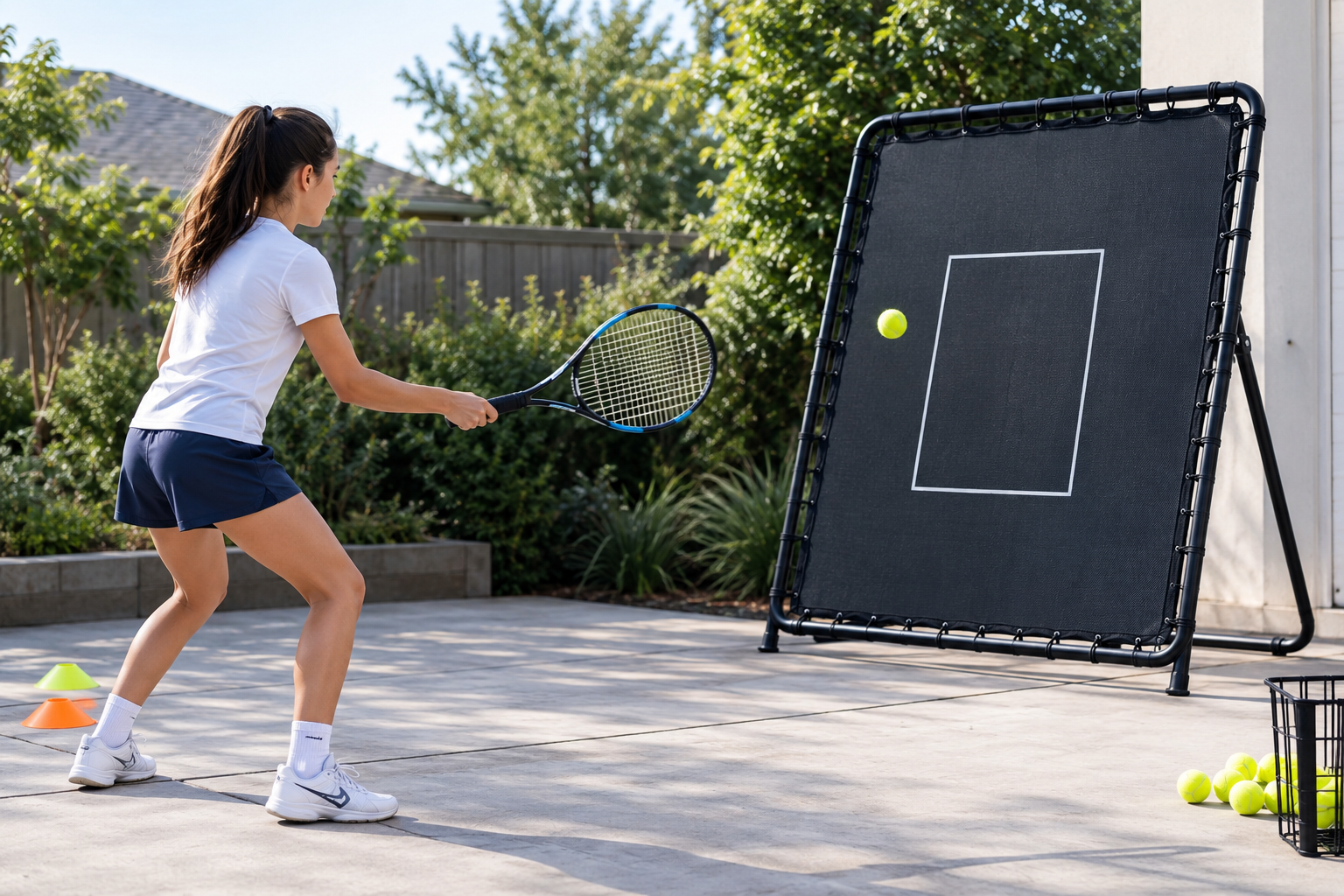
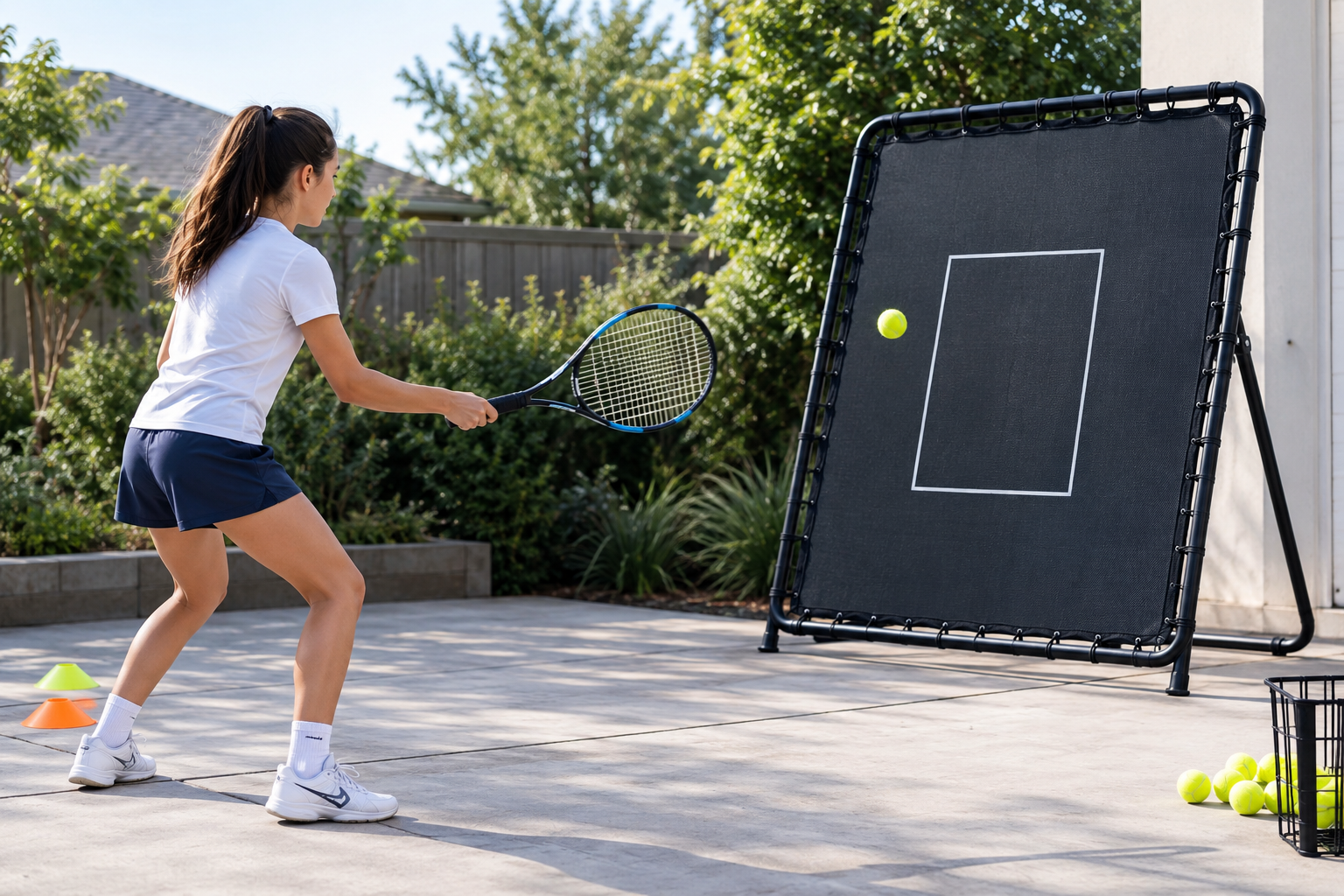
That is where a tennis rebounder wall can become useful. It gives you a way to practise independently and focus on specific parts of your game without turning every session into a full match.
Think About the Skill Before the Drill
The easiest way to waste a solo practice session is to start hitting without knowing what you want to improve.
Before picking up your racket, choose one main goal.
For example:
- “I want a more consistent backhand.”
- “I want to recover faster after a forehand.”
- “I want better contact timing.”
- “I want to increase my rally count.”
Once you have a goal, the drill becomes much easier to structure.
Drill One: The 20-Ball Challenge
Stand at a comfortable distance from the rebounder.
Hit 20 forehands while trying to keep your technique consistent. Do not worry about maximum speed. Count only clean, controlled contacts.
Then repeat with your backhand.
If you cannot reach 20, start with 10. The goal is to gradually increase consistency rather than force the number.
Drill Two: Change the Distance
Your relationship with the ball changes when you move closer or further away.
Start close to the rebounder and practise shorter reactions. Then move back and work on larger swings and deeper contact.
This can help you learn to adjust your preparation instead of using exactly the same swing for every ball.
You can also include short recovery steps between shots.
Drill Three: Add a Target
A target gives your session a clear purpose.
Place a marker on the rebounder and aim for it repeatedly. Once you can hit the target consistently, move it or create a second target.
This type of exercise is more useful than simply measuring how hard you can hit.
Accuracy and repeatability matter because tennis matches often reward players who can consistently place the ball rather than those who only produce occasional powerful shots.
Create a Small-Space Tennis Setup
You do not need a full tennis court to practise basic strokes.
A suitable driveway or backyard can be enough for certain solo drills. If you have additional space, a best driveway tennis net can allow you to work on volleys, serves, and net positioning.
You can also add cones to create movement patterns.
For players who want an alternative source of incoming balls, a tennis training ball machine can provide repeated feeds and movement-based drills. The rebounder and ball machine can therefore complement each other rather than perform exactly the same role.
Don't Forget Your Body
Technical practice is only one part of tennis preparation.
A home session can involve repeated swings and frequent changes of direction. Start with a warm-up and avoid increasing training volume too quickly.
If knee comfort is part of your equipment considerations, research the best knee support for tennis players based on fit, support level, activity, and individual needs.
Good footwear and proper recovery are equally important.
Turn Random Practice Into a Weekly Routine
Instead of using the rebounder only when you have spare time, give it a place in your weekly schedule.
For example:
Monday: Forehand and backhand consistency
Wednesday: Movement and recovery
Friday: Target practice
Weekend: Court practice or match play
You can keep each home session between 20 and 40 minutes.
The objective is consistency. Small sessions performed regularly can be easier to maintain than occasional long workouts.
Take Your Rebounder Skills Onto the Court
Rebounder practice works best when you transfer the skills to actual tennis.
After practising forehand consistency at home, focus on the same skill during your next court session. After working on movement, see whether you recover more quickly during rallies.
This is how solo practice becomes connected to match performance.
If your goal is to improve tennis skills at home, use the rebounder for technical repetition and then use real court sessions to test those skills under changing conditions.
For players creating a home practice area, Tennis Assist provides tennis training options that can support independent practice and regular tennis sessions.
FAQs
What is the main benefit of a tennis rebounder wall?
It allows players to repeat strokes independently without needing a hitting partner.
Can a rebounder improve forehand and backhand consistency?
Yes. Repeated controlled hitting can help you practise timing, preparation, contact, and follow-through.
Can I practise tennis in a driveway?
Yes, provided the area is safe and has enough room for your intended drills.
Should I practise every day?
Not necessarily. A few focused sessions each week can be easier to maintain and combine with court training.
Is a rebounder useful for experienced players?
Yes. Advanced players can use it for repetition, reaction drills, footwork, and technical adjustments.

 Bangla