


Flood Cleanup Services: Steps to Restore Your Property
Flooding wrecks homes and businesses fast, and honestly, it doesn't take much. Heavy rain, an overflowing river, a burst pipe, a sewage backup — any of it can leave standing water sitting inside a property. Floors, walls, furniture, belongings, all of it takes the hit. And if cleanup gets delayed even a little, that moisture sets the stage for mold and structural problems that weren't there before.
Understanding how flood cleanup services actually work helps property owners know what to do once a flood hits. From clearing standing water to drying everything out properly, each stage plays a real role in getting the place back to normal. Move fast, and you genuinely limit how bad things get.
Inspect the Property First
Before jumping into cleanup, take a real look at the affected property to understand how bad things actually are. Check for standing water, damaged walls, wet flooring, and anything that looks contaminated.
Safety comes before anything else, always. Floodwater can carry sewage, chemicals, bacteria — stuff you don't want near your skin. Damaged electrical systems add their own serious hazards on top of that.
Never walk into a flooded area if electrical equipment or wiring might be exposed to water. Wait until a qualified professional's confirmed the space is actually safe.
A professional inspection catches both visible damage and moisture hiding where you can't see it. That's what tells you which materials can actually be saved and which ones need replacing.
Stop the Water at Its Source
Next up — figure out where the water's actually coming from and stop it. Damaged pipes, leaking roofs, foundation cracks, blocked drains, bad outdoor drainage — any of these could be the culprit.
If a burst pipe caused the mess, shutting off the water supply often prevents things from getting worse. For storm-related flooding, check whether water's still coming in through doors, windows, or other openings.
Some situations genuinely need a plumber or drainage specialist to sort out properly. Getting the source under control has to happen before repairs and drying can even start.
Clear the Standing Water Out
Standing water does damage fast. Carpets, wooden floors, drywall, furniture — all of it soaks up moisture and gets harder to restore the longer it sits.
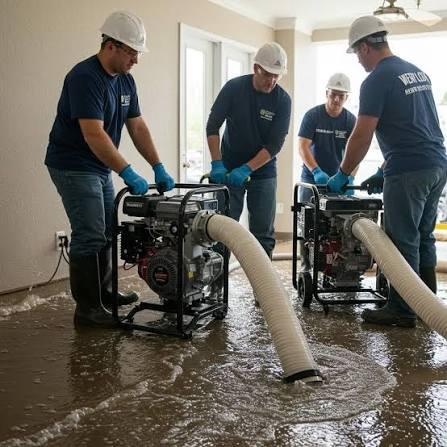
Professional flood cleanup services bring in pumps, wet vacuums, and commercial extraction equipment to pull water out of affected areas. What gets used really depends on how much water's involved and what kind of flooding caused it.
Clearing water quickly limits further damage, sure, but removing water alone doesn't mean the property's actually dry. Moisture often stays trapped inside walls, flooring, and other materials long after the surface looks clear.
Dry Out Walls, Floors, and Everything Else
Once the standing water's gone, the affected area needs real, thorough drying. Moisture hides beneath carpets, behind baseboards, inside wall cavities — spots you'd never think to check.
Restoration professionals use air movers and commercial dehumidifiers to boost airflow and cut humidity. Moisture meters help confirm whether building materials are actually drying the way they should be, not just looking dry on the surface.
How long drying takes varies a lot — depends on how severe the flooding was, what materials got hit, and how much moisture's actually present.
Proper drying matters more than people realize here, because leftover moisture leads to bad odors, material breakdown, and mold growth down the road.
Clean and Sanitize Everything That Got Hit
Floodwater isn't always clean to begin with. Water from sewage backups or outdoor flooding often carries contaminants that make affected surfaces genuinely unsafe to touch.
Cleaning methods need to match whatever kind of water was involved. Hard surfaces might just need the right cleaning and sanitizing products, while contaminated porous materials sometimes have to be removed entirely.
Professional flood cleanup services help figure out what's safe to clean versus what needs to go.
Furniture, clothing, personal belongings — all of it should get assessed before heading back into the restored space. Proper cleaning cuts down contamination and gets the property ready for the next stage.
Watch for Mold and Damage You Can't See
Mold shows up when moisture sticks around too long. It can appear on walls, ceilings, carpets, furniture — basically anywhere damp. Sometimes a musty smell is the only clue you get, even before mold's actually visible.
Pay attention to damp spots, discoloration, peeling paint, and odd smells after any flooding event.
If mold's covering a large area, or you suspect it's growing behind walls, professional assessment is genuinely worth getting. Don't go poking around extensive mold growth yourself — that just spreads particles into the air you're breathing.
Catching moisture problems early helps prevent additional damage and usually means less extensive repairs down the line.
Repair What Actually Needs Fixing
Once the property's clean and dry, damaged materials can finally be evaluated for repair or replacement.
Depending on how bad the flooding was, repairs might involve drywall, insulation, flooring, cabinets, baseboards, paint — the list varies. Structural components sometimes need inspection too if they've taken on significant water exposure.
Not everything wet needs replacing, though. Plenty of items can be restored just fine if they're dried and cleaned properly. But materials that stay contaminated or have lost structural integrity? Those usually need to come out.
A careful assessment here helps property owners actually understand what repairs are necessary and how to plan the rest of the restoration.
Document Everything for Insurance
Flood damage brings unexpected expenses, and documentation makes a real difference later. Photos and videos of affected rooms, damaged belongings, visible water marks — all of it helps build your case.
Hold onto receipts for emergency repairs, cleanup expenses, and anything you had to replace. Reach out to your insurance provider early to understand what documentation they actually need and whether your specific situation is covered.
Coverage depends heavily on your policy and where the water came from. Standard homeowners insurance often treats certain types of flooding differently than sudden plumbing leaks, so confirming your coverage matters.
Documenting the damage before removing affected items, when it's safe to do so, genuinely helps support your claim later.
Preventing the Next Flood
Once your property's restored, it's worth taking steps to lower the odds of this happening again. Check plumbing connections, keep gutters maintained, and make sure downspouts actually direct water away from the foundation instead of pooling right next to it.
Check your sump pump regularly if your basement relies on one. A backup system's worth considering where it makes sense, and repairing cracks or drainage problems early stops water from finding its way back in.
Installing water leak detectors near appliances, water heaters, and plumbing fixtures catches small problems before they turn into another flood. Regular maintenance really is the cheapest insurance you'll ever buy.
When Should You Actually Hire Professional Help?
Some flooding can be handled with basic cleanup on your own. Larger or contaminated floods usually call for professional assistance, though.
Worth calling a restoration company when:
- Large amounts of standing water are present
- Floodwater may contain sewage or other contaminants
- Water's entered walls, insulation, or flooring
- Mold growth or persistent dampness shows up
- The property's suffered significant structural damage
- Electrical hazards make the area unsafe
Professional restoration teams bring specialized equipment and real experience to remove water, dry affected materials, catch hidden moisture, and coordinate whatever repairs end up being necessary.
Final Thoughts
Flooding touches far more of a property than people expect — flooring, walls, furniture, structural materials, all of it. A careful restoration process addresses the visible damage while genuinely reducing the risk of problems caused by moisture you can't see. The right flood cleanup services guide property owners through water removal, drying, cleaning, damage assessment, and repairs in a way that actually makes sense, step by step. Quick action, real safety precautions, and thorough moisture control are what separate a smooth restoration from one that drags on. If your home or business has dealt with flooding, assess the situation safely and bring in professional help when the damage is extensive or the water might be contaminated. Taking the right steps early genuinely protects your property and keeps bigger problems from developing later.
FAQ
How soon should flood cleanup services be called after a flood?
As soon as it's safe to do so, ideally within the first 24 to 48 hours. Waiting longer significantly raises the risk of mold growth and permanent material damage.
Can I handle flood cleanup myself without professional help?
For small amounts of clean water, sometimes. But anything involving significant standing water, contamination, or structural damage really needs professional equipment and expertise.
How long does the full flood cleanup and restoration process typically take?
It varies quite a bit based on severity — minor flooding might resolve in a few days, while extensive damage requiring structural drying and repairs can take several weeks.

 Bangla