


Which Details Should Buyers Check With relayfactory Before Ordering?
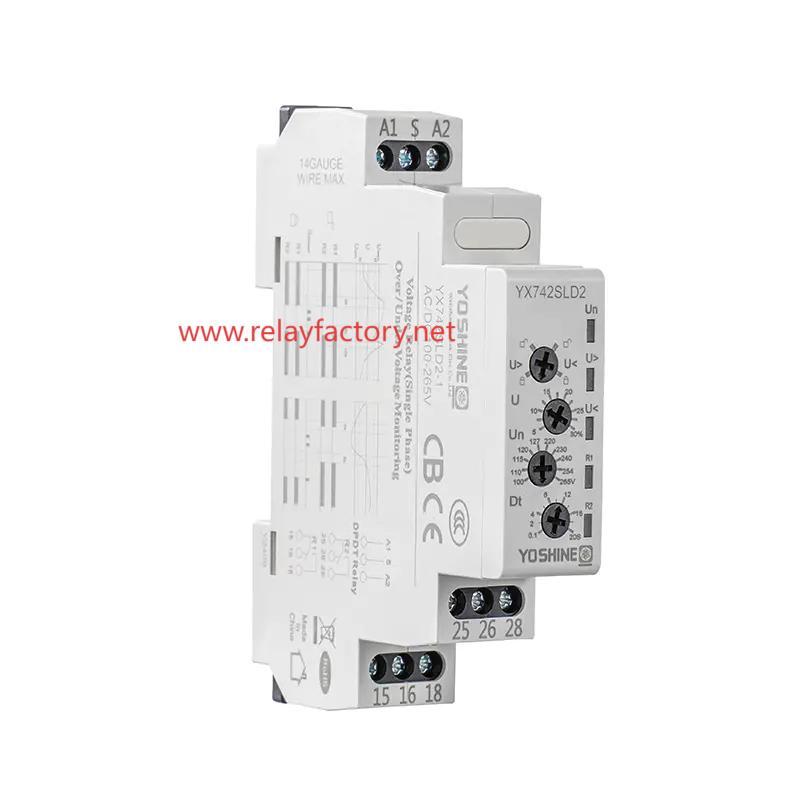
Time Relay Producer selection should begin with the requirements of the actual control application. Buyers should consider operating functions, electrical specifications, timing ranges, contact arrangements, installation methods, load characteristics, environmental conditions, and customization needs. For OEM projects, it is also useful to examine how a supplier handles samples, drawings, testing, production communication, and specification changes before moving forward with an order.
Start With the Application
The intended application should be clearly defined before comparing different products. Industrial machinery, lighting equipment, HVAC systems, pumps, generators, and automated equipment can have different control sequences.
A buyer can describe the process in several simple steps. What happens when the input signal arrives? When should the output change? Should the output remain active for a particular period? Does the process repeat automatically?
These questions help transform a general purchasing request into a practical technical specification. A manufacturer can then evaluate which configuration may fit the project instead of relying on assumptions.
Review the Operating Functions
Different applications can require different operating modes. Buyers should determine whether they need delayed activation, delayed deactivation, interval operation, cyclic control, pulse operation, or several functions within one unit.
For a project with several control sequences, a multifunction configuration may provide useful flexibility. For a simple application, a clearly defined single operating mode may be easier to configure and maintain.
The key is to connect the selected function with the actual control process. Buyers should not evaluate a product only by its appearance or general product name. The operating diagram and functional description can provide much more useful information.
Check Electrical Compatibility
Electrical specifications are another important area for evaluation. Buyers should provide the supply voltage, AC or DC requirement, input conditions, output arrangement, and expected load.
The connected load should also be considered. Motors, solenoids, lamps, heaters, pumps, and contactor coils can have different electrical characteristics. The switching requirements may therefore vary according to the equipment being controlled.
Buyers should also clarify whether the device will operate the load directly or provide a control signal to another component. A wiring diagram can help both parties understand the intended electrical connection.
Define the Timing Range
The required timing range should be expressed with actual values whenever possible. Instead of describing a requirement as short or long, buyers can provide the expected minimum and maximum settings.
The adjustment method is also worth discussing. Some applications may use a rotary control, while others may require selector settings or another adjustment arrangement.
For replacement projects, information from the existing product can be very useful. A photograph of the label, wiring diagram, technical drawing, or product specification can give the manufacturer a reference for the required operating behavior.
For new equipment, buyers can provide the expected control sequence and cycle duration. This information can help the supplier understand the intended application more clearly.
Examine Contact and Output Configuration
The output structure needs to match the electrical circuit. Depending on the project, buyers may need normally open contacts, normally closed contacts, changeover contacts, or multiple outputs.
This detail can become important when the component is connected to several parts of a machine. One output may activate an actuator, while another provides a signal to an indicator or secondary control circuit.
Before confirming an order, buyers can compare the proposed wiring diagram with their existing schematic. This simple check can help identify compatibility issues before installation.
Consider Installation Requirements
Physical dimensions are just as important as electrical specifications when integrating a component into existing equipment. Buyers should check mounting method, overall size, terminal location, wiring access, and available panel space.
DIN rail installation may be suitable for certain control cabinets, while panel or socket mounting may fit another design. For replacement applications, matching the existing installation method can reduce structural changes.
OEM buyers can provide cabinet drawings or installation measurements during the inquiry stage. These references allow the manufacturer to understand the physical limitations of the project before proposing a configuration.
Ask About Customization
Standard products may not always match every OEM project. Customization can involve electrical ratings, timing functions, output configuration, dimensions, mounting structure, terminal positions, product labels, or other project requirements.
Buyers should ask which parameters can be adjusted and which changes require engineering evaluation. It is also helpful to clarify whether samples can be prepared before a larger production order.
relayfactory provides customized solutions according to customer requirements, making technical communication an important part of the purchasing process. Buyers can prepare a specification sheet covering voltage, load, timing range, mounting, dimensions, operating environment, quantity, and application.
The clearer the information, the easier it becomes for both sides to discuss a suitable configuration.
Review Samples and Testing
For a new OEM project, a sample can provide useful information before volume production. Buyers can use the sample to check dimensions, wiring, adjustment, installation, and compatibility with the target equipment.
Testing requirements should also be discussed in advance. Depending on the project, buyers may ask about functional testing, electrical checks, operating behavior, visual inspection, and applicable documentation.
If a project involves repeat orders, the approved sample and specification can become an important reference. Keeping the agreed configuration documented can help reduce confusion when future batches are arranged.
Evaluate Production Communication
Production communication deserves attention when selecting a supplier. Buyers should understand how technical changes are handled after a quotation, whether drawings require approval, and how confirmed specifications are transferred into production.
Clear records are particularly useful for OEM projects because a small change in voltage, contact arrangement, dimensions, or timing range can affect system integration.
A structured communication process allows purchasing and engineering teams to work from the same information. It can also make discussions about samples, packaging, inspection, and delivery easier to manage.
Look at Long-Term Project Support
A supplier may become part of a longer purchasing process rather than simply handling one order. Buyers may later require replacement products, specification updates, additional quantities, or new configurations for another machine.
For this reason, buyers should consider how product information is maintained and how technical questions are handled after an order has been completed.
relayfactory has an OEM-oriented approach and provides products for applications involving industrial control, lighting, pump control, generator control, and other equipment. Buyers can use their own application information to begin a more specific technical discussion.
Choosing a manufacturing partner is therefore not only about comparing a catalog and a price. Buyers can begin with the application, define the operating function, confirm electrical requirements, establish the timing range, check the output structure, review installation conditions, and discuss customization and testing. A clear specification gives both sides a practical basis for evaluating the project and reduces uncertainty during integration. Buyers interested in product details, OEM cooperation, and customized control solutions can visit https://www.relayfactory.net/ for further information.

 Bangla