


How can IVF Lab Design Services accommodate advanced embryo monitoring systems?
INTRODUCTION
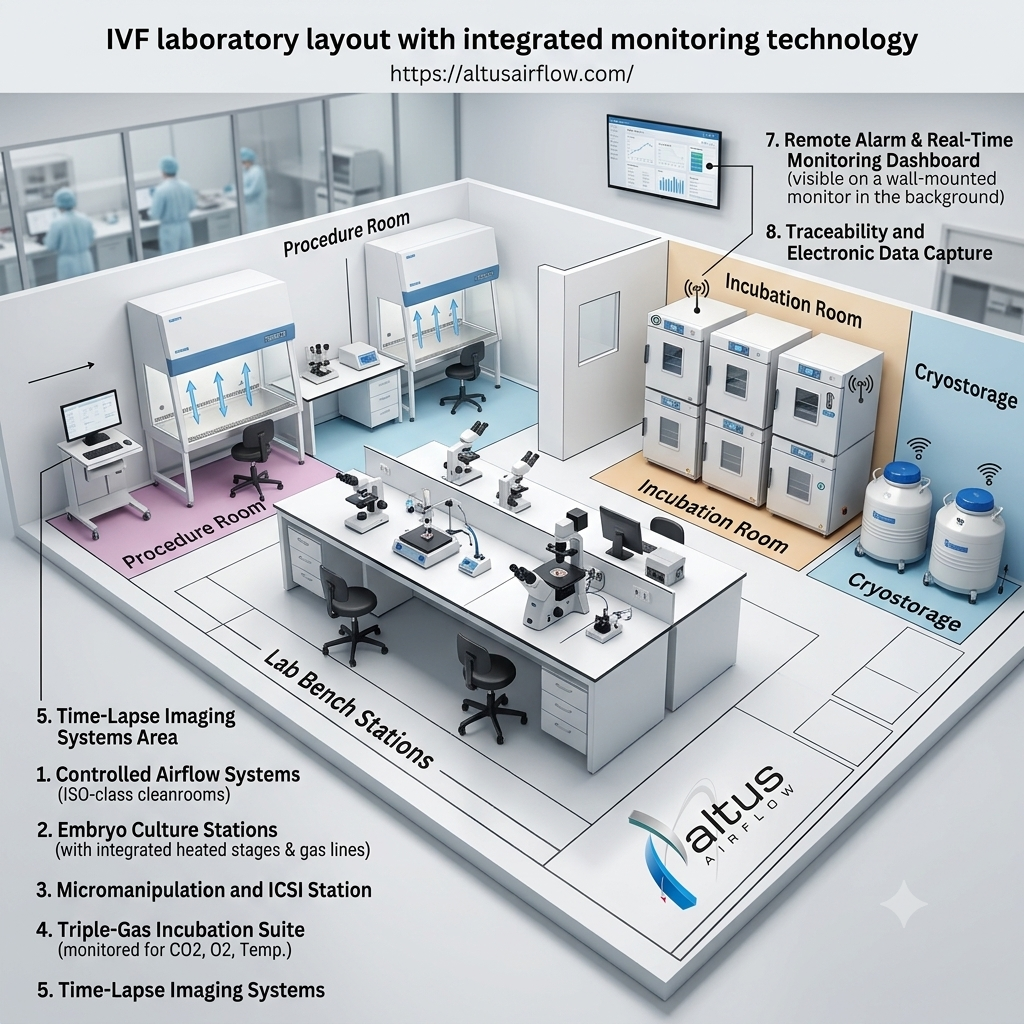
Advanced embryo monitoring systems are transforming the way fertility laboratories observe and document embryo development during in vitro fertilization procedures. Professional IVF Lab Design Services must account for these technologies from the earliest planning stages to ensure that monitoring equipment, incubators, environmental controls, digital infrastructure, and laboratory workflows function together effectively. Systems such as time-lapse embryo monitoring platforms can capture embryo development at regular intervals, allowing embryologists to review developmental patterns while reducing the need to repeatedly remove embryos from controlled incubation conditions. To accommodate these systems, laboratories require thoughtful space planning, reliable power supplies, suitable data connectivity, environmental stability, equipment compatibility, and procedures for managing digital records. Integrating these requirements into the laboratory design helps create an efficient, adaptable, and technology-ready IVF facility.
Understanding Advanced Embryo Monitoring Systems
Advanced embryo monitoring systems are technologies used to observe, record, and review embryo development during laboratory culture. Many modern platforms incorporate time-lapse imaging, specialized incubators, digital image storage, and software for organizing developmental observations.
Traditional embryo assessment commonly involves examining embryos at specific intervals using an appropriate microscope. Time-lapse systems can capture images at repeated intervals while embryos remain inside a compatible incubation environment. Depending on the platform, software may combine these images into a sequence that allows embryologists to review developmental changes over time.
Some systems also offer image-analysis tools or algorithm-assisted assessments. These features can support laboratory decision-making, but their clinical use should follow the laboratory’s validated procedures and professional guidance.
A well-designed IVF laboratory should accommodate:
-
Time-lapse incubators and imaging equipment
-
Dedicated workstations for embryo assessment
-
Secure digital storage and data connectivity
-
Stable environmental conditions
-
Reliable electrical infrastructure
-
Equipment servicing and calibration access
-
Data protection and traceability procedures
Planning these elements together helps prevent equipment conflicts and expensive changes after installation.
1. Integrating Time-Lapse Incubators Into the Laboratory Layout
Time-lapse incubators are central to many advanced embryo monitoring systems. Their placement should be determined during the laboratory planning stage rather than after construction is complete.
The design team should review the equipment manufacturer’s requirements for dimensions, ventilation clearances, heat output, electrical connections, service access, and operating conditions. The layout should also consider how embryologists load culture dishes, identify samples, retrieve information, and perform routine checks.
Important design considerations include:
-
Sufficient space around each incubator
-
Convenient access for authorized laboratory staff
-
Clear movement routes for samples and equipment
-
Appropriate separation from sources of heat and vibration
-
Accessible power and data connections
-
Adequate space for maintenance and cleaning
The final arrangement should support the laboratory’s actual workload and procedures. Equipment placement should not obstruct clean work areas or compromise the movement of staff and materials.
2. Maintaining Stable Environmental Conditions
Embryo monitoring equipment operates within a laboratory environment where temperature, air quality, humidity, and other environmental factors require careful management.
The room’s HVAC system should be designed according to the laboratory’s occupancy, equipment loads, ventilation requirements, and applicable engineering specifications. Environmental stability is important because external conditions can affect equipment operation and laboratory working conditions.
Designers should consider heat generated by incubators, computers, monitors, and other electrical devices. If this heat is not accounted for, the room may develop localized temperature variations or place additional demand on the HVAC system.
An effective design should include:
-
Appropriate HVAC capacity
-
Temperature monitoring and alarms where required
-
Humidity management based on project needs
-
Suitable air distribution
-
Planned equipment heat-load calculations
-
Preventive maintenance access
Room conditions and incubator conditions must be treated separately. The incubator’s internal environment should be controlled according to the equipment manufacturer’s specifications and the laboratory’s validated protocols. Room HVAC alone cannot replace the incubator’s environmental controls.
3. Planning Electrical Infrastructure and Backup Power
Advanced embryo monitoring systems depend on reliable electrical infrastructure. Interruptions can affect equipment operation, image capture, digital records, or connected monitoring functions, depending on the system.
Electrical planning should cover incubators, imaging components, computers, network equipment, monitoring devices, and any associated control systems.
Before installation, the engineering team should establish the electrical load of each device and identify manufacturer-specific requirements. Essential equipment may require connection to an appropriate backup power arrangement, such as a UPS or emergency electrical supply, based on a documented risk assessment.
Planning should include:
-
Correctly rated electrical circuits
-
Appropriate grounding and electrical protection
-
Clearly identified outlets
-
Backup power for designated critical equipment
-
Protection against accidental disconnection
-
Safe routing of cables
-
Testing of backup arrangements
Backup systems should be selected according to the equipment’s power demand, required operating duration, and the facility’s emergency procedures. Their operation should be tested periodically and documented.
4. Providing Reliable Data Connectivity
Modern embryo monitoring systems often rely on digital networks to transfer, display, store, or review images and associated records. Consequently, network planning is an essential part of the laboratory design.
A reliable network should support the monitoring platform’s data requirements without creating unnecessary cable clutter or obstructing cleaning and movement. The design team should confirm whether the equipment requires wired Ethernet, a dedicated local network, approved wireless connectivity, or connections to a laboratory information management system.
Key considerations include:
-
Network points near designated workstations
-
Sufficient bandwidth for image transfer
-
Secure network configuration
-
Reliable communication between connected devices
-
Protection against unauthorized access
-
Network support and troubleshooting arrangements
Where a monitoring system stores images locally, remotely, or in a cloud environment, the architecture should be agreed upon with the equipment provider and the hospital’s IT team. The design should also account for data retention, backup, recovery, and access permissions.
5. Designing Workstations for Embryologists
A monitoring system is useful only when embryologists can access and interpret its information efficiently. Workstation design should support concentration, clear viewing, ergonomic posture, and accurate documentation.
The laboratory may need dedicated computer stations for reviewing time-lapse sequences, comparing developmental observations, checking sample identifiers, and entering relevant records. Monitor placement should minimize glare, while seating and desk arrangements should support comfortable working positions.
Workstation planning should address:
-
Suitable desk and monitor positioning
-
Appropriate task lighting
-
Easy access to authorized software
-
Clear sample identification procedures
-
Secure login and user access controls
-
Convenient communication with other laboratory areas
The workstation should be positioned to avoid disrupting clean laboratory activities. Digital review areas and embryo handling areas may have different operational requirements, so their relationship should be established through workflow planning.
6. Integrating Monitoring Software With Laboratory Information Systems
Advanced embryo monitoring platforms may generate images, timestamps, developmental observations, and other digital records. Where supported, integration with a laboratory information management system (LIMS) or other approved clinical software can help organize information and reduce duplicate manual entry.
However, integration should be planned carefully. Not every monitoring platform supports every laboratory system, and available features differ between manufacturers.
During the design and procurement process, the laboratory should identify:
-
Software compatibility requirements
-
Supported data-transfer methods
-
Sample and patient identification workflows
-
User access permissions
-
Record retention requirements
-
Audit trails and change tracking
-
Backup and recovery arrangements
Data mapping and testing should confirm that information is associated with the correct patient, cycle, and embryo. Staff should also have procedures for handling mismatches, incomplete transfers, software downtime, and equipment errors.
The design should provide suitable space and infrastructure for the IT equipment and connections required by the selected system. Technical integration should be verified before clinical use.
7. Supporting Traceability and Data Security
Embryo monitoring produces sensitive clinical information. The laboratory must protect these records while maintaining accurate identification and traceability throughout the treatment process.
Facility planning should coordinate physical sample-handling procedures with the digital monitoring workflow. The location of computers, barcode readers, label printers, and other identification devices should support reliable documentation without introducing unnecessary handling steps.
Data security measures may include:
-
Individual user accounts
-
Role-based access permissions
-
Secure network connections
-
Regular data backups
-
Audit logging
-
Defined retention and deletion procedures
-
Documented incident-response processes
Where patient information is stored or transferred electronically, the clinic should follow applicable privacy and data-protection requirements. The IT team, laboratory leadership, and equipment supplier should agree on responsibilities before the system goes live.
8. Managing Lighting, Vibration, and Equipment Placement
The laboratory layout should account for the physical conditions that may influence equipment use and staff performance.
Lighting should support accurate visual inspection and comfortable digital image review. Designers should consider glare on monitors, reflections from work surfaces, and the requirements of other laboratory activities. Task lighting should be selected without compromising the conditions required for sensitive procedures.
Equipment placement should also account for vibration and heat. Incubators, imaging equipment, and precision devices should be installed according to manufacturer instructions and kept away from avoidable sources of disturbance where practical.
Useful design measures include:
-
Stable, suitable equipment supports
-
Proper clearance around devices
-
Thoughtful positioning of computers and monitors
-
Cable management that supports cleaning
-
Access for inspection and servicing
-
Separation from avoidable heat and vibration sources
These considerations should be confirmed during installation and commissioning rather than assumed from the floor plan alone.
9. Coordinating Cleanroom Design and Contamination Control
An IVF laboratory requires a carefully planned environment for handling gametes and embryos. Introducing advanced monitoring equipment should not compromise established contamination-control measures.
Monitoring systems may involve incubators, computers, cables, external accessories, and maintenance activities. Their placement should be coordinated with the laboratory’s clean and controlled work zones, cleaning procedures, and sample movement routes.
IVF Lab Design Services should consider the following:
-
Smooth, cleanable surfaces around installed equipment
-
Cable routing that avoids dirt-collecting spaces
-
Access for routine cleaning and maintenance
-
Appropriate placement of workstations
-
Defined routes for equipment delivery and servicing
-
Materials selected for their intended laboratory use
Equipment should be cleaned and maintained according to the manufacturer’s instructions and laboratory procedures. New devices should be assessed for potential contamination risks before they are introduced into operational areas.
The aim is to integrate monitoring technology without creating unnecessary obstacles to routine cleaning, sample traceability, or laboratory workflow.
10. Planning Equipment Delivery, Installation, and Validation
Advanced monitoring systems can have specific installation requirements, including access dimensions, electrical specifications, network connections, environmental conditions, and software configuration.
These requirements should be confirmed before construction is finalized. Door widths, corridors, lifts, workbench dimensions, and service access should allow the equipment to reach its intended location safely.
A coordinated installation plan should cover:
-
Review of equipment specifications and site readiness.
-
Verification of electrical and network connections.
-
Installation according to manufacturer instructions.
-
Configuration of monitoring software and authorized integrations.
-
Testing of image capture and data transfer.
-
Verification of alarms and backup arrangements where applicable.
-
Staff training and documentation.
-
Approval through the laboratory’s established commissioning process.
Validation should be appropriate to the system’s intended use. The laboratory should confirm that the equipment performs as expected, that records can be retrieved correctly, and that relevant failure scenarios have been addressed. Equipment validation does not by itself establish improved pregnancy rates or guarantee better clinical outcomes.
11. Providing Space for Maintenance and Future Upgrades
Embryo monitoring technologies continue to evolve, and a laboratory may eventually need to replace equipment, upgrade software, expand digital storage, or introduce additional monitoring units.
A future-ready design can reduce the disruption associated with these changes. Designers should consider spare electrical capacity where justified, accessible cable routes, network expansion, service clearances, and sufficient space for additional workstations.
Maintenance planning should include:
-
Safe access to equipment components
-
Space for authorized servicing
-
Procedures for software updates
-
Scheduled inspection and calibration where applicable
-
Spare-parts and technical-support arrangements
-
Documentation of maintenance activities
Any planned upgrade should be assessed for compatibility with existing incubators, software, networks, and laboratory procedures. Changes that could affect validated processes should be reviewed and tested before being introduced into routine use.
12. Training Staff and Establishing Standard Operating Procedures
Technology integration is not complete when equipment is installed. Embryologists and other authorized personnel need training in routine operation, data review, troubleshooting, and record management.
Standard operating procedures should define how the system is used, how embryos and records are identified, who may access information, and what to do if equipment or software fails.
Training should address:
-
Routine operation and image review
-
Sample identification and traceability
-
Recognition of alarms and errors
-
Data entry and record verification
-
Equipment cleaning and maintenance
-
Backup procedures during downtime
-
Escalation to technical support
The laboratory should document training and assess staff competency according to its quality-management procedures. Periodic reviews help ensure that staff remain familiar with the system as workflows or software change.
13. Choosing the Right IVF Laboratory Design Partner
Selecting a qualified design partner helps ensure that advanced monitoring systems are integrated into the laboratory rather than added as an afterthought.
Clinics should assess whether the provider can coordinate architectural planning, HVAC engineering, electrical systems, network infrastructure, equipment requirements, and commissioning activities.
Important selection criteria include:
-
Experience with IVF laboratory layouts
-
Understanding of embryology workflows
-
Ability to coordinate equipment specifications
-
HVAC and environmental-control expertise
-
Planning for digital infrastructure
-
Contamination-control awareness
-
Testing and commissioning capabilities
-
Documentation and maintenance support
Hospitals should also involve embryologists, laboratory managers, IT professionals, biomedical engineers, and equipment suppliers during planning. This multidisciplinary approach helps align technical decisions with daily clinical requirements.
Conclusion
Accommodating advanced embryo monitoring systems requires careful coordination of laboratory layout, time-lapse incubators, HVAC, electrical backup, network connectivity, data security, cleanable surfaces, staff workflows, and equipment validation. These systems should be selected and integrated according to the laboratory’s intended use, manufacturer specifications, and established quality procedures. By addressing digital infrastructure and operational requirements early, clinics can reduce avoidable installation changes and create a flexible environment for future technology upgrades. For facilities planning a modern, technology-ready IVF laboratory, Altus Airflow provides specialized laboratory design and turnkey infrastructure solutions tailored to evolving healthcare requirements.
Frequently Asked Questions
1. How can IVF Lab Design Services accommodate advanced embryo monitoring systems?
IVF Lab Design Services can accommodate advanced embryo monitoring systems by planning suitable incubator locations, stable environmental controls, reliable power, data connectivity, secure workstations, maintenance access, and equipment commissioning.
2. Why is time-lapse incubator placement important in IVF laboratory design?
Time-lapse incubators require appropriate electrical connections, service clearances, and operating conditions. IVF Lab Design Services can coordinate these requirements with laboratory workflows and the manufacturer’s installation specifications.
3. Do advanced embryo monitoring systems require dedicated network infrastructure?
Some systems require network connections for image transfer, software access, or integration with laboratory information systems. IVF Lab Design Services should coordinate connectivity and cybersecurity requirements with the equipment supplier and the clinic’s IT team.
4. How does HVAC design support embryo monitoring equipment?
IVF Lab Design Services can account for equipment heat loads, room temperature, humidity, ventilation, and appropriate air distribution. Incubator controls must still maintain their own specified internal culture conditions.
5. Can embryo monitoring systems integrate with a laboratory information management system?
Integration may be possible when the monitoring platform and laboratory software are compatible. IVF Lab Design Services should provide the necessary infrastructure and coordinate integration testing, data mapping, and traceability procedures.
Read Our Previous Blog------>What are the benefits of modular construction in IVF Lab Design Consultant?

 Bangla