


The Role of Product Barcodes in Modern Supply Chain Management
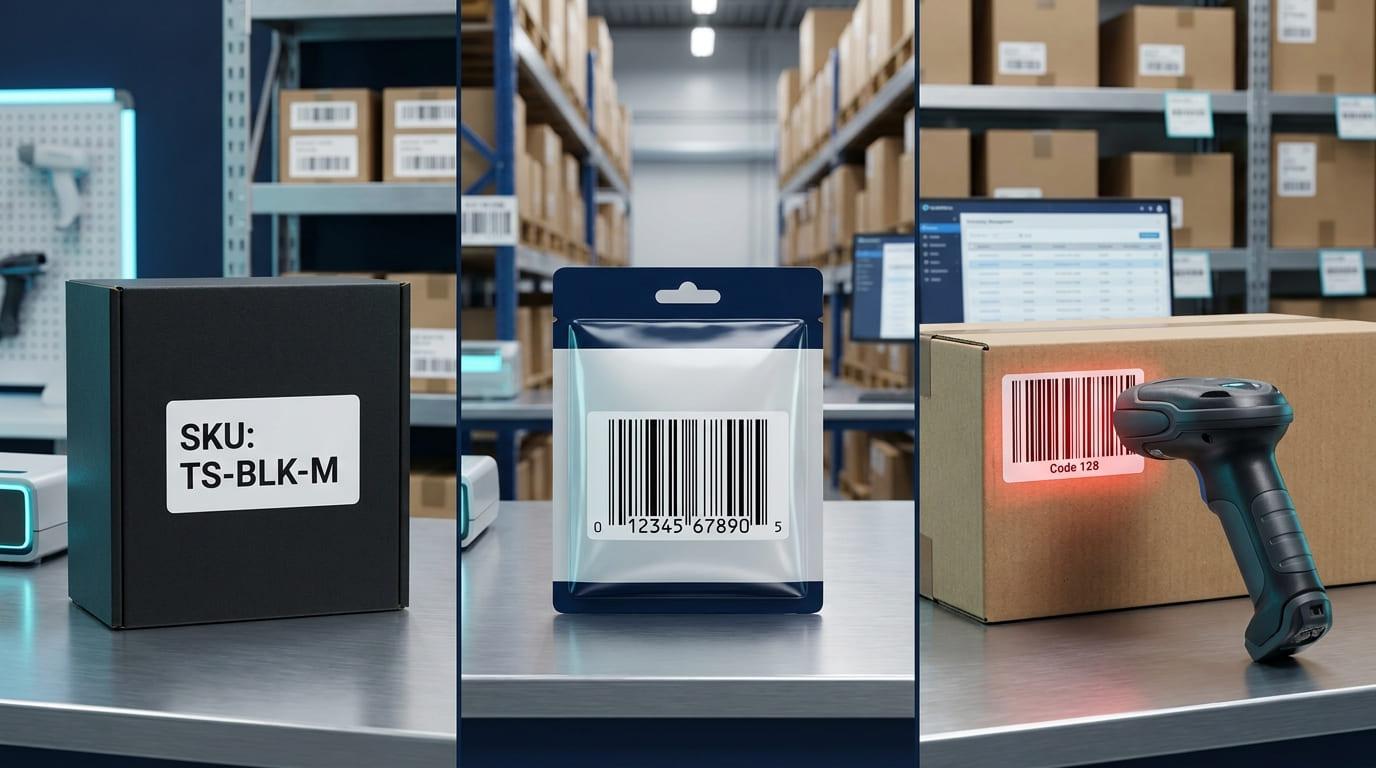
Supply chains depend on accurate information moving between manufacturers, distributors, warehouses, retailers, and customers. When product information is inconsistent or inventory movements are recorded late, even routine operations can become inefficient.
Barcodes help organizations identify products and capture inventory transactions in a consistent format. Combined with standardized product identifiers and digital inventory systems, they can improve traceability, reduce manual data entry, and support more reliable supply chain operations.
Why Product Identification Matters
A supply chain may involve multiple businesses that use different internal systems. One distributor might refer to an item by its product description, while a retailer uses a different name or internal stock code.
Standardized identifiers help reduce confusion by providing a recognized way to identify trade items.
A Global Trade Item Number, commonly called a GTIN, identifies a trade item within commercial supply chains. Depending on the application, GTINs can be represented in barcode formats such as UPC and EAN.
Managing Product Identifiers Across Sales Channels
Manufacturers and retailers should maintain accurate records linking product identifiers to descriptions, packaging configurations, and relevant commercial information.
Businesses entering new online marketplaces should review the identifier requirements for their products. Companies considering whether to buy GTIN identifiers should first establish whether valid identifiers already exist and confirm the requirements of the relevant marketplace and issuing organization.
Different packaging levels may require different identifiers. For example, a single consumer product and a case containing multiple units may need separate identification, depending on their commercial use.
Clear identification rules help prevent catalog errors and improve communication between trading partners.
How Barcodes Improve Warehouse Operations
Warehouses process numerous inventory movements every day. Goods arrive from suppliers, move between storage areas, and leave to fulfill customer orders.
Recording these movements accurately is essential for maintaining reliable stock records.
Barcode scanning enables employees to identify items quickly and associate each scan with an inventory transaction. Depending on the system, workers can scan products during receiving, put-away, picking, packing, and dispatch.
Receiving and Verification
When a shipment arrives, employees can compare its contents with the purchase order and expected delivery quantities. Scanning helps identify products and record accepted quantities.
If the shipment contains damaged or unexpected items, staff can document the discrepancy before the inventory becomes available for sale.
Picking and Dispatch
During order fulfillment, barcode scanning can help workers verify that they have selected the correct product. A final scan may also support packing checks or confirm that an order has been dispatched.
These controls are particularly valuable when several products have similar descriptions or packaging.
Selecting Software for Supply Chain Visibility
Barcode technology becomes more useful when scanning activity updates a centralized inventory record.
Organizations evaluating barcode software inventory solutions should consider their warehouse structure, transaction volume, reporting requirements, and existing business applications.
Important capabilities may include:
-
Mobile barcode scanning.
-
Inventory updates after receiving and dispatch.
-
Location-level stock visibility.
-
Transfer tracking between facilities.
-
User permissions and transaction histories.
-
Reports for shortages, discrepancies, and replenishment.
The appropriate system depends on the organization's size and operating model. A small distributor may need only basic scanning and reporting, while a larger operation may require more advanced integrations and workflow controls.
Businesses should also verify how software handles offline activity, synchronization, and duplicate scans when these issues are relevant to their operating environment.
Building a Reliable Product Database
Barcode scanning cannot compensate for inaccurate product information. Each identifier must connect to the correct item record, and duplicate or outdated records should be resolved.
A product database should include a consistent product description, SKU, barcode or GTIN where applicable, supplier details, packaging information, and storage location.
Businesses should establish a process for adding new products and modifying existing records. Changes to product packaging or specifications should be reviewed carefully to determine whether updated product identification is necessary.
Using Spreadsheets for Early-Stage Tracking
Organizations with limited inventory requirements may begin by organizing records in a spreadsheet.
Resources such as Google Sheets inventory templates can help businesses create structured records for product quantities, supplier information, reorder levels, and stock locations.
However, spreadsheets generally depend on users entering and maintaining information correctly. They may become less suitable when multiple warehouses, frequent transactions, or strict traceability requirements demand faster synchronization.
Businesses should evaluate whether their existing tools provide enough control as operational complexity increases.
Strengthening Inventory Traceability
Traceability involves maintaining records that help an organization understand where products came from, where they moved, and what happened to them.
Barcodes support this process when scans are connected to meaningful transaction records. For example, a receiving record may capture the product, quantity, supplier, date, and destination location.
Depending on the industry, businesses may also need lot numbers, serial numbers, expiration dates, or other attributes. A standard product identifier alone does not necessarily identify a specific production batch or individual item.
Organizations should therefore select tracking fields according to their regulatory obligations and operational risks.
Measuring Supply Chain Performance
Useful performance indicators help managers evaluate whether inventory processes are improving.
Inventory accuracy measures the agreement between recorded and physical quantities. Order accuracy measures whether customers receive the products they requested. Order cycle time measures how long it takes to process an order through the relevant stages.
Businesses may also monitor supplier lead times, inventory turnover, and the frequency of stock discrepancies.
Reviewing these indicators regularly can reveal recurring problems, such as receiving delays or errors during order picking.
Conclusion
Product barcodes play an important role in modern supply chain management by supporting consistent identification and more efficient transaction recording.
When combined with accurate product data, suitable inventory software, and well-defined operating procedures, barcode systems can improve stock visibility and strengthen traceability across warehouses and distribution networks.
Organizations should choose technology based on their specific requirements and review performance regularly. A structured approach helps build a supply chain that is more accurate, responsive, and prepared for growth.

 Bangla