

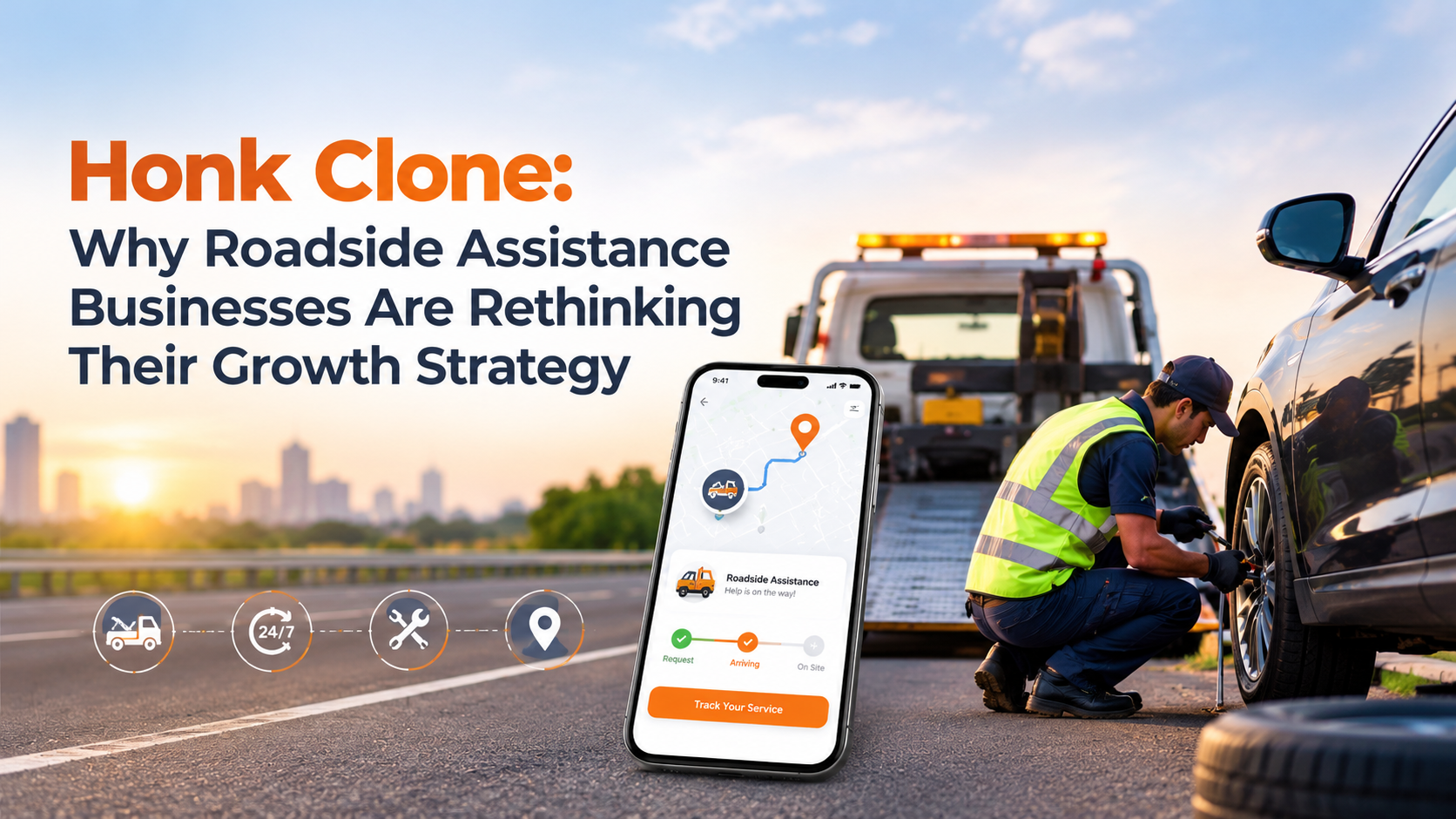
Honk Clone: Why Roadside Assistance Businesses Are Rethinking Their Growth Strategy

The Next Opportunity Is Not Just in Towing More Vehicles
Roadside assistance has traditionally depended on local towing companies, repair professionals, membership programs, and referral partnerships. These businesses continue to play an important role, but customer expectations are changing. Drivers increasingly want convenient service requests, clear pricing, reliable arrival estimates, and updates without repeatedly contacting a dispatcher.
For roadside assistance entrepreneurs, this shift creates a business opportunity: develop a service model that combines the reliability of established operators with the convenience of digital platforms.
A Honk Clone solution can support this approach by providing a foundation for a branded roadside assistance marketplace. Rather than competing solely on towing prices, businesses can differentiate themselves through provider availability, service coverage, customer experience, and commercial partnerships.
The Economics of a Roadside Assistance Business Are Changing
A roadside assistance company must balance two different priorities. Customers expect prompt help during an unexpected vehicle problem, while service providers need sufficient job volume to justify their equipment, staffing, fuel, and maintenance expenses.
When these priorities are poorly coordinated, customers may face long waits while providers experience inconsistent workloads.
Digital service networks offer a way to connect demand with available capacity. By organizing service requests, provider information, locations, and job assignments, operators can make better use of their existing network.
The commercial value becomes particularly relevant when a business expands beyond a single towing fleet. A platform can coordinate independent operators across multiple locations, subject to provider verification, service standards, and suitable coverage arrangements.
This model gives entrepreneurs an alternative to purchasing every recovery vehicle themselves. However, it requires effective partner management, transparent commercial terms, and reliable service quality.
A New Customer Base Is Emerging Beyond Private Motorists
Individual drivers are an important audience, but they are not the only potential customers for roadside assistance businesses.
Consider three commercial opportunities.
Vehicle rental companies need recovery arrangements when rented vehicles become immobilized. Reliable assistance can help reduce disruption and improve the customer experience.
Commercial fleet operators must manage vehicle downtime because delayed deliveries and unavailable vehicles can affect operating costs. They may value coordinated assistance across several service locations.
Automotive dealerships and service businesses may use roadside support to strengthen customer retention and provide additional assistance after a vehicle purchase or repair.
These segments have different purchasing requirements. Some may prefer per-job billing, while others may negotiate service agreements with defined coverage and response expectations.
A roadside assistance platform can help businesses organize these relationships and manage incoming requests. For entrepreneurs, the opportunity is to develop a service operation that addresses both individual emergencies and recurring business requirements.
Why the Customer Experience Can Influence Market Share
Roadside assistance is an infrequent purchase for many drivers, but it often occurs during stressful circumstances. This makes trust and communication important factors in the customer journey.
A customer who cannot determine whether help has been dispatched may feel uncertain even when a provider is available nearby. Similarly, unclear pricing can create disputes when the service is completed.
Digital platforms can address these concerns by presenting service options, communicating estimated arrival times, displaying request status, and recording payment details.
Businesses should also establish clear procedures for cancellations, additional charges, service limitations, and complaints. Technology can make these policies easier to communicate, but it cannot replace professional customer support.
For new market entrants, a consistent experience can become a competitive differentiator—particularly in locations where customers have limited visibility into available roadside assistance providers.
The Electric Vehicle Transition Creates New Service Requirements
The evolution of vehicle technology is creating additional considerations for roadside assistance operators.
Electric vehicles may require specialized towing procedures, suitable recovery equipment, and providers who understand manufacturer-specific guidance. Conventional vehicles also present different requirements depending on their size, condition, and breakdown circumstances.
This creates an opportunity for operators to develop specialist service categories instead of offering identical assistance for every vehicle.
For example, a business could establish a verified network of providers trained to handle selected electric vehicle recovery situations. It could also develop partnerships with automotive service centres to support incidents that require specialist assessment.
Before entering these segments, operators must evaluate training, equipment investment, safety procedures, and local demand. A digital platform can then help record provider capabilities and route suitable requests to qualified professionals.
From a Service Idea to a Digital Business Model
Developing a roadside assistance platform involves more than creating a booking screen. The business needs a connected system for customers, service providers, dispatchers, and administrators.
A Honk Clone solution offers a starting point for building this infrastructure. Depending on the selected product and customization scope, the platform may support service requests, provider applications, location tracking, job assignment, digital payments, notifications, and administrative reporting.
The technology should reflect the intended commercial model. A business serving individual motorists may prioritize convenient bookings and payment processing. An operator targeting corporate fleets may need account management, service records, consolidated reporting, and configurable billing workflows.
Before implementation, business owners should assess integration requirements, provider verification, data security, scalability, and the cost of maintaining the platform. They should also establish how revenue will be generated through service fees, commissions, commercial agreements, or a combination of models.
The objective is to invest in capabilities that support a defined market opportunity rather than adding features without a measurable business purpose.
What Will Differentiate the Next Generation of Operators?
Roadside assistance businesses will not compete on technology alone. Provider reliability, geographic coverage, transparent pricing, and the ability to handle different vehicle emergencies will remain central to customer confidence.
A Honk Clone App can provide the digital foundation for organizing these elements within a branded service network. Its effectiveness depends on the operator's ability to recruit capable providers, establish productive partnerships, and deliver consistent service.
For entrepreneurs entering the market, the most promising starting point may be a clearly defined customer segment or geographic area where dependable assistance is difficult to access.
Build a strong service network, demonstrate consistent performance, and expand according to verified demand. That is how a roadside assistance business can turn digital convenience into a credible long-term commercial proposition.
