


Businesses rely on vendors and suppliers to maintain smooth operations, manage costs, and deliver products or services on time. However, working with an unreliable supplier can expose an organisation to financial losses, operational delays, compliance issues, and reputational damage. Before entering into a new supplier relationship or renewing an existing contract, businesses should assess the vendor’s credibility, financial position, operational capabilities, and business practices.
A Vendor Due Diligence Report helps organisations evaluate potential suppliers by examining relevant business information, identifying possible risks, and supporting informed procurement decisions. It provides a structured view of a vendor’s reliability and helps businesses determine whether a supplier can meet their requirements consistently.
What Is a Vendor Due Diligence Report?
A Vendor Due Diligence Report is a detailed assessment of a supplier or service provider conducted before establishing or continuing a business relationship. It involves reviewing the vendor’s company background, financial stability, legal and regulatory records, operational capabilities, market reputation, and other relevant information.
The purpose is to verify whether the supplier is legitimate, financially sound, operationally capable, and suitable for the proposed business arrangement. The findings help procurement teams, business owners, lenders, and compliance professionals understand potential risks before making a commitment.
Why Is Vendor Due Diligence Important?
Supplier relationships can directly affect a company's production, service delivery, customer satisfaction, and financial performance. Evaluating vendors in advance helps businesses reduce uncertainty and avoid preventable disruptions.
Key reasons for conducting vendor due diligence include:
1. Verify Business Legitimacy
Checking company registration details, ownership information, registered addresses, and business records helps confirm that a supplier is a legitimate operating entity. It also helps identify inconsistencies in the information provided by the vendor.
2. Assess Financial Stability
A supplier experiencing financial difficulties may struggle to fulfil orders, maintain inventory, or continue operations. Reviewing available financial statements, credit information, payment history, and financial indicators helps businesses assess the vendor’s ability to meet its commitments.
3. Identify Legal and Compliance Risks
Pending litigation, regulatory actions, insolvency proceedings, and compliance concerns can affect a vendor’s reliability. Reviewing relevant legal and regulatory records helps businesses identify issues that may create financial or operational exposure.
4. Reduce Supply Chain Disruptions
An unreliable supplier can cause delayed deliveries, production interruptions, and increased operating costs. Evaluating operational capacity, infrastructure, delivery performance, and dependency on subcontractors helps businesses understand whether the vendor can support ongoing requirements.
5. Protect Business Reputation
A supplier's unethical practices, poor quality standards, or involvement in disputes can affect the reputation of the organisation working with them. Due diligence helps businesses identify potential concerns before entering into a commercial relationship.
Key Areas to Evaluate in a Vendor Due Diligence Report
A comprehensive vendor assessment should cover several aspects of the supplier's business. The depth of the review may vary depending on the nature of the services, contract value, industry, and level of risk involved.
1. Company Background and Registration Details
Start by verifying the supplier's basic business information. This establishes whether the vendor operates as a legally recognised entity and whether its details are consistent across available records.
Important details to review include:
-
Registered company name and registration number
-
Date of incorporation and business status
-
Registered and operational addresses
-
Directors, promoters, and ownership structure
-
Nature of business and principal activities
-
Available registration certificates and licences
For Indian companies and LLPs, relevant information can be checked through the Ministry of Corporate Affairs (MCA) portal. Cross-checking the information provided by the vendor against official records can help identify discrepancies.
2. Financial Health and Creditworthiness
Financial stability is one of the most important indicators of supplier reliability. A financially weak vendor may face difficulties in maintaining operations, sourcing raw materials, or fulfilling contractual obligations.
The assessment may include:
-
Revenue and profitability trends
-
Balance sheet position
-
Cash flow and liquidity indicators
-
Outstanding borrowings and liabilities
-
Payment behaviour and credit history, where available
-
Insolvency or financial distress indicators
Businesses should review financial information over multiple reporting periods wherever possible. A single year's financial performance may not provide a complete picture of a supplier's financial condition.
3. Legal and Regulatory Compliance
Legal and regulatory checks help determine whether a supplier has any known issues that could affect its ability to operate or fulfil contractual commitments.
Relevant checks may include:
-
Pending or historical litigation
-
Regulatory notices and enforcement actions
-
Insolvency and bankruptcy records
-
Tax or statutory compliance concerns
-
Industry-specific licences and certifications
-
Contractual disputes, where information is available
The significance of each finding should be evaluated based on its nature, status, financial impact, and relevance to the proposed business relationship.
4. Operational Capabilities and Infrastructure
A supplier may be financially stable but still lack the resources or infrastructure required to meet business requirements. Operational due diligence helps evaluate whether the vendor has the capacity to deliver products or services as agreed.
Consider reviewing:
-
Production capacity and available resources
-
Manufacturing or service facilities
-
Workforce strength and technical expertise
-
Quality control procedures
-
Inventory and logistics arrangements
-
Delivery timelines and fulfilment history
-
Business continuity and disaster recovery plans
Site visits, operational audits, and discussions with existing customers can provide additional insight into the supplier's capabilities.
5. Market Reputation and Business Track Record
A vendor's market reputation can provide useful information about its business practices and service quality. Reviewing its track record helps businesses understand how consistently the supplier meets customer expectations.
Useful sources of information include:
-
Customer references and testimonials
-
Business reviews and industry feedback
-
Previous client relationships
-
History of major disputes
-
Publicly available business information
-
Past performance against contractual commitments
Businesses should verify important claims through independent sources rather than relying entirely on information supplied by the vendor.
6. Ownership Structure and Related-Party Risks
Understanding who owns and controls a supplier is important, particularly when dealing with high-value contracts or strategically important vendors.
Review the available information about directors, shareholders, beneficial ownership, and related entities. Identify potential conflicts of interest, unusual ownership arrangements, or undisclosed relationships that may affect the business relationship.
7. Information Security and Data Protection
If a vendor handles confidential business information, customer records, financial data, or digital systems, information security should form part of the due diligence process.
Assess whether the supplier has:
-
Appropriate data protection policies
-
Access controls and security procedures
-
Data backup and recovery arrangements
-
Incident response and breach reporting processes
-
Relevant security certifications, where applicable
-
Clear contractual responsibilities for handling confidential data
The level of review should reflect the type and sensitivity of information the vendor will access.
How to Conduct Vendor Due Diligence: Step-by-Step Process
A structured process helps businesses evaluate suppliers consistently and maintain proper records of their findings.
Step 1: Define the Scope of Assessment
Determine the purpose of the vendor review, the value of the proposed contract, the nature of the goods or services, and the potential impact of supplier failure. This helps establish the depth of due diligence required.
Step 2: Collect Vendor Information
Request relevant documents and information from the supplier, such as company registration details, financial statements, licences, certifications, operational information, and customer references.
Step 3: Verify Business Credentials
Cross-check the vendor's information against official company registries, regulatory databases, financial records, and other reliable sources. Investigate any inconsistencies or missing details.
Step 4: Evaluate Financial and Legal Risks
Review available financial information, credit indicators, litigation records, regulatory concerns, and insolvency-related information. Identify issues that could affect the supplier's ability to perform its obligations.
Step 5: Assess Operational Reliability
Evaluate the vendor's infrastructure, workforce, production capacity, quality standards, logistics, and delivery performance. Depending on the risk level, conduct a site visit or operational audit.
Step 6: Prepare the Vendor Due Diligence Report
Consolidate the findings into a structured report. Highlight verified information, potential risks, missing documents, areas requiring further investigation, and the overall assessment of supplier reliability.
Step 7: Make an Informed Decision
Use the findings to decide whether to approve the supplier, request additional documentation, introduce contractual safeguards, or reject the vendor. High-risk suppliers may require enhanced monitoring and periodic reassessment.
Common Red Flags to Watch for During Vendor Evaluation
Certain warning signs may indicate that a supplier requires additional scrutiny. These do not automatically establish misconduct or unreliability, but they should be investigated before proceeding.
| Red Flag | Potential Concern |
|---|---|
| Inconsistent company details | Possible inaccuracies in business information |
| Limited financial disclosures | Difficulty assessing financial stability |
| Repeated delivery delays | Potential operational weaknesses |
| Ongoing material litigation | Possible legal or financial exposure |
| Frequent ownership changes | Uncertainty around management or control |
| Poor customer feedback | Possible service or quality concerns |
| Missing licences or certifications | Potential compliance gaps |
| Heavy dependence on one customer or supplier | Increased business continuity risk |
What Should a Vendor Due Diligence Report Include?
A well-prepared report should present relevant findings in a clear and organised format. Although the exact structure may vary, the following sections are commonly useful:
-
Vendor Overview: Company name, registration details, address, business activities, and ownership information.
-
Financial Assessment: Available financial statements, liquidity indicators, profitability, liabilities, and credit-related findings.
-
Legal and Compliance Review: Relevant litigation, regulatory records, licences, and compliance concerns.
-
Operational Assessment: Infrastructure, workforce, production capacity, quality controls, and delivery capabilities.
-
Reputation Review: Customer references, business track record, market feedback, and known disputes.
-
Risk Assessment: Identified risks, their potential impact, and areas requiring further verification.
-
Recommendations: Suggested safeguards, additional checks, approval conditions, or monitoring requirements.
The report should distinguish between verified facts, information provided by the vendor, and findings that require further investigation. This helps decision-makers understand the reliability and limitations of the assessment.
How Often Should Businesses Conduct Vendor Due Diligence?
Vendor due diligence should not be treated as a one-time activity. A supplier's financial condition, ownership, operational capacity, and compliance position can change over time.
Businesses should consider conducting reviews:
-
Before onboarding a new supplier.
-
Before signing high-value or long-term contracts.
-
When renewing important supplier agreements.
-
After major changes in ownership or management.
-
When a supplier experiences financial or operational difficulties.
-
When regulatory, legal, or reputational concerns arise.
High-risk and business-critical suppliers may require more frequent monitoring than vendors providing low-value or easily replaceable services.
How MNS Credit Management Group Supports Business Due Diligence
Evaluating a supplier requires access to reliable business information and a structured approach to identifying potential risks. MNS Credit Management Group supports organisations with business information and due diligence services that help them assess company credentials and make informed business decisions.
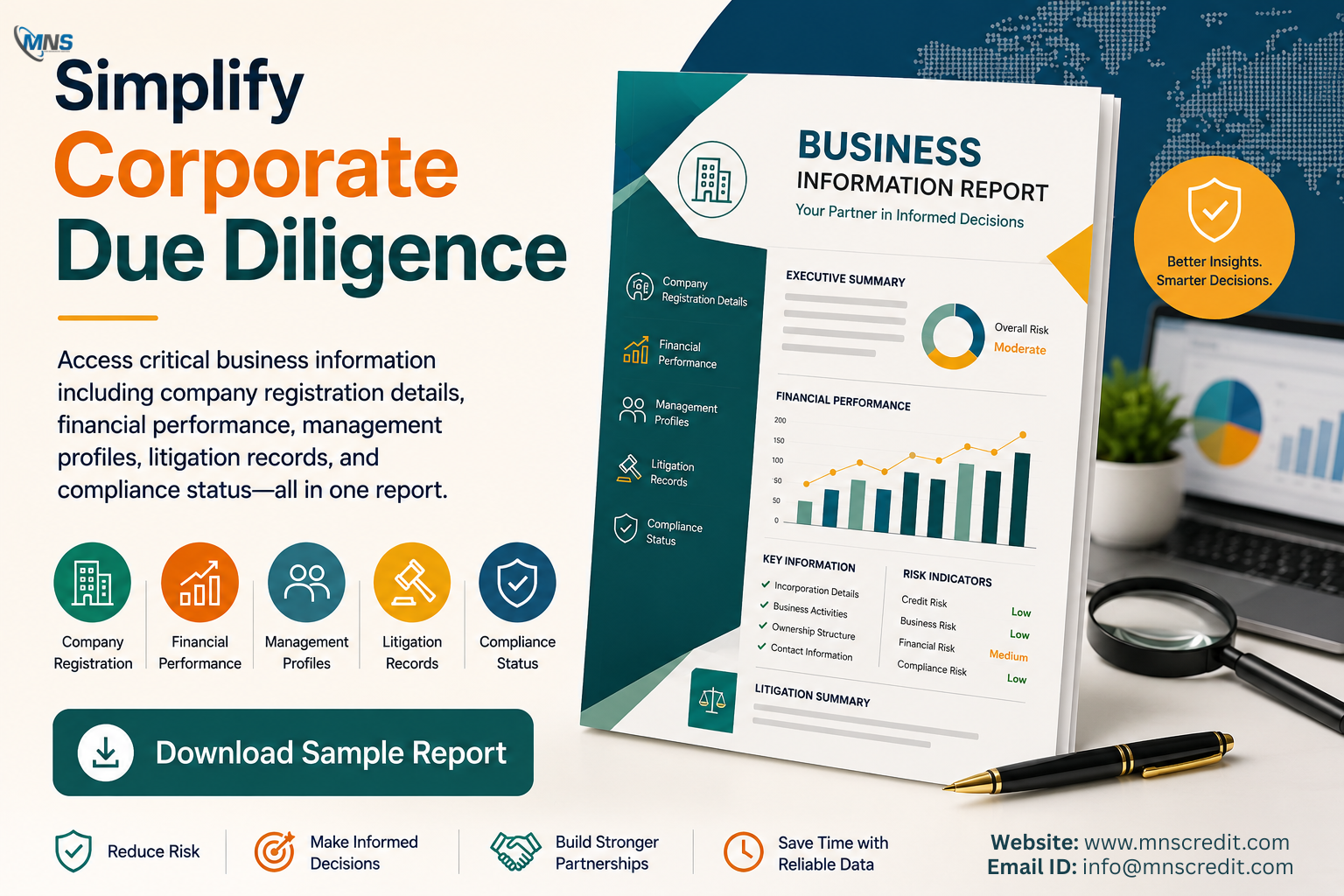
Through Business Information Reports, businesses can obtain relevant company information, available financial and credit-related insights, litigation checks, and other business intelligence to support supplier evaluation and commercial risk assessment.
By reviewing a vendor's business background and available risk indicators, organisations can strengthen their verification process, identify areas requiring further investigation, and make more informed decisions before entering into business relationships.
Visit MNS Credit Management Group to learn more about Business Information Report services.
Frequently Asked Questions (FAQs)
1. What is the purpose of a Vendor Due Diligence Report?
A Vendor Due Diligence Report helps businesses evaluate a supplier's legitimacy, financial stability, legal compliance, operational capabilities, and market reputation before entering into or continuing a business relationship.
2. What documents are required for vendor due diligence?
Commonly requested documents include company registration certificates, financial statements, tax and regulatory registrations, business licences, insurance details, quality certifications, operational records, and customer references. Requirements vary depending on the supplier and industry.
3. How does vendor due diligence reduce business risk?
It helps identify financial, legal, operational, compliance, and reputational concerns before they affect the organisation. Businesses can use the findings to introduce safeguards, request further verification, or reconsider a supplier relationship.
4. Is vendor due diligence required for every supplier?
The depth of due diligence should be proportionate to the supplier's importance, contract value, access to sensitive information, and potential business impact. Critical or high-risk vendors generally require more detailed assessments.
5. What is the difference between vendor due diligence and supplier evaluation?
Supplier evaluation often focuses on factors such as pricing, product quality, delivery, and service performance. Vendor due diligence takes a broader view by also examining company legitimacy, financial health, legal records, compliance, ownership, and potential business risks.
Conclusion
Supplier reliability plays an important role in maintaining operational continuity, controlling costs, and protecting business interests. A Vendor Due Diligence Report provides a structured way to assess a supplier's financial position, legal standing, operational capabilities, and reputation before making procurement decisions.
By verifying business information, identifying potential red flags, and reviewing supplier performance regularly, organisations can reduce avoidable risks and build stronger vendor relationships. A consistent due diligence process helps businesses select suppliers with greater confidence and support long-term supply chain stability.
