

Providing dogs with suitable treats is a simple way to reward good behavior, support training, and add enjoyment to their daily routines. Many pet owners pay closer attention to ingredient quality, preparation methods, and nutritional value when selecting snacks for their companions. Healthy handmade dog treats can be an appealing option for those seeking thoughtfully prepared products with clearly listed ingredients and options suited to their dogs' needs.
However, a treat being handmade does not automatically make it nutritious or safe. The ingredients, processing standards, portion size, and individual dog's health all matter. By understanding these factors, pet parents can make informed decisions and offer treats that complement a complete and balanced diet.
What Are Healthy Handmade Dog Treats?
Healthy handmade dog treats are snacks prepared using hands-on methods and ingredients selected for their intended purpose. Depending on the product, they may include meat-based rewards, dehydrated organ meats, or animal-hide chews.
Some treats contain only one ingredient, while others combine several ingredients. Single-ingredient options can be useful for owners who want a straightforward ingredient list, although they are not automatically healthier than every multi-ingredient product.
Quality matters more than the handmade label alone. Look for transparent ingredient information, hygienic processing, appropriate packaging, and clear feeding instructions. A suitable treat should match your dog's size, chewing habits, and dietary requirements.
Benefits of Choosing Quality Dog Treats
When selected carefully, treats can support several parts of a dog's everyday routine.
1. Supports Positive Training
Small treats can reinforce desirable behavior during obedience practice, walks, and everyday activities. Offering a reward immediately after a desired action helps dogs associate that behavior with a positive outcome.
For training sessions, use small portions that your dog can eat quickly. Remember to include treat calories in the daily food allowance to avoid overfeeding.
2. Provides Mental Stimulation
Certain treats and appropriately selected chews can give dogs an engaging activity. Chewing is a natural canine behavior, and a suitable chew may help keep a dog occupied during supervised downtime.
Chews should complement exercise, play, and interaction rather than replace them. Choose an appropriate texture and supervise your dog to reduce choking and dental injury risks.
3. Offers Ingredient Transparency
Pet owners who prefer uncomplicated foods may appreciate treats with clearly identified ingredients. A short ingredient list can make it easier to check for known allergens or compare similar products.
Nevertheless, natural ingredients can still cause adverse reactions. If your dog has food sensitivities or a medical condition, consult a veterinarian before introducing unfamiliar treats.
4. Adds Variety to Treat Time
Different treats serve different purposes. Small, soft rewards may work well during training, while suitable longer-lasting chews offer a different texture and chewing experience.
Selecting products according to their intended use helps you provide variety without giving your dog excessive snacks.
Popular Types of Healthy Handmade Dog Treats
Understanding common treat categories can help you identify options that fit your dog's routine.
Freeze-Dried Liver Treats
Freeze-dried beef liver treats are a concentrated, animal-based snack that many dogs find appealing. Their small portions can be convenient for training or occasional rewards.
Liver is rich in nutrients, including vitamin A, so excessive feeding is not advisable. Follow the product's feeding instructions and keep treats within approximately 10% of your dog's daily calories.
Natural Hide Chews
Natural hide chews are intended for dogs that enjoy chewing. Depending on the product, they may come in rolls, chips, chunks, or other shapes.
These products require supervision because dogs can tear off and swallow pieces. Choose a size appropriate for your dog, avoid excessively hard products, and remove pieces that become small enough to swallow.
Single-Ingredient Treats
Single-ingredient treats contain one listed ingredient and may appeal to owners who want a simpler feeding routine. Examples can include certain meat-based treats and appropriately processed animal products.
Always check the label and consider your dog's allergies, nutritional needs, and chewing behavior. One ingredient does not automatically guarantee that a product is complete, balanced, or appropriate for every dog.
How to Choose Healthy Handmade Dog Treats
Selecting the right treats involves several important considerations.
Check the Ingredient List
Look for clear product labeling and understandable ingredient names. If you want to avoid artificial flavors, preservatives, or unnecessary fillers, verify the specific product information rather than relying on general marketing claims.
Consider Your Dog's Age and Size
Puppies, adult dogs, and senior dogs may require different treat textures and sizes. A small dog could struggle with an oversized chew, while a dog that gulps food may be at greater risk from products that break into large pieces.
Consult your veterinarian if your dog has dental problems, digestive concerns, allergies, or special dietary requirements.
Review Product Quality
Choose sellers that provide clear information about sourcing, processing, packaging, and storage. Handmade production alone does not guarantee hygiene, safety, or nutritional quality.
Watch Portion Sizes
Treats should complement a complete and balanced diet, not replace regular meals. As a general guideline, treats should provide no more than 10% of your dog's daily calories, with the rest coming from a nutritionally complete diet.
Why Consider Ugly Chews for Natural Dog Treats?
Pet owners looking for natural treat options can consider Ugly Chews, a family-owned business focused on natural dog chews and single-ingredient dog treats.
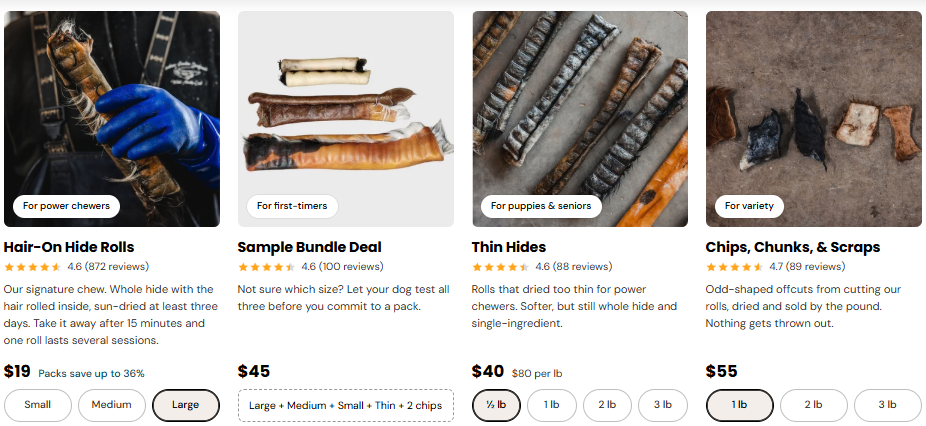
Its product range includes freeze-dried liver treats, hair-on hide rolls, and chips, chunks, and scraps made from cattle hides. The company emphasizes straightforward ingredients and a zero-waste approach to using different portions of cattle hides. Its stated hide-processing methods include cleaning with water and drying in direct sunlight.
These products offer different uses: freeze-dried liver can serve as a measured reward, while hide-based products are intended for chewing under supervision. Review the individual product details, ingredients, and feeding instructions to determine what suits your dog.
Visit the Ugly Chews natural dog treats collection to compare the available options.
Tips for Feeding Dog Treats Safely
Responsible feeding helps keep treat time enjoyable and appropriate for your pet.
-
Introduce unfamiliar treats gradually and monitor your dog's response.
-
Supervise your dog whenever you provide a chew.
-
Remove damaged or small pieces that could be swallowed.
-
Provide fresh drinking water.
-
Follow the product's storage and feeding instructions.
-
Discard treats that show mold, unusual odors, or signs of contamination.
-
Ask your veterinarian about suitable treats for dogs with specific health needs.
Remember that even natural treats can pose risks if they are unsuitable for a dog's chewing style or dietary requirements.
Conclusion
Healthy handmade dog treats can be a useful addition to your dog's routine when they contain suitable ingredients and are fed in moderation. Prioritize transparent labeling, appropriate sizing, safe preparation, and your dog's individual needs rather than relying on the word handmade alone.
Ugly Chews offers natural hide-based chews and freeze-dried liver treats for pet owners seeking straightforward treat options. Compare the product details, select suitable treats, and use them alongside a complete diet, regular exercise, and attentive care to support your dog's everyday well-being.

