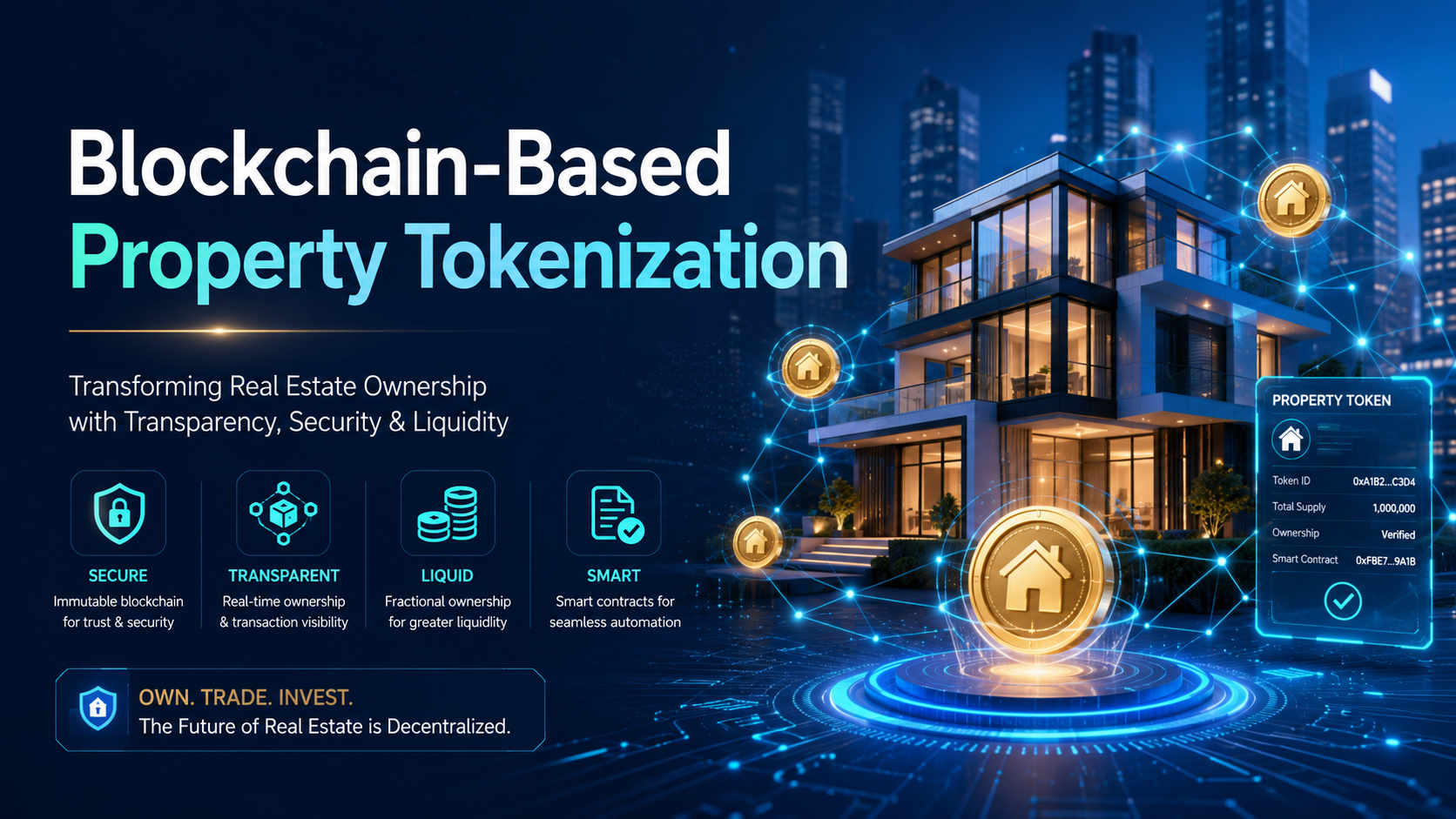
In 2026, blockchain-based property tokenization systems have moved beyond experimentation and are now actively reshaping how real estate is owned, traded, and managed. By converting physical real estate assets into digital tokens on a blockchain, these systems enable fractional ownership, automated transactions, and global investor participation. The result is a more liquid, transparent, and efficient property market that addresses long-standing inefficiencies in traditional real estate.
As global adoption increases, tokenization is being recognized not just as a technological upgrade but as a structural transformation in real estate finance, enabling capital to move faster and more freely across borders and asset classes.
1. Fractional Ownership and Lower Entry Barriers
One of the most significant advantages of blockchain-based property tokenization is fractional ownership. Instead of requiring full capital to purchase a property, investors can buy small digital shares represented by tokens.
This fundamentally lowers the entry barrier for real estate investment, allowing individuals who previously could not access high-value properties to participate in the market. It also enables investors to diversify across multiple properties rather than committing all capital to a single asset. Research in 2026 highlights that fractional ownership is one of the core drivers of real estate tokenization adoption, making premium real estate accessible to a much broader investor base.
2. Enhanced Liquidity in Traditionally Illiquid Markets
Real estate has always been considered an illiquid asset class due to long transaction cycles, legal complexity, and lack of secondary markets. Tokenization changes this by enabling property shares to be traded like digital assets.
Investors can buy or sell tokens representing real estate ownership in near real-time on blockchain-based marketplaces, significantly reducing holding periods. This introduces liquidity into a market that traditionally required weeks or months to exit. Tokenization platforms in 2026 increasingly support secondary trading, which improves capital flow and makes real estate investment more flexible and responsive.
3. Greater Transparency and Fraud Reduction
Blockchain technology ensures that every transaction is recorded on an immutable ledger. This creates a transparent system where ownership history, transfers, and asset data cannot be altered or manipulated.
This transparency reduces fraud risks, ownership disputes, and documentation inconsistencies that are common in traditional real estate systems. Investors gain higher confidence because all transaction records are verifiable and traceable. Additionally, blockchain’s decentralized structure eliminates single points of failure, further increasing data integrity and security.
4. Smart Contract Automation for Efficiency
Smart contracts are self-executing programs that automate agreements on the blockchain. In property tokenization systems, they handle key functions such as:
Rental income distribution
Dividend payouts to token holders
Ownership transfers
Compliance checks
This automation reduces dependency on intermediaries such as brokers, legal agents, and banks. It also minimizes human error and speeds up transaction execution. In 2026, smart contracts are widely used to streamline property investment workflows, making operations faster, cheaper, and more reliable.
5. Global Investment Accessibility
Blockchain-based tokenization removes geographical barriers in real estate investing. Investors from different countries can participate in property markets without the need for complex cross-border legal procedures.
This global accessibility expands the investor pool significantly, allowing developers to raise capital from a worldwide audience. It also enables investors to diversify internationally without physically owning or managing foreign properties. As a result, real estate becomes a borderless asset class with improved capital mobility and increased market participation.
6. Faster Settlement and Reduced Transaction Time
Traditional real estate transactions involve multiple intermediaries, including banks, brokers, and legal institutions, leading to long settlement periods. Tokenization significantly reduces this timeline by enabling blockchain-based ownership transfers. Transactions that once took weeks can now be completed in minutes or hours depending on regulatory requirements. Smart contracts further accelerate settlement by automatically verifying conditions and executing transfers without manual intervention.
7. Reduced Transaction and Operational Costs
By eliminating or reducing the need for intermediaries, blockchain-based property tokenization lowers overall transaction costs. Expenses related to paperwork, legal verification, brokerage fees, and administrative overhead are significantly reduced. This makes real estate investment more cost-efficient for both investors and developers. It also allows property owners to retain a larger portion of returns from asset sales or rentals.
8. Improved Portfolio Diversification
Tokenization enables investors to distribute capital across multiple properties, asset types, and geographic regions. Instead of investing heavily in a single property, investors can hold fractions of several assets. This diversification reduces risk exposure and improves portfolio stability. It also allows investors to balance high-yield commercial properties with lower-risk residential assets.
9. Increased Market Efficiency and Price Discovery
Tokenized real estate markets enable continuous trading and real-time valuation updates. This improves price discovery, as asset values are influenced by transparent market activity rather than delayed or opaque appraisal methods. With more participants and higher liquidity, pricing becomes more accurate and reflective of true market demand.
10. Integration with DeFi and Yield Generation
In 2026, tokenized real estate is increasingly integrated with decentralized finance (DeFi) systems. Property tokens can be used as collateral for loans or included in yield-generating financial products. This allows real estate assets to become productive financial instruments rather than static investments. Investors can earn rental income, appreciation gains, and DeFi-based yields simultaneously.
11. Automated Compliance and Regulatory Reporting
Modern tokenization platforms integrate compliance rules directly into smart contracts. This ensures that transactions follow legal frameworks automatically. This reduces regulatory friction and simplifies reporting for both developers and investors. It also helps platforms align with evolving global standards for digital assets and securities regulation.
12. Tokenized Asset Interoperability
Blockchain-based systems allow tokenized real estate assets to interact with other digital financial systems. This includes integration with digital wallets, exchanges, and investment platforms. This interoperability enhances liquidity and allows assets to move seamlessly across financial ecosystems, increasing usability and market efficiency.
13. Improved Capital Raising for Developers
Developers can use tokenization to raise funds faster by issuing property-backed tokens instead of relying on traditional financing methods such as bank loans or institutional investors. This democratizes capital access and enables smaller developers to attract global funding. It also reduces dependency on centralized financial institutions.
14. Long-Term Market Transformation
By 2026, property tokenization is not just improving real estate systems—it is redefining them. Ownership structures, investment models, and asset liquidity are all being reshaped through blockchain integration.
As adoption grows, tokenized real estate is expected to become a foundational component of global digital asset markets, bridging traditional property investment with modern decentralized finance systems.
Conclusion
Blockchain-based property tokenization systems offer a wide range of advantages that directly address long-standing inefficiencies in the real estate industry. From fractional ownership and increased liquidity to transparency, automation, and global accessibility, these systems are transforming how property investment works in 2026.
While challenges such as regulation and adoption still exist, the trajectory is clear: tokenization is evolving into a core infrastructure layer for modern real estate markets. As technology and legal frameworks continue to mature, its role in shaping the future of property investment will only grow stronger.




 Bangla