


Industrial plants depend on reliable piping components to manage the movement of water, chemicals and other process fluids. Valves are important parts of these systems because they help control flow, isolate pipeline sections and support routine maintenance. Choosing the right valve can improve operational convenience and help maintain an efficient piping arrangement.
Industrial Grade UPVC Butterfly Valve is used in selected industrial applications where lightweight construction, corrosion resistance and practical flow control are important. Manufactured using unplasticized polyvinyl chloride (UPVC), these valves are suitable for various water-handling and compatible chemical-processing applications.
Petron Thermoplast offers thermoplastic product solutions for industrial piping requirements. Selecting suitable UPVC butterfly valves according to pipeline dimensions, operating pressure and fluid compatibility helps plant operators build dependable fluid-handling systems.
What Is an Industrial UPVC Butterfly Valve?
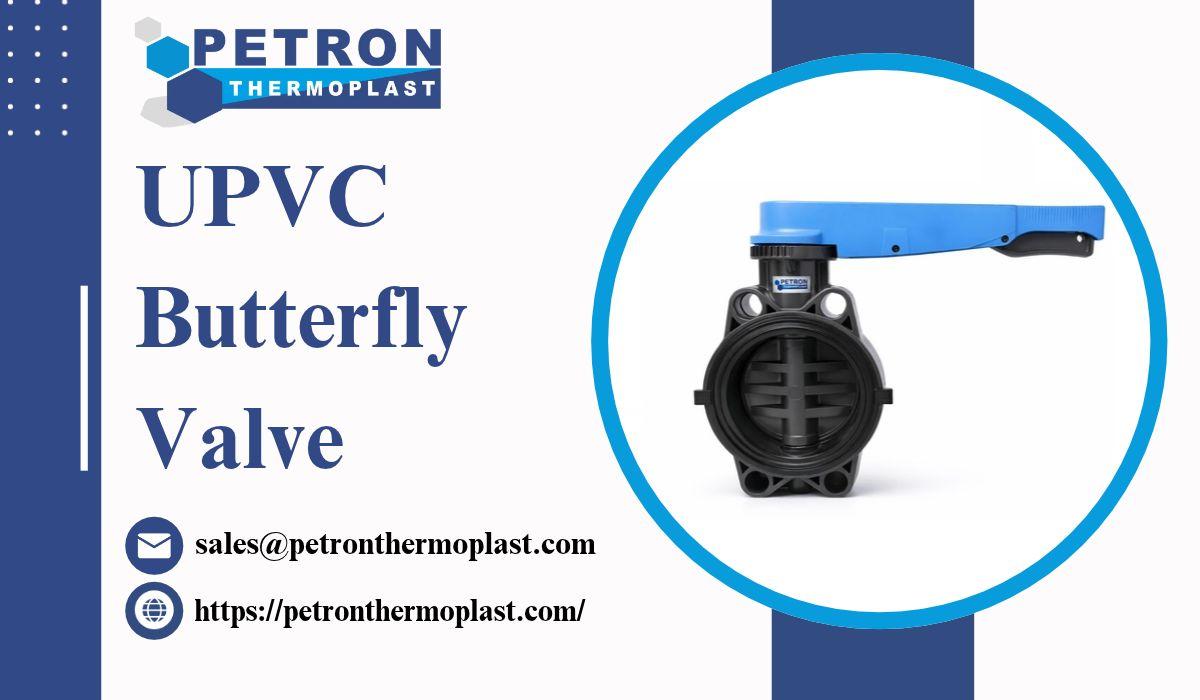
A UPVC butterfly valve is a quarter-turn valve that uses a rotating disc to regulate or stop fluid movement through a pipeline. When the handle or operating mechanism turns, the disc changes its position inside the valve body. When the disc is aligned with the direction of flow, fluid can pass through the valve. When the disc rotates across the flow path, it restricts or stops fluid movement.
UPVC is a rigid thermoplastic material known for its corrosion resistance, dimensional stability and lightweight construction. These properties make it useful in selected industrial piping applications. Butterfly valves are commonly considered for pipelines where compact construction and convenient operation are required.
Why Choose UPVC Butterfly Valves for Plant Operations?
Industrial environments involve different operating conditions. Pipeline components must be selected according to the fluid, pressure, temperature and installation requirements.
UPVC butterfly valves offer several practical advantages for compatible applications.
- Corrosion Resistance
Unlike conventional carbon steel components, UPVC does not rust. It offers resistance to many chemicals and corrosive environments, making it suitable for selected industrial fluid-handling systems.
However, chemical compatibility must always be verified for the specific fluid and concentration.
- Lightweight Construction
UPVC butterfly valves are generally lighter than many metal valve alternatives. This can make transportation, handling and installation more convenient.
- Convenient Operation
The quarter-turn operating mechanism allows users to change the valve position without multiple handle rotations. This makes routine operation straightforward.
- Compact Design
Butterfly valves generally require less installation space than some other valve designs. Their compact construction can be useful in industrial plants with multiple pipeline connections.
- Reduced Corrosion-Related Maintenance
UPVC does not experience metal rusting. In suitable operating conditions, this can reduce maintenance concerns associated with corrosion of metallic valve bodies.
- Practical Flow Control
The rotating disc provides an effective way to open, close or partially restrict flow where the valve manufacturer permits throttling operation. The suitability of a valve for continuous throttling should be checked against its design.
Important Components of a UPVC Butterfly Valve
Understanding the valve construction helps buyers evaluate the product before installation.
|
Component |
Function |
|
Valve body |
Houses the disc and provides the main pipeline connection |
|
Disc |
Rotates to control fluid movement |
|
Stem |
Transfers movement from the operating mechanism to the disc |
|
Seat or liner |
Provides the sealing interface |
|
Handle or gearbox |
Operates the valve |
|
Sealing components |
Help prevent leakage around the stem and other interfaces |
Applications of Industrial Grade UPVC Butterfly Valves
UPVC butterfly valves are used across different sectors where their material properties and operating limits match the application.
- Water Treatment Plants
Water treatment facilities use valves throughout filtration, distribution and treatment processes. UPVC butterfly valves may be considered for compatible water pipelines and utility systems.
- Chemical Processing Industries
Chemical plants require suitable valve materials for handling different process fluids. UPVC butterfly valves can be evaluated for compatible chemical transfer and distribution lines.
- Effluent Treatment Plants
Effluent treatment facilities use piping networks to move wastewater between collection, treatment and discharge stages. Selected UPVC valves may be suitable for compatible applications.
- Industrial Manufacturing Units
Manufacturing plants use butterfly valves in utility lines, water circulation systems and other fluid-handling arrangements.
- Pharmaceutical Facilities
Certain utility and process-support systems may use UPVC butterfly valves where material specifications and process requirements permit.
- Cooling Water Systems
UPVC butterfly valves may be used in selected cooling-water pipelines where the pressure, temperature and fluid conditions are within the approved operating limits.
Technical Factors to Consider Before Purchasing
Selecting an industrial butterfly valve requires careful evaluation of the application. Buyers should not rely only on nominal valve size or material name.
|
Technical parameter |
What to verify |
|
Valve size |
Required nominal diameter |
|
Body material |
UPVC grade and product specification |
|
Operating pressure |
Maximum system working pressure |
|
Temperature |
Normal and maximum operating temperature |
|
Disc material |
Compatibility with the process fluid |
|
Seat material |
Chemical and temperature compatibility |
|
Connection type |
Wafer, lug or other available configuration |
|
Operation |
Lever, gearbox or approved actuator |
|
Fluid type |
Water, chemical or other process fluid |
|
Installation |
Pipeline layout and available operating clearance |
UPVC Butterfly Valve vs. Metal Butterfly Valve
Both UPVC and metal butterfly valves have applications in industrial piping systems. The appropriate choice depends on the process requirements.
|
Comparison factor |
UPVC butterfly valve |
Metal butterfly valve |
|
Construction |
Thermoplastic |
Metallic |
|
Corrosion behaviour |
Does not rust |
Depends on metal grade and environment |
|
Weight |
Generally lightweight |
Generally heavier |
|
Chemical resistance |
Depends on chemical compatibility |
Depends on alloy and lining |
|
Temperature limits |
Material and design dependent |
Material and design dependent |
|
Application |
Suitable water and chemical systems |
Broad industrial applications |
How to Select the Right UPVC Butterfly Valve?
Before ordering valves for a plant, consider the following steps:
- Identify the application: Determine whether the valve will be used for water distribution, chemical transfer or another process.
- Confirm the fluid: Provide the exact fluid or chemical name and concentration.
- Check operating conditions: Specify maximum pressure and operating temperature.
- Confirm the valve size: Match the valve size with the pipeline specification.
- Select the connection type: Verify wafer, lug or another suitable configuration.
- Review operating requirements: Decide whether manual, gearbox or automated operation is required.
- Check technical documentation: Review product drawings, ratings and material specifications before purchase.
Why Choose Petron Thermoplast for UPVC Butterfly Valves?
Petron Thermoplast provides thermoplastic product solutions for industrial piping and fluid-handling applications. UPVC butterfly valve requirements can be discussed according to project specifications, pipeline dimensions and intended operating conditions.
Key considerations include:
- UPVC butterfly valve requirements for industrial plants.
- Product selection for suitable fluid-handling applications.
- Customized requirements based on project specifications.
- Different valve sizes and connection arrangements, subject to product availability.
- Bulk order enquiries for industrial installations.
- Support for project-specific product requirements.
Industries Using UPVC Butterfly Valves
Depending on operating conditions and material compatibility, industrial UPVC butterfly valves may be considered for:
- Chemical processing plants
- Water treatment facilities
- Effluent treatment plants
- Pharmaceutical manufacturing
- Textile processing units
- Industrial manufacturing facilities
- Cooling-water circulation systems
- General utility piping networks
Conclusion
Industrial grade UPVC butterfly valves provide a practical option for selected plant operations where corrosion resistance, lightweight construction and convenient flow control are important. Their quarter-turn mechanism and compact design make them useful in different industrial piping arrangements.
Before purchasing, it is important to verify valve size, connection type, pressure rating, operating temperature and chemical compatibility. The disc, seat and sealing materials should also match the intended application. Petron Thermoplast can discuss UPVC butterfly valve requirements for industrial projects based on technical specifications and application details. Contact the team to explore suitable valve solutions for your plant operations.
