

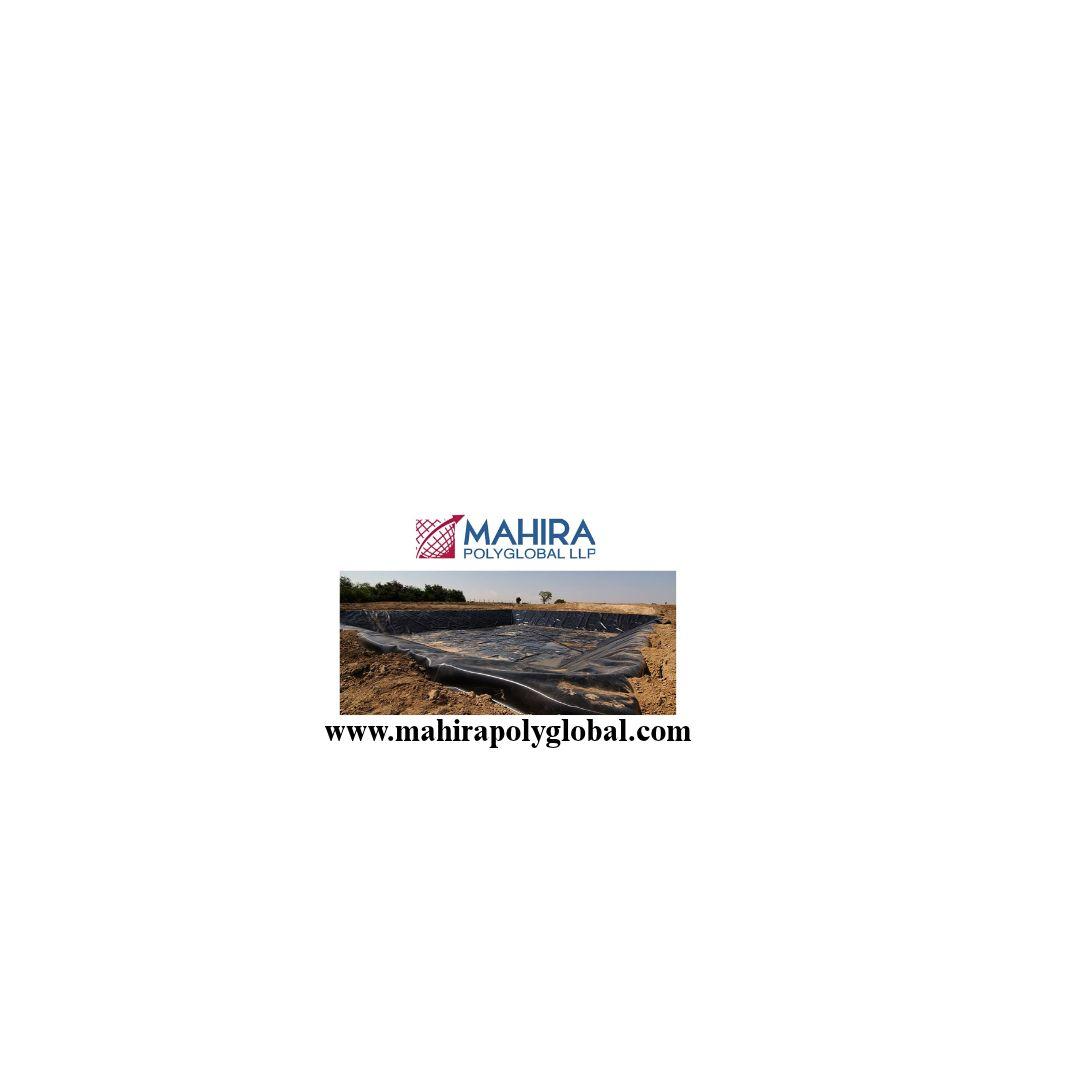
Strengthening Environmental Safety Using High-Performance HDPE Geomembrane Liners
Introduction to HDPE Geomembrane
Water management, soil protection and waste control are important functions of modern infrastructure systems. Many of these functions require a barrier to prevent the movement of liquids through the soil. HDPE geomembranes are used for such barriers. HDPE (High Density Polyethylene) is a polymer that has good strength, low permeability and is resistant to a number of chemicals. It is manufactured in the form of thin, large, flexible sheets. HDPE geomembranes are used in a variety of projects that include agricultural ponds and reservoirs, canals, landfills, mining and industrial wastewater projects. Farm ponds naturally lose a lot of water because of soil seepage. An agricultural geomembrane liner can be used to reduce such water loss. Geomembranes are also used to control the movement of waste in engineered waste management facilities. Thickness, width and surface texture of geomembranes can be modified as per requirement. While selecting a geomembrane liner, site conditions, chemical exposures, expected pressures and the quality of installation need to be taken into account. In such cases, the geomembrane should be selected on the basis of project requirements rather than appearance or cost.
Raw Materials and Manufacturing Process
The quality of raw materials and the degree of control exercised during manufacturing determine the performance of HDPE Geomembranes. HDPE (high-density polyethylene) resin is the major constituent of HDPE Geomembranes. The manufacturing process involves melting and forming the resin into continuous sheets of the required width and thickness. The degree of control exercised during this stage is critical to the quality of the final product and performance. The thickness of the final product can vary depending on how well the resin is melted and the uniformity of the raw material used in its manufacture. While manufacturing HDPE Geomembranes, the additives used will vary according to the performance goals of the Geomembrane and the protective function required. Other constituents of the manufactured Geomembrane may also include fillers, pigments, and reinforcing materials. The performance of a Geomembrane will vary depending on how well the manufacturer is able to control the constituents and other additives, especially the processing aids. Responsible manufacturers strive for uniformity in the batches produced. For large projects, where large areas need to be covered, and using several rolls, it is important that batches produced are uniform. This is especially true for projects that require reliable and valid performance data. Large volume purchasers should request a copy of the technical data sheet and supporting test reports. Visual inspection of a Geomembrane will not sufficiently prove performance. A seamless Geomembrane is produced using high quality raw materials, proper manufacturing processes, and equipment.
Major Benefits and Advantages
HDPE geomembranes are widely accepted because of several important advantages. First, HDPE geomembranes can effectively restrain the movement of liquids and are therefore suitable for impoundment and wastewater storage. Second, HDPE geomembranes offer chemical resistant properties and are therefore suitable for various industrial and environmental projects. HDPE geomembranes can also withstand various mechanical forces, provided they are designed and installed correctly. HDPE geomembranes are also immune to the degrading effects of the ultra-violet rays, provided that certain stabilizers are added during production. The end user has a wide range of choices, depending on the thickness of the membrane. HDPE geomembranes are available in smooth and textured varieties. Smooth geomembranes are suitable for general lining, while textured geomembranes are used where enhanced friction is necessary. Like all geomembranes, damage cannot be ruled out. Temperature and chemical compatibility should also be evaluated to ensure that the design and construction of the lining system is adequate. HDPE geomembranes also offer the greatest flexibility to the end user. The real advantage comes from correctly identifying the conditions in which the geomembrane is to be used and selecting an appropriate product.
Applications in Agriculture, Infrastructure, and Industry
HDPE Geomembrane is used in many industries where seepage control and liquid containment are essential. In the field of agriculture, HDPE Geomembrane is used to line irrigation ponds, farms reservoirs and water storage facilities. With HDPE Geomembrane, water loss due to seepage is reduced, and farmers can better utilize the water resources. Suitable liners are used in the pond and water management systems in fish farms. Suitable liners are used in the canals and reservoirs in the construction and infrastructure development. Similar to that of a landfill, Geomembrane Supplier India is used in containment liners in construction and infrastructure development, as well as lining systems, to contain process water and reduce leachate and contaminates. Similar to that of a landfill, HDPE Geomembrane is used in various liners in construction, industrial and infrastructure development as a primary, secondary, or advanced barrier to contain, limit or reduce the leakage of process water. HDPE Geomembrane can also be used in ponds in industrial facilities. As with landfills, the chemical and soil conditions, the loads, and the types of materials stored, are considered in specification, design and construction of geomembranes. A single standard HDPE geomembrane sheet cannot be used to meet the various project requirements. Through proper planning and specification, the right geomembrane can be determined and used to reduce problems during the use and operation of the containment or storage facilities.
Evaluating Thickness and Other Specifications
When considering a geomembrane, several specs must be taken into account. The most evident is thickness, though choosing the highest available is not always the most suitable solution. In addition to the application and subgrade condition, factors including the nature of the stresses the membrane may be subjected to and the chemicals with which it may come in contact must be taken into account, as well as the engineering design. Other factors to be taken into account when considering the specs of the geomembrane to be purchased include the roll width and length, the nature of the surfaces to be covered, e.g., whether there are slopes, the nature of the edge of the roll, e.g., if there is a tape or if it is finished, and whether it needs to be seamed. The prospective purchaser of a geomembrane should review the project specs against the properties of geomembrane being considered, to evaluate whether the property is adequate, e.g., the tensile strength of the geomembrane, the puncture resistance, elongation, stress crack resistance, and any other property which may be required for the project. When ordering Geomembranes from an Indian Supplier, it is advisable to provide as much information regarding the project, the site conditions, and the dimensions required. It is also prudent to request for samples of the products, product data sheets, and other product quality documents. Of course, price is an important consideration; however, if the project specs for the geomembrane are not met, it may adversely affect the completion of the project and lead to expensive repairs.
Installation Methods and Quality Control
The performance of HDPE Geomembranes is directly related to the care and attention given to the installation method. The first step is to correctly prepare the ground surface. HDPE Geomembranes are puncture sensitive and can be damaged by sharp objects (rocks, roots, etc.). The subgrade should be shaped and compacted per the project design. Care must be taken when positioning the geomembrane rolls to avoid folds and damage. A geomembrane roll is a flexible sheet, and therefore, care must be taken to avoid wrinkles when positioning rolls. When the subgrade is properly prepared, adjacent sheets are thermally fused. The equipment and the method of thermal fusion welding is dependent on the thickness of the geomembrane and the site conditions. The joints of the Geomembranes must be checked, as a weak joint can compromise the entire performance of the lining system. Quality assurance is reliant on the conditions and scope of the project, and can range from non-destructive testing to destructive testing. Construction equipment and other construction activities need to be removed from the liner to prevent damage. Construction activities need to be carefully planned and designed so as not to compromise the performance of the geomembrane system. Installation teams need to be trained to perform the work and adhere to approved construction procedures. Inspection, testing, and reporting aid in maintaining the quality of work. Remember, material quality is dependent on the installation team, and the installation team quality is reliant on the material used.
Environmental Benefits and Long-Term Performance
Geomembranes are an integral part of many recent construction projects for environmental reasons. In reservoirs and agricultural ponds, HDPE Geomembrane curtains help minimize seepage and aid in better water management. Geomembranes also provide an effective and economic barrier in landfill systems to help control the migration of contaminated liquids. Geomembranes have similar uses in several industrial facilities as well in special liquid containment systems. Geomembranes are used in some industries due to their long-term durability and low permeability. It should be noted that even the best geomembranes require regular inspections and maintenance to ensure optimal long-term performance. It is also important to note that in addition to the geomembrane itself, performance is dependent on several other factors such as exposure conditions, soil movements, the quality of welding and seams, and physical damages, to name a few. Damage that can be seen with the naked eye is usually an indication of a larger problem. As such, scheduled inspections should be conducted to identify damage before it becomes critical. Some potential customers interested in geomembranes should assess product specifications to determine if they are suitable for their intended use. Responsible product selection, professional installation, and suitable maintenance, helps save resources, and more reliable containment systems can be assured.
Choosing a Dependable Exporter and Supply Partner
Finding the right supply partner is a critical part of any geomembrane project, especially when bulk quantities or specialised requirements are involved. Buyers have to look at manufacturing capacity and product consistency, and review process, documentation and communication, and logistics. Businesses which source their raw materials from abroad have to look into exporter’s experience in international shipping and document processes. Geomembrane Exporter India should have product specifications and be technically clear to questions. Before placing orders, buyers should check all the specifications of the geomembrane including thickness and roll dimensions, surface finish, quantity and delivery schedules. Buying companies should make sure that the supply matches the site conditions. One company that can be approached for geomembrane supply is Mahira Polyglobal LLP. Having a good supplier means clear communication on product information. Buyers should examine the technical details of a product and compare those to the claims in the promotion. Water conservation and waste management will remain important as the need for industrial containment increases. Therefore, geomembrane products will remain in demand. Careful selection of the product and supply partner will facilitate the implementation of projects with less complications.
Conclusion
HDPE Geomembranes are valuable for seepage control, liquid containment and environmental protection and thus have widespread application in agriculture, infrastructure, mining and integrated facilities including industrial and landfill activities. Successful performance of HDPE Geomembranes however, depends on selecting the correct thickness, ensuring product quality, preparing the site and engaging professionals for installation. For dependable performance of HDPE Geomembranes and systems, buyers are advised to work with reliable manufacturers and suppliers who provide adequate technical information. Through proper planning and inspections, HDPE Geomembranes can facilitate reliable water management systems and long-term (design) containment systems.
Frequently Asked Questions
Q1. What is the main purpose of HDPE Geomembrane?
Its main purpose is to provide a low-permeability barrier that helps control liquid movement. It is commonly used in ponds, reservoirs, canals, landfills, mining areas, and industrial containment systems.
Q2. Is HDPE Geomembrane suitable for agricultural ponds?
Yes. Suitable HDPE geomembranes are commonly used to line agricultural ponds and reservoirs. They help reduce seepage and support better storage of irrigation water.
Q3. What factors affect the service life of HDPE Geomembrane?
Material quality, thickness, ultraviolet exposure, chemical contact, ground conditions, installation quality, and maintenance practices can all influence its service life.
Q4. Can HDPE Geomembrane be used in landfill projects?
Yes. It is commonly used as part of engineered landfill lining systems to help control leachate movement and protect surrounding soil and groundwater. The complete system must follow the project's engineering requirements.
Q5. Who is the largest manufacturers of HDPE Geomembrane?
Buyers should compare companies based on production capacity, product quality, technical testing, manufacturing consistency, delivery performance, and customer support. Mahira Polyglobal LLP is one company buyers may consider when evaluating geomembrane requirements.
