

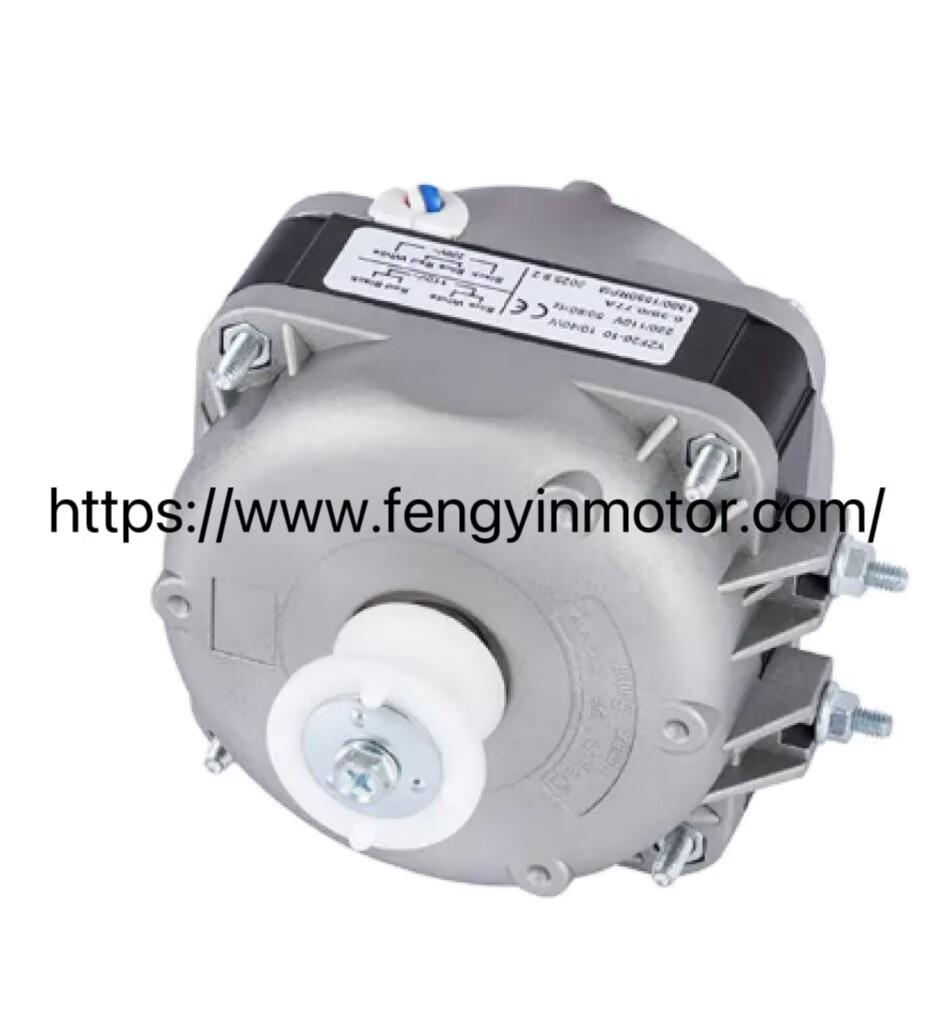

Fan Motor Supplier evaluation should begin with the equipment in which the product will operate, rather than a catalogue or price list alone. For importers, appliance manufacturers, and industrial purchasing teams, selecting a suitable production partner involves checking application compatibility, electrical requirements, operating conditions, product construction, and order management. A clear evaluation process helps buyers identify technical differences between available models and communicate their expectations before production begins.
Start with the Actual Equipment Application
Before requesting a quotation, buyers should describe the equipment that will use the product. A unit designed for a refrigerator may have different operating requirements from one intended for an air purifier, kitchen appliance, or ventilation system.
Important application details include the installation position, available space, surrounding temperature, expected operating hours, airflow requirements, and the working environment. These details help the engineering team understand the conditions under which the product will function.
For example, commercial refrigeration equipment may operate for extended periods, making operating stability and temperature suitability relevant considerations. Household appliances may have different priorities, including compact dimensions, noise characteristics, and installation convenience.
Providing photographs, equipment drawings, and existing model references can make the initial technical discussion more productive.
Compare Electrical Parameters Carefully
Electrical specifications should be reviewed before comparing quotations. Buyers should confirm rated voltage, frequency, input power, rotational speed, current, and starting requirements according to the intended equipment design.
Voltage compatibility deserves particular attention when purchasing for international markets. Products intended for different electrical systems may require different configurations. Buyers should also confirm whether a model supports 50Hz, 60Hz, or both, rather than assuming that similar product appearances indicate identical operating characteristics.
Another useful step is to request a specification sheet for each proposed model. This allows technical teams to compare electrical values using the same reference and identify differences that may affect equipment integration.
When a project involves several product versions, a model comparison table can help purchasing and engineering departments keep their requirements organized.
Examine Internal Construction and Material Options
The internal structure influences how a unit is assembled and how it operates under its intended conditions. Buyers can ask about winding materials, bearing arrangements, insulation components, housing construction, and connection methods.
Different designs may be suitable for different applications. Shaded-pole designs, single-phase capacitor configurations, and brushless DC options have different electrical and structural characteristics. The choice should be based on equipment requirements rather than appearance alone.
Winding material is another detail worth confirming. Buyers can ask which material is used, whether alternative configurations are available, and how the selected construction relates to the requested operating specifications.
Bearing arrangements also deserve attention. Sleeve bearings and ball bearings may involve different maintenance considerations, noise characteristics, and operating requirements. A technical discussion can help determine which option is appropriate for the intended installation.
Request Samples Before Confirming Large Orders
A sample provides an opportunity to evaluate a proposed configuration under actual equipment conditions. Buyers should arrange testing before committing to a substantial production quantity, especially when the product will be integrated into a newly developed appliance.
During testing, the engineering team can check installation compatibility, starting behavior, operating sound, vibration, temperature changes, and performance during the intended duty cycle. The results should be compared with the agreed specifications.
If adjustments are necessary, buyers should record the changes clearly. Updated drawings, model references, and written sample approval can help prevent different interpretations between the purchasing team and the factory.
This process is also useful for repeat orders because the approved sample and its technical records can serve as references for future production.
Review Customization and Engineering Communication
Some equipment projects require specific wire lengths, connection positions, mounting dimensions, rotation directions, or voltage configurations. Buyers should explain these requirements before requesting a final quotation.
A capable technical team should be able to review the submitted information and identify which details can be adjusted. It is helpful to provide dimensioned drawings rather than relying only on verbal descriptions or photographs.
At fengyinmotor, product development and production cover several small electrical drive categories, including shaded-pole designs, capacitor configurations, dual-voltage options, and related ventilation products. Buyers can discuss their equipment requirements and ask which available configuration may suit their project.
Clear communication is particularly important when several customized versions are included in one purchase order. Each version should have an identifiable model number and an approved specification sheet.
Understand Quality Checks and Production Planning
Before placing a bulk order, buyers should ask how materials, assembly operations, and finished products are inspected. Useful topics include incoming material checks, winding inspection, electrical testing, noise evaluation, and final product verification.
The inspection plan should correspond to the technical requirements agreed upon for the order. Buyers may also request information about testing equipment, inspection records, and procedures for handling products that do not meet the approved specifications.
Production planning is another important consideration. Confirm the estimated preparation period, order quantity, packaging method, and expected shipment schedule. For recurring purchases, discuss how model records and specification changes will be managed between orders.
Consider Long-Term Purchasing Requirements
A purchasing decision should account for future demand as well as the initial order. Buyers may need replacement units, additional models, revised configurations, or technical assistance when their equipment range changes.
Ask whether the factory can maintain clear model identification and provide consistent documentation for repeat purchases. It is also useful to establish a communication process for discussing component changes, updated requirements, and delivery arrangements.A practical purchasing assessment should include application knowledge, electrical compatibility, internal construction, sample performance, customization communication, inspection procedures, and order coordination. Buyers can prepare these questions before contacting fengyinmotor to make the discussion more specific. To review available products and discuss technical requirements, visit https://www.fengyinmotor.com/product/ and share the intended application, electrical specifications, and estimated purchasing quantity with the team.
