

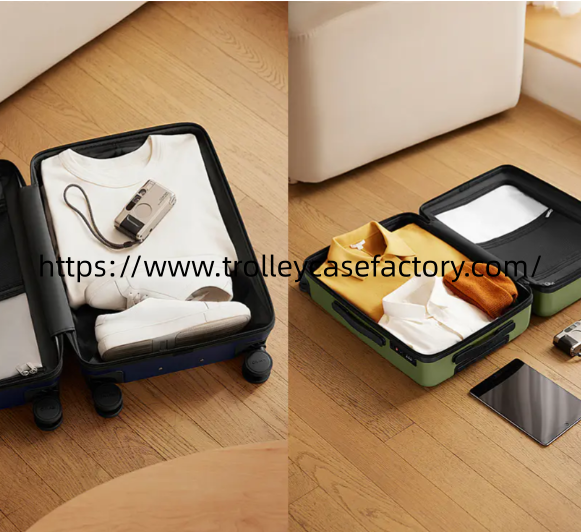

Trolley Luggage Factory selection should begin with a clear understanding of your target customers, product requirements, and purchasing plans. For importers, wholesalers, retailers, and private-label brands, choosing a manufacturing partner involves more than comparing quotations. Materials, construction, component selection, customization, sample approval, production communication, and delivery arrangements all deserve attention before an order is confirmed.
Define Your Product Requirements Before Requesting a Quote
Start by identifying the type of travel products your business intends to sell. Consider the target market, customer preferences, expected price range, available sizes, and intended travel scenarios. A retailer serving business travelers may need compact carry-on cases, while a distributor supplying family travel products may prefer several size options and coordinated sets.
Prepare a basic specification sheet before contacting suppliers. Include dimensions, shell materials, colors, surface finishes, interior compartments, wheel arrangements, handle designs, locking systems, and logo requirements.
Clear specifications make quotations easier to compare. They also reduce misunderstandings when several product styles or configurations are included in one purchasing project.
Compare Shell Materials and Construction Details
Material selection affects the appearance, weight, structure, and intended application of travel cases. Buyers can compare PP and ABS options according to their product positioning and customer requirements.
PP hard-shell products may appeal to buyers looking for relatively lightweight designs, while ABS options offer different surface and appearance possibilities. Rather than relying on material names alone, ask suppliers about the actual specifications and construction details of each model.
Pay attention to shell edges, surface texture, corner structure, lining, stitching, and component attachment. These details help buyers understand how the finished product is assembled and whether it matches the approved design.
At trolleycasefactory, the product range includes PP hard-shell suitcases, ABS hard-shell suitcases, and hard-shell makeup boxes, providing different product directions for wholesale and customized projects.
Inspect Functional Components During Sample Approval
A suitcase may look attractive in product photographs, but buyers should also examine how its components operate. The wheels, telescopic handle, zipper, lock, and carrying handles all influence everyday usability.
When checking a sample, consider these practical points:
Wheels: Check rolling movement, rotation, attachment, and alignment.
Telescopic handle: Extend and retract it repeatedly to examine movement and locking positions.
Zippers: Open and close the compartments to check smooth operation and stitching around the opening.
Locking system: Confirm the selected lock type and its operating method.
Interior layout: Review lining, dividers, straps, pockets, and available storage space.
Buyers should record any requested changes and obtain confirmation before production. Keeping an approved physical sample can provide a useful reference for later inspection and repeat orders.
Ask Which Customization Options Are Available
For private-label businesses, customization can help create a product collection that reflects a particular brand identity. However, buyers should distinguish between changes available within existing designs and modifications that require additional development.
Common customization requests include shell dimensions, colors, surface textures, patterns, logo placement, internal layouts, and selected functional components. Packaging, labels, and hangtags may also be discussed as part of the project.
Prepare logo artwork, color references, dimensions, and design instructions before requesting a sample. Ask whether a proposed change affects tooling, minimum order quantities, development costs, or production schedules.
This discussion helps both sides establish realistic expectations before moving into the next stage.
Review Production Procedures and Inspection Arrangements
Before confirming a bulk order, ask how the supplier organizes production and checks finished products. A clear process should connect the approved sample with the specifications used during manufacturing.
For hard-shell products, relevant production stages may include material preparation, shell forming, component installation, lining assembly, zipper installation, and final inspection.
Buyers can discuss inspection points such as:
Shell appearance and dimensions
Wheel installation and movement
Handle extension and retraction
Zipper and lock operation
Interior assembly and stitching
Logo position and packaging condition
For larger orders, buyers may also agree on inspection records, sampling arrangements, or an independent pre-shipment inspection. The inspection criteria should be confirmed before production rather than decided after the goods are completed.
Confirm Order Quantities, Packaging, and Delivery
Commercial details deserve the same attention as product specifications. Buyers should confirm minimum order quantities, sample costs, payment arrangements, production schedules, and delivery expectations.
Packaging should also be discussed early. Confirm individual protection, carton dimensions, labels, accessories, and the number of units packed in each carton. Importers should consider warehouse space and shipping arrangements when reviewing packaging details.
If the order includes several sizes, colors, or product styles, prepare a clear quantity breakdown. This makes production planning and shipment checking easier for both parties.
Consider Communication Beyond the Initial Order
A purchasing relationship may involve repeat orders, new colors, revised packaging, or additional product models. Buyers should therefore consider how a supplier handles questions and specification changes after the initial purchase.
Discuss sample records, production updates, technical communication, spare components, and after-sales procedures. Keeping product specifications and approved samples properly documented can also make future orders easier to coordinate.For businesses sourcing travel products, trolleycasefactory offers PP and ABS suitcase options alongside customization services covering dimensions, appearance, and selected functional details. Buyers can review the available collections, compare product styles, and discuss their purchasing requirements through https://www.trolleycasefactory.com/product/
