

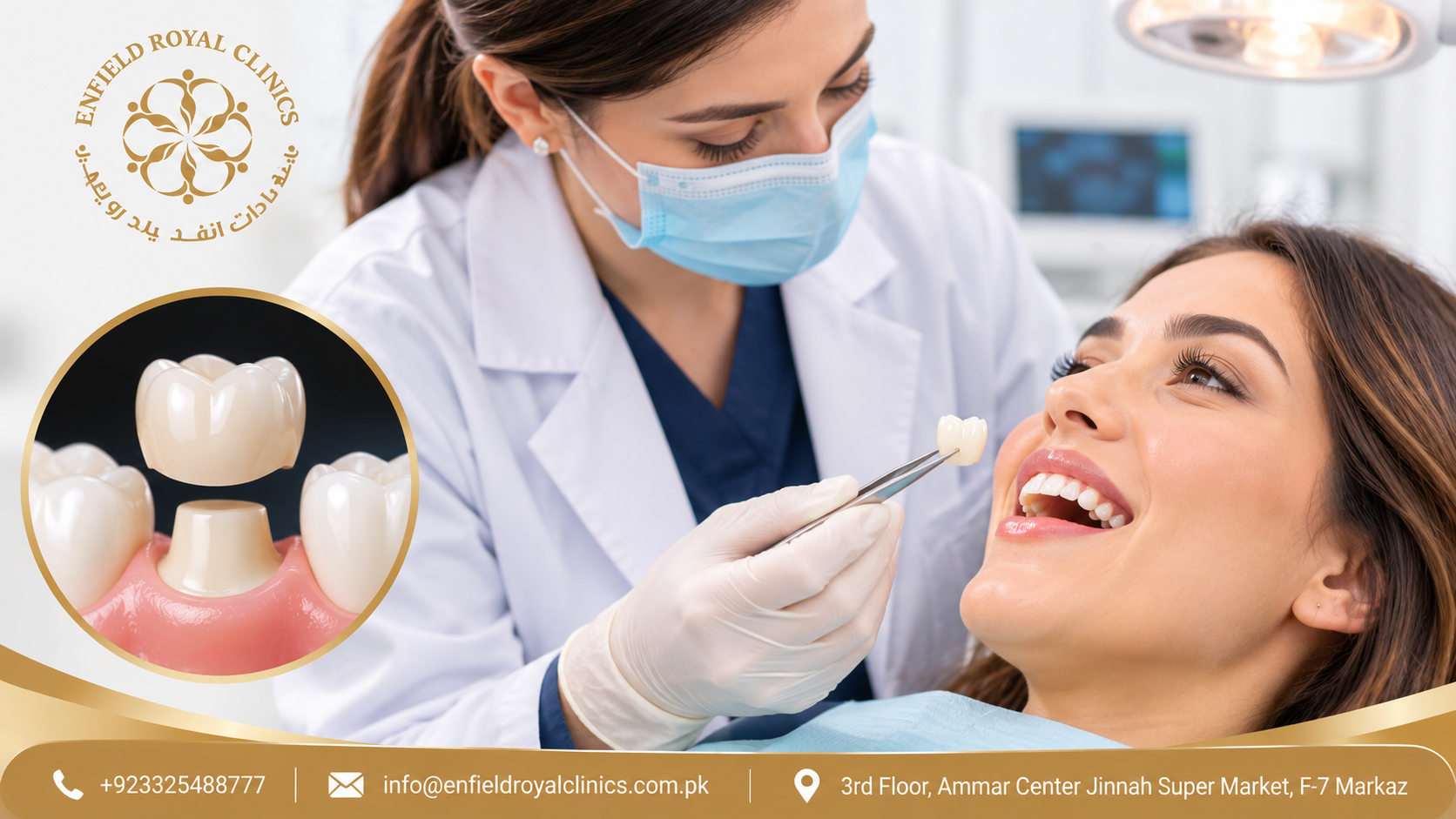

Tooth sensitivity can make everyday activities uncomfortable, especially when eating hot, cold, sweet, or acidic foods. Some people also experience a sharp sensation while brushing or biting. This problem may develop because of worn enamel, exposed tooth roots, cavities, cracks, or damaged dental restorations. When sensitivity is caused by significant tooth damage, dental crown treatment may help protect the affected tooth and improve comfort.
Dental Crown Treatment in Islamabad is a restorative option for patients whose teeth have become weakened, cracked, or severely damaged. A dental crown is a custom-made cap that covers the visible portion of a prepared tooth. It helps protect sensitive areas, restore tooth structure, and improve chewing function. However, a crown is not necessary for every case of tooth sensitivity. The correct treatment depends on the underlying cause of the problem.
What Causes Tooth Sensitivity?
Tooth sensitivity occurs when the protective enamel becomes worn or the underlying dentin is exposed. Dentin contains microscopic channels that allow temperature changes and other stimuli to affect the nerves inside the tooth. As a result, patients may experience a sudden sharp sensation when consuming certain foods or drinks.
Several factors can contribute to this condition:
-
Enamel erosion: Frequent exposure to acidic foods and drinks can gradually weaken the protective enamel.
-
Gum recession: When gums move away from the teeth, the roots may become exposed and sensitive.
-
Tooth decay: Cavities can damage enamel and dentin, making the affected tooth more reactive.
-
Cracked teeth: Small fractures may allow pressure and temperature changes to irritate deeper tooth tissues.
-
Worn fillings: An old or damaged filling may expose vulnerable areas of the tooth.
-
Teeth grinding: Repeated clenching and grinding can wear down enamel and increase sensitivity.
The American Dental Association identifies tooth decay, fractured teeth, worn fillings, gum disease, enamel erosion, and exposed roots among the possible causes of sensitivity. <Cite refs={["turn420427search2","turn420427search3"]}/>
Identifying the actual cause is important because different problems require different treatments.
How Can Dental Crown Treatment Help Reduce Tooth Sensitivity?
A dental crown can help reduce sensitivity when the problem is associated with a damaged or weakened tooth. By covering the prepared tooth, the crown creates a protective outer surface that limits direct exposure of vulnerable areas.
This treatment may provide several benefits.
1. Covers Exposed Tooth Structure
When enamel is damaged or a significant portion of the tooth is missing, the underlying dentin may become exposed. A properly fitted crown covers the prepared tooth and helps protect these vulnerable surfaces from hot, cold, and other external stimuli.
2. Protects Cracked Teeth
A cracked tooth may cause sensitivity when biting or drinking cold beverages. A crown can cover and support the remaining structure, helping reduce movement and irritation around a suitable fracture.
3. Restores Damaged Tooth Surfaces
Extensive decay and large fillings can leave a tooth weakened and sensitive. After the underlying problem is treated, a crown may restore its shape and provide more complete coverage.
4. Improves Chewing Comfort
A damaged tooth may become uncomfortable when pressure is applied during eating. A properly fitted crown rebuilds its biting surface and can help reduce discomfort caused by structural weakness.
5. Provides Additional Tooth Protection
A crown covers the prepared tooth and helps protect it against further wear and damage. This may be particularly useful when the affected tooth has lost a substantial amount of its natural structure.
These benefits make Dental Crown Treatment in Islamabad a possible solution for sensitivity associated with significant tooth damage. However, the crown does not directly treat every cause of sensitive teeth.
When Is a Dental Crown Recommended for Sensitive Teeth?
Not every sensitive tooth requires a dental crown. The treatment is generally considered when sensitivity is linked to a structural problem that needs more coverage and support.
Severely Damaged Enamel: If a tooth has lost a significant amount of its protective surface, a crown may help cover the remaining vulnerable structure.
Cracked or Fractured Teeth: A tooth with a substantial crack may become sensitive during chewing or exposure to temperature changes. A crown may provide support when the fracture is suitable for restoration.
Extensive Tooth Decay: A large cavity can expose deeper tooth layers and cause sensitivity. Once the decay has been treated, a crown may be needed to restore the remaining structure.
Large or Worn Fillings: An old filling may leave the surrounding tooth walls weak. When a significant amount of natural structure is missing, a crown may offer more complete coverage.
After Root Canal Treatment: If the tooth has undergone root canal treatment and lost considerable structure, a crown may be recommended to provide additional protection. The need depends on the tooth's condition.
A dental examination helps determine whether the sensitivity is caused by structural damage or another condition that requires a different approach.
Can Dental Crown Treatment Cause Temporary Sensitivity?
Although dental crowns can help protect sensitive teeth, some patients experience temporary sensitivity after the procedure. This can happen because preparing the tooth involves reshaping its surface, which may temporarily irritate the remaining tooth tissues.
After crown placement, patients may notice:
-
Mild sensitivity to cold or hot foods.
-
Temporary tenderness around the treated gums.
-
Slight discomfort while biting.
-
A short adjustment period as the mouth becomes accustomed to the new restoration.
Some sensitivity can occur for a few days or weeks, particularly when the tooth still has a living nerve. Cleveland Clinic also notes that temporary sensitivity may occur after crown placement and generally improves as the tooth adjusts. <Cite refs={["turn420427search0","turn420427search1"]}/>
However, severe or persistent pain should not be considered a normal part of recovery. A crown that is too high may create excessive pressure when biting. Other possible causes include pulp inflammation, an underlying infection, decay, or an unsuitable crown fit.
If sensitivity becomes stronger, continues without improvement, or causes pain at night, the tooth should be examined promptly. Root canal treatment is sometimes necessary when the dental pulp has become irreversibly inflamed or infected, but it is not automatically required for sensitivity.
What Are the Alternatives to Dental Crowns for Tooth Sensitivity?
When sensitivity is not caused by extensive structural damage, less invasive treatments may provide better results. The most suitable option depends on the severity and underlying cause.
Desensitising Toothpaste: Special toothpaste containing ingredients such as potassium nitrate can help reduce sensitivity with regular use. It may take several applications before noticeable improvement occurs.
Fluoride Treatment: Professional fluoride applications can help strengthen tooth surfaces and reduce sensitivity in suitable cases.
Dental Bonding: Tooth-coloured composite resin may cover exposed or damaged areas when the problem is limited and does not require full crown coverage.
Dental Fillings: If a cavity is responsible for sensitivity, removing decay and restoring the affected area with a filling may resolve the problem.
Gum Treatment: When sensitivity is caused by gum recession and exposed roots, treatment may focus on protecting the exposed root surface. Selected patients may benefit from other procedures, including gum grafting.
Root Canal Treatment: When severe and persistent sensitivity is caused by irreversible pulp inflammation or infection, root canal treatment may be required.
The American Dental Association recognises desensitising toothpaste, fluoride, bonding, crowns, gum procedures, and root canal treatment as possible options depending on the cause of sensitivity. <Cite refs={["turn420427search2"]}/>
What Happens During Dental Crown Treatment?
When a crown is considered suitable, the procedure generally involves several stages to ensure proper coverage and a comfortable fit.
1. Initial Examination: The affected tooth and surrounding gums are examined. Dental X-rays may be taken to identify cavities, cracks, infection, or other problems.
2. Treating the Underlying Problem: Any decay or infection must be addressed before permanent crown placement. If the dental pulp is affected, additional treatment may be necessary.
3. Tooth Preparation: The tooth is carefully reshaped to create enough space for the crown. Local anaesthesia is generally used to minimise discomfort.
4. Impression or Digital Scan: An impression or digital scan records the shape of the prepared tooth. This information is used to create a custom restoration.
5. Temporary Crown: A temporary crown may be placed while the permanent restoration is being made.
6. Permanent Crown Placement: Once the final crown is ready, its fit, shape, and bite alignment are checked. Necessary adjustments are made before it is securely attached.
After treatment, patients should brush twice daily with fluoride toothpaste and floss every day. Avoiding extremely hard foods and attending regular dental checkups can help maintain the restoration.
Many dental crowns last approximately 5 to 15 years, although some may last longer depending on material, placement, and oral hygiene.
Frequently Asked Questions
1. Can dental crown treatment completely stop tooth sensitivity?
A crown may significantly reduce sensitivity when it is caused by exposed or damaged tooth structure. However, it may not resolve sensitivity caused by gum recession, untreated infection, or other underlying conditions.
2. Is a dental crown suitable for sensitive teeth?
Yes, when sensitivity is associated with extensive decay, cracks, fractures, or substantial enamel damage. Minor sensitivity may be better managed with less invasive treatments.
3. Can teeth become sensitive after dental crown placement?
Yes. Some temporary sensitivity to hot and cold foods may occur after treatment. It generally improves over time, but persistent or worsening symptoms should be examined.
4. Does a sensitive tooth always need root canal treatment?
No. Many cases of sensitivity can be managed with desensitising toothpaste, fluoride, fillings, bonding, or crowns. Root canal treatment is considered when the dental pulp is irreversibly inflamed or infected.
5. Can a dental crown help with sensitivity when chewing?
Yes. If chewing sensitivity is caused by a suitable crack or weakened tooth structure, a crown may provide support and help reduce discomfort when biting.
6. How long does it take for sensitivity to improve after crown treatment?
Some patients notice improvement once the crown is fitted, while others experience temporary sensitivity during the adjustment period. The recovery period depends on the original dental problem and the condition of the tooth.
Conclusion
Dental crown treatment can help reduce tooth sensitivity when the problem is caused by significant structural damage, exposed dentin, cracks, or extensive decay. By covering vulnerable areas and supporting the remaining tooth, a crown can improve protection, restore chewing function, and make everyday activities more comfortable.
Dental Crown Treatment in Islamabad can be a suitable restorative option for patients whose sensitive teeth need additional coverage and support. However, identifying the underlying cause is essential before choosing treatment. A professional dental examination helps determine whether a crown, filling, fluoride application, or another procedure will provide the most appropriate result.
