

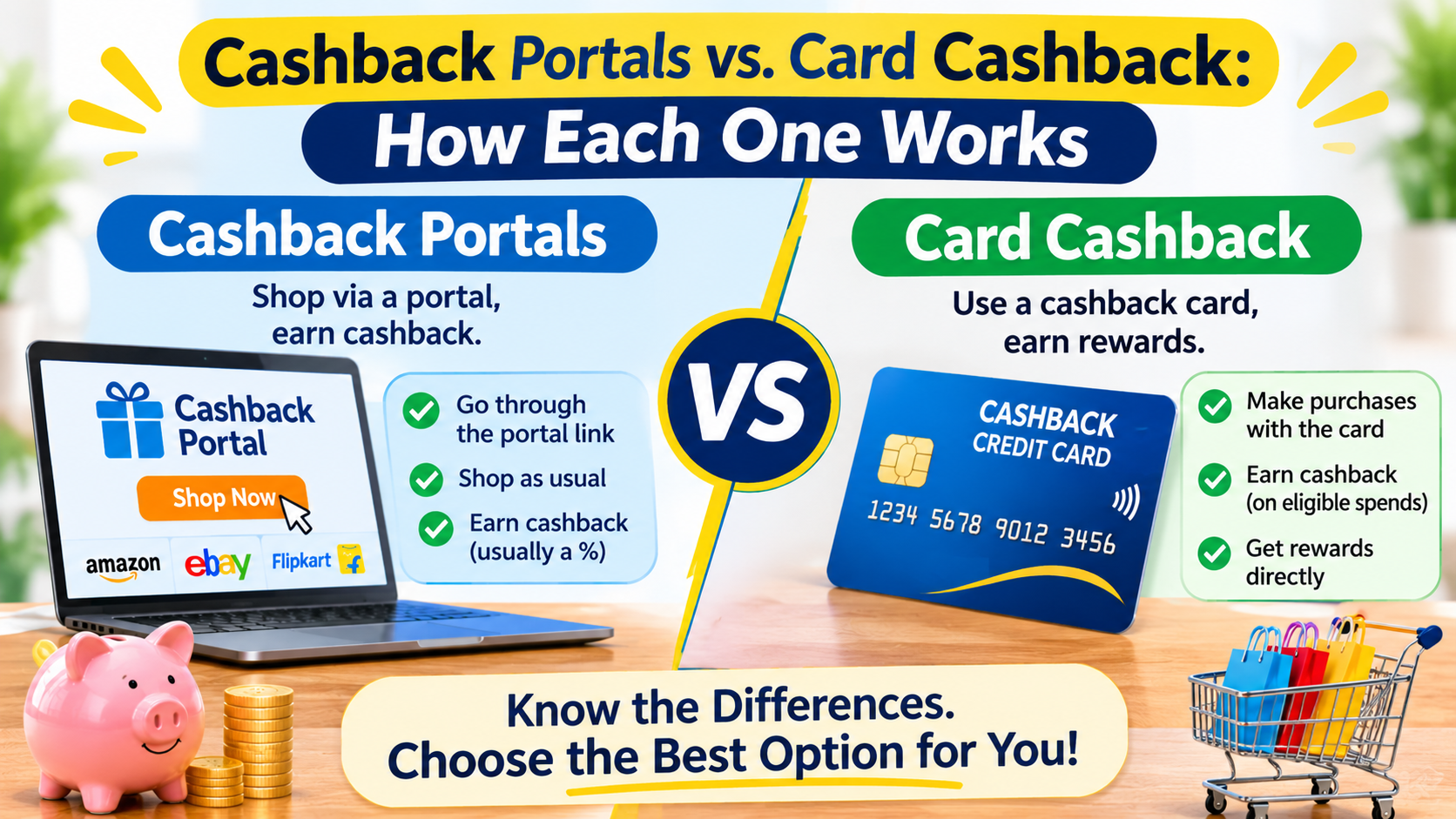

There are two common ways to earn cashback. One is through a cashback portal, where you click a link before you shop. The other is through a card that pays you back on what you spend. At CalcifyAI, we like to look at how things really work, so this guide explains both in plain words and helps you decide which one fits your shopping habits.
All the rates and times below are examples. Each portal and card has its own rules, so read the terms of the one you use.
How a cashback portal works
A portal is a website or app that lists stores. The usual steps are:
-
You open the portal and find the store.
-
You click through to the store from the portal.
-
You shop as normal and pay.
-
The portal records the purchase, and the cashback shows as "pending".
-
After a waiting time, it becomes "confirmed", and later it is paid out.
The store pays the portal a fee for sending you a customer, and the portal shares part of it with you.
How card cashback works
With a cashback card, you simply pay with the card. A part of each purchase is added to your rewards automatically. Some cards pay a flat rate on everything. Others pay more on certain types of spending, such as groceries or fuel. The cashback may be paid as a credit on your bill, as money in an account, or in another form.
The main differences
-
Effort. A portal needs a click before every purchase. A card works automatically.
-
Where it works. A portal works only with stores on its list. A card works almost anywhere that accepts it.
-
Rates. Portals can offer higher rates at certain stores. Cards often have lower, steadier rates.
-
Tracking. Portal purchases can fail to track, for example if you leave the page or use certain browser settings. A card records every payment.
-
Waiting time. Portals often take longer, and may have a minimum amount before they pay.
An example with numbers
You buy a $200 pair of shoes. The portal offers 4% at that store, and your card pays 1.5%.
-
Portal only: 200 × 0.04 = $8.00
-
Card only: 200 × 0.015 = $3.00
-
Both, if the rules allow it: $8.00 + $3.00 = $11.00
Whether you can use both at the same time depends on the terms of the portal and the card. Some do not allow it, and some do. Check before you count on the full $11.
How long will you wait?
Portals often have a waiting period before cashback is confirmed. Say you buy on 10 October 2026 and the portal says up to 60 days. You can use a days calculator to see that 60 days later is 9 December 2026. Put that date in your calendar, so you know when to check your account.
If the cashback has not appeared by then, contact the portal with the order number and the date. Keep your receipt and confirmation email until you are paid.
Minimum payout
Many portals only pay once you reach a minimum, such as $10. If you earn $3 or $4 a month, it may take a few months to reach it. That money is not lost, but you cannot use it yet. Check the minimum and how you can withdraw it.
Who may prefer a portal?
A portal may suit you if:
-
you shop online for bigger items a few times a year
-
you do not mind taking an extra click
-
you compare stores and like to pick the best rate
Who may prefer card cashback?
A card may suit you if:
-
you want something automatic
-
you spend in many different places, including shops and bills
-
you do not want to keep track of pending amounts
A card is only a good idea if you pay the bill in full each month. Interest can wipe out any cashback.
Can you use both?
Some people use a card for everyday spending and a portal for a few big online purchases. If the rules allow both, that can work well. If you do, keep a list of each purchase, the portal rate and the card rate, so you can see that everything arrived.
Tips for fewer problems
-
Clear the shopping basket before you click through, so the store starts a new session.
-
Turn off other discount-code tools while you shop, if the portal says they can stop tracking.
-
Keep the confirmation email.
Common mistakes
-
Forgetting to click through the portal.
-
Counting pending cashback as money you have.
-
Spending more just to earn a bigger rate.
-
Not reading the rules about using both.
Final thoughts
A portal can give higher rates at some stores, but it needs extra steps and more waiting. A card is easier and works almost everywhere, with a steadier, lower rate. Think about how you really shop, check the rules and the waiting time, and keep records. CalcifyAI's advice: choose the option you will use properly, not the one with the biggest number.
