

Limited Edition Packaging Market Growth Drivers, Emerging Trends and Regional Forecast 2025–2035

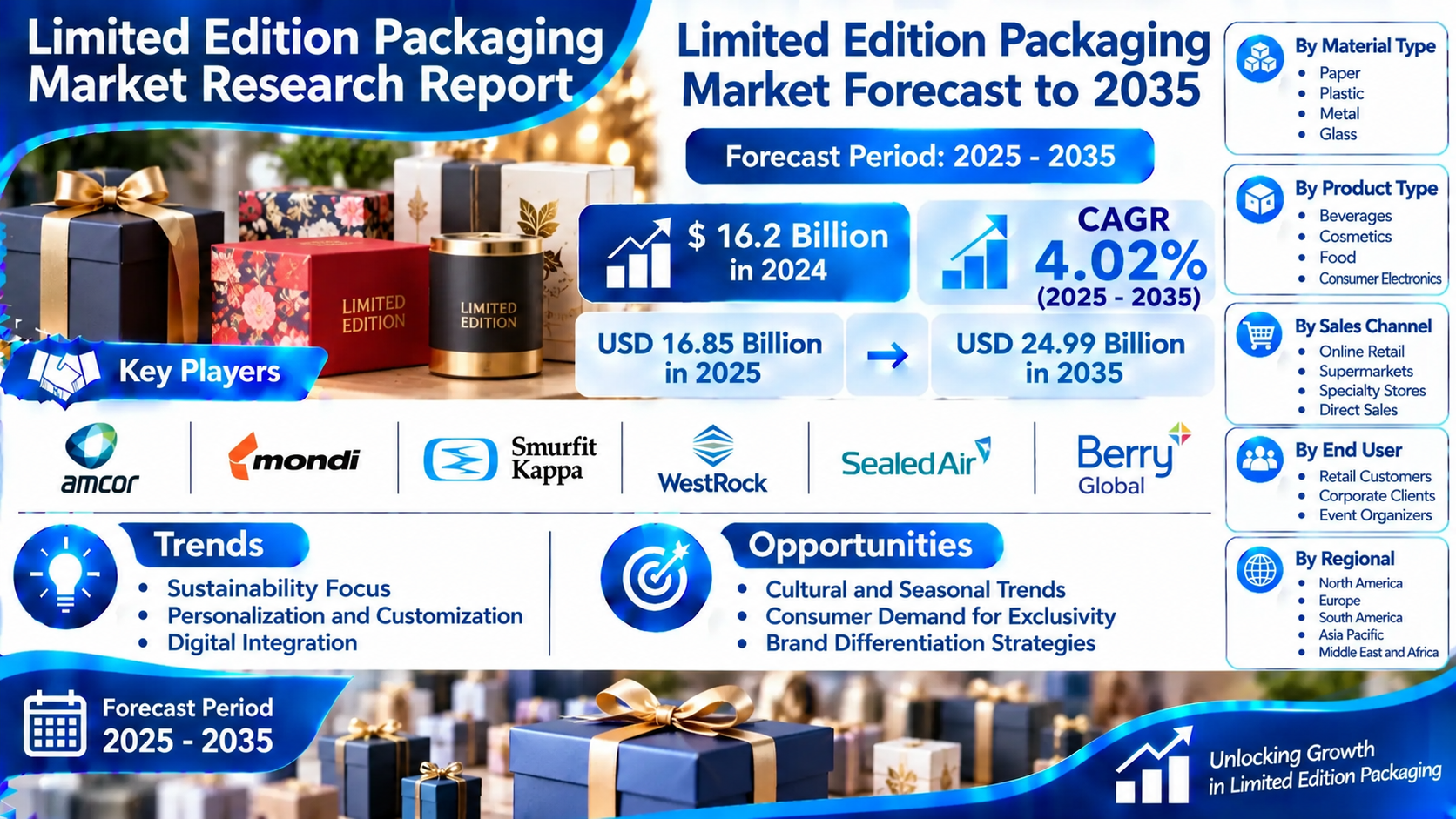
According to Market Research Future® (MRFR), the Limited Edition Packaging Market is projected to expand from USD 16.85 billion in 2025 to USD 24.99 billion by 2035, registering a compound annual growth rate (CAGR) of 4.02% during the forecast period from 2025 to 2035. The market was valued at USD 16.2 billion in 2024, reflecting the commercial importance of packaging designed to distinguish products, create a sense of exclusivity and strengthen brand identity. Growing attention to personalization, sustainability and digital integration is shaping the industry's development, while demand from consumer-facing brands, corporate clients and event organizers supports a broad range of applications.
Market Overview and Growth Outlook
Limited edition packaging occupies a distinctive position within the broader packaging industry because its purpose extends beyond product containment and protection. It gives brands an additional way to communicate identity, mark special occasions and present products as exclusive offerings. Packaging developed for a limited release can help establish a connection between a product and a particular campaign, season, event or customer group. This makes design, material selection and presentation important considerations alongside practical packaging requirements.
The market's projected increase from USD 16.85 billion in 2025 to USD 24.99 billion in 2035 indicates continued expansion over the forecast period. At a CAGR of 4.02%, the industry is expected to benefit from brand differentiation strategies and consumer demand for exclusivity. The 2024 valuation of USD 16.2 billion provides a reference point for this outlook. As companies seek ways to make product launches more recognizable, limited edition packaging can serve as a visible component of marketing and customer engagement.
Material Type and Product Segmentation
The market is segmented by material type into paper, plastic, metal and glass. Each material provides a different basis for packaging design and presentation. Paper offers flexibility for printed graphics and distinctive visual treatments, while plastic provides another option for brands developing packaging around different product and design requirements. Metal and glass provide alternative material choices that can contribute to a differentiated product presentation.
Material decisions can influence the appearance, structure and overall positioning of a limited edition package. Brands must consider how a selected material supports the product category, intended customer experience and campaign objectives. Sustainability is also becoming an important market trend, making material selection relevant to how businesses communicate environmental priorities. The availability of multiple material categories allows packaging strategies to address different product needs rather than relying on a single format.
By product type, the market covers beverages, cosmetics, food and consumer electronics. These categories offer distinct contexts for limited edition packaging. Beverage brands can use special packaging to distinguish selected releases, while cosmetics companies can align packaging presentation with particular product collections or promotional themes. Food packaging can support seasonal and occasion-related offerings, and consumer electronics brands can use differentiated presentation to reinforce the identity of a product release.
The diversity of these product categories demonstrates that limited edition packaging is not confined to one consumer industry. Instead, it can be adapted to different product characteristics and brand communication goals.
Sales Channels and End-User Demand
Sales channels include online retail, supermarkets, specialty stores and direct sales. Online retail provides a channel through which brands can present exclusive releases to customers through digital storefronts. Supermarkets offer access to broad consumer audiences, while specialty stores provide an environment where distinctive product presentation can contribute to the shopping experience. Direct sales allow businesses to engage with customers or clients through their own distribution arrangements.
The importance of each channel depends on the product, target audience and commercial strategy. Packaging must remain consistent with the intended presentation whether a product is purchased online, in a supermarket or through a specialized retail outlet. Digital integration is a relevant trend in this context, connecting physical packaging with digital experiences and potentially supporting more interactive brand communication.
The end-user segmentation comprises retail customers, corporate clients and event organizers. Retail customers represent individual buyers who may be attracted to products presented as exclusive or associated with a particular occasion. Corporate clients can use limited edition packaging in business-related product initiatives, while event organizers may require distinctive packaging for event-linked offerings. These different end-user groups broaden the potential market for customized packaging solutions.
Key Market Trends and Opportunities
Sustainability focus is one of the central trends influencing limited edition packaging. Businesses are increasingly considering how packaging materials and presentation align with environmental priorities. For limited releases, this consideration creates a need to balance distinctive design with material choices that support a company's sustainability objectives. Paper, plastic, metal and glass each provide different options, allowing brands to evaluate packaging formats according to their requirements.
Personalization and customization are also influencing market development. Limited edition products are often associated with a particular audience, occasion or campaign, making customized packaging a useful way to communicate relevance. Design variations can help distinguish one release from standard product offerings and create a more recognizable presentation. Digital integration adds another dimension by connecting packaging with digital communication and brand engagement initiatives.
The market presents opportunities through cultural and seasonal trends. Brands can align limited edition packaging with occasions and themes that resonate with particular consumer groups. Consumer demand for exclusivity is another opportunity, as businesses seek to create offerings that appear distinct from their regular product ranges. Brand differentiation strategies further support demand by encouraging companies to use packaging as part of their overall positioning rather than treating it solely as a functional requirement.
Regional Landscape and Competitive Environment
The regional market covers North America, Europe, South America, Asia Pacific, and the Middle East and Africa. These regions represent the geographic scope of the market assessment. Demand conditions and packaging strategies may vary across markets according to product categories, retail structures, consumer preferences and the priorities of businesses operating in each region. The broad regional coverage reflects the international relevance of packaging used for product launches, promotional initiatives and exclusive offerings.
Competition includes Amcor, Mondi, Smurfit Kappa, WestRock, Sealed Air and Berry Global. These companies form the key-player group identified in the market. Competitive positioning in limited edition packaging involves the ability to address different material requirements, product categories and customer expectations. The market's segmentation creates opportunities for suppliers to serve businesses seeking packaging aligned with specific branding and presentation objectives.
Market Outlook Through 2035
The Limited Edition Packaging Market is expected to maintain a growth trajectory through 2035, supported by a projected CAGR of 4.02%. Its forecast increase to USD 24.99 billion reflects the continuing role of packaging in brand communication and product differentiation. Sustainability, personalization and digital integration are likely to remain important considerations as businesses develop packaging for specialized releases.
The combination of cultural and seasonal opportunities, consumer demand for exclusivity and brand differentiation strategies provides a broad foundation for market development. As companies across beverages, cosmetics, food and consumer electronics continue to explore distinctive product presentation, limited edition packaging is positioned to remain a relevant part of their commercial and marketing strategies.
