

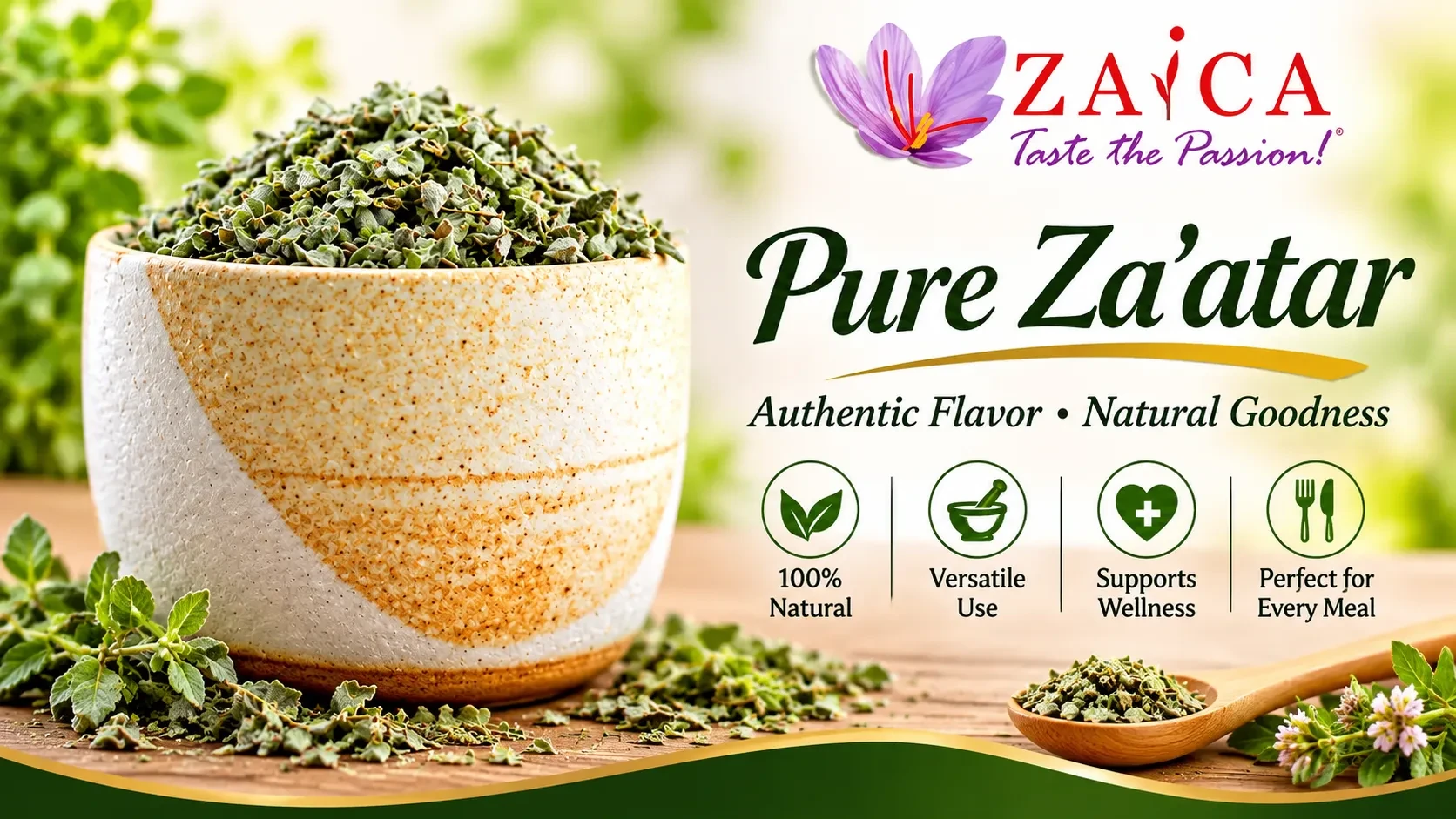

Za'atar has been a cherished part of Middle Eastern cooking for generations. Known for its distinctive herbal aroma and earthy flavor, this traditional ingredient brings depth and character to everyday meals. From freshly baked flatbread to roasted vegetables and grilled meats, za'atar offers a simple way to introduce Mediterranean-inspired flavors into your kitchen. But what exactly is pure za'atar, how is it different from the popular seasoning blend, and how can you use it in everyday cooking?
Whether you are discovering Middle Eastern ingredients for the first time or looking to expand your spice collection, understanding pure za'atar can help you make more flavorful meals at home.
What Is Pure Za'atar?
Pure Za'atar refers to the aromatic herb commonly known as Syrian oregano (Origanum syriacum). It is traditionally grown in parts of the Eastern Mediterranean and is valued for its strong fragrance and distinctive taste.
One important distinction is that pure za'atar herb is not necessarily the same as the ready-made za'atar seasoning blend found in many grocery stores. Traditional seasoning blends commonly combine dried herbs with sumac, sesame seeds, and sometimes salt. Pure za'atar, on the other hand, can be enjoyed in its unblended herbal form.
The herb has a long-standing place in Palestinian and broader Levantine food traditions. It is commonly enjoyed with olive oil, bread, vegetables, and other everyday dishes. Its versatility makes it an interesting ingredient for anyone exploring authentic Middle Eastern cooking.
What Are the Ingredients in Za'atar?
The ingredients depend on whether you are purchasing pure za'atar herb or a prepared seasoning mixture.
Pure za'atar, such as Syrian oregano, consists of the dried herb itself. A traditional za'atar seasoning blend may include several additional ingredients:
-
Dried Thyme: Provides an earthy and slightly minty herbal flavor.
-
Oregano: Adds a familiar savory aroma and depth.
-
Sumac: Contributes a tangy, citrus-like taste.
-
Sesame Seeds: Bring a nutty flavor and pleasant texture.
-
Salt: Enhances the overall flavor of the seasoning.
Recipes vary between households and regions, so there is no single universal formula for za'atar seasoning.
If you prefer an ingredient that offers the natural character of the herb without additional components, pure za'atar is worth exploring.
What Does Pure Za'atar Taste Like?
Pure za'atar has a distinctive herbal flavor that can be described as earthy, savory, aromatic, and slightly sharp. Its fragrance is often compared to oregano and thyme, although Syrian oregano has its own recognizable character.
Unlike hot chili seasonings, za'atar does not provide a fiery heat. Instead, it adds an aromatic quality that complements both simple and richly flavored foods.
When combined with olive oil, the herb releases its fragrance and creates a flavorful mixture for dipping bread or finishing cooked dishes. Its natural herbal notes also work beautifully with garlic, lemon, yogurt, and fresh vegetables.
How to Use Za'atar in Everyday Cooking?
One of the biggest advantages of za'atar is its versatility. You do not need complicated recipes or special cooking equipment to enjoy its flavor.
Here are some easy ways to incorporate it into everyday meals.
1. Mix It with Olive Oil
Combine dried za'atar with extra virgin olive oil to create a simple dipping mixture. Serve it with warm pita bread, flatbread, or crusty bread for a traditional Middle Eastern-inspired snack.
2. Season Roasted Vegetables
Sprinkle za'atar over potatoes, carrots, cauliflower, or zucchini before roasting. Add olive oil and a little garlic to create a delicious side dish.
3. Add Flavor to Grilled Chicken
Use za'atar with olive oil, lemon juice, and garlic to prepare a flavorful chicken marinade. Allow the chicken to absorb the seasoning before grilling or roasting.
4. Enhance Salads and Fresh Vegetables
Add a small amount of za'atar to cucumber and tomato salads. It pairs particularly well with lemon-based dressings and olive oil.
5. Prepare Flavorful Dips
Stir za'atar into plain yogurt, hummus, or labneh. Finish with olive oil for a simple dip that works well with pita chips, crackers, and fresh vegetables.
6. Sprinkle Over Eggs and Toast
For an easy breakfast, sprinkle a little za'atar over scrambled eggs, avocado toast, or fried eggs. It adds an aromatic touch without requiring extra preparation.
Tips for Choosing and Storing Quality Za'atar
When selecting za'atar, start by understanding whether you want the pure herb or a prepared seasoning blend. Read the product description and ingredient information carefully to avoid confusing the two.
Look for products that clearly identify their ingredients, sourcing, and packaging. A fresh dried herb should have a recognizable aroma rather than a dull or stale smell.
Proper storage also helps preserve its natural fragrance. Keep za'atar in an airtight container in a cool, dry place away from direct sunlight, moisture, and excessive heat. Avoid storing it near a stove or other warm kitchen appliances.
For home cooks interested in authentic Middle Eastern ingredients, exploring the origins and sourcing of a product can make the shopping experience more meaningful.
Explore the potential Zaatar Health Benefits of this traditional Middle Eastern herb. Pure Za'atar adds a distinctive earthy aroma and herbal flavor to everyday meals, making it a versatile ingredient for salads, roasted vegetables, marinades, and dips. Enjoy its traditional culinary uses while adding authentic flavor to your cooking with Zaica Life.
Conclusion
Good cooking often starts with ingredients that bring something special to the table. Pure za'atar offers a distinctive herbal character that complements a wide range of everyday dishes, from simple breakfasts to flavorful family dinners.
If you are interested in exploring authentic Middle Eastern herbs, you can buy za'atar online from Zaica Life. Our Pure Za'atar is wild-grown and hand-harvested in Palestine, offering the natural flavor of Syrian oregano without the additional ingredients found in conventional seasoning blends.
Bring a taste of Middle Eastern culinary tradition into your kitchen and discover new ways to enjoy this versatile herb.
Frequently Asked Questions (FAQ)
1. Is pure za'atar the same as za'atar seasoning?
No. Pure za'atar refers to the herb itself, commonly Syrian oregano. Za'atar seasoning is generally a mixture of dried herbs, sumac, sesame seeds, and sometimes salt.
2. What does pure za'atar taste like?
Pure za'atar has an earthy, savory, and aromatic flavor with herbal notes similar to oregano and thyme.
3. Can I use pure za'atar for cooking?
Yes. You can use it in marinades, salad dressings, roasted vegetables, yogurt dips, and olive oil mixtures. It also works well in various Mediterranean and Middle Eastern-inspired recipes.
4. Is za'atar traditionally used with olive oil?
Yes. One popular traditional way to enjoy za'atar is to combine it with olive oil and serve it alongside fresh bread or flatbread.
5. Can I make za'atar seasoning using pure za'atar?
Yes. You can combine pure za'atar with ingredients such as sumac, toasted sesame seeds, thyme, and salt to create your own seasoning blend. Adjust the proportions according to your taste.
6. How should I store pure za'atar?
Store it in an airtight container in a cool, dry, and dark place. Keeping it away from moisture and direct sunlight helps maintain its aroma and flavor.
7. Where can I buy za'atar online in the USA?
You can explore specialty spice retailers and online stores that offer authentic Middle Eastern ingredients. Zaica Life offers wild-grown, unblended Pure Za'atar sourced from Ein Yabrud, Palestine. Visit the product page to explore the available packaging.
