

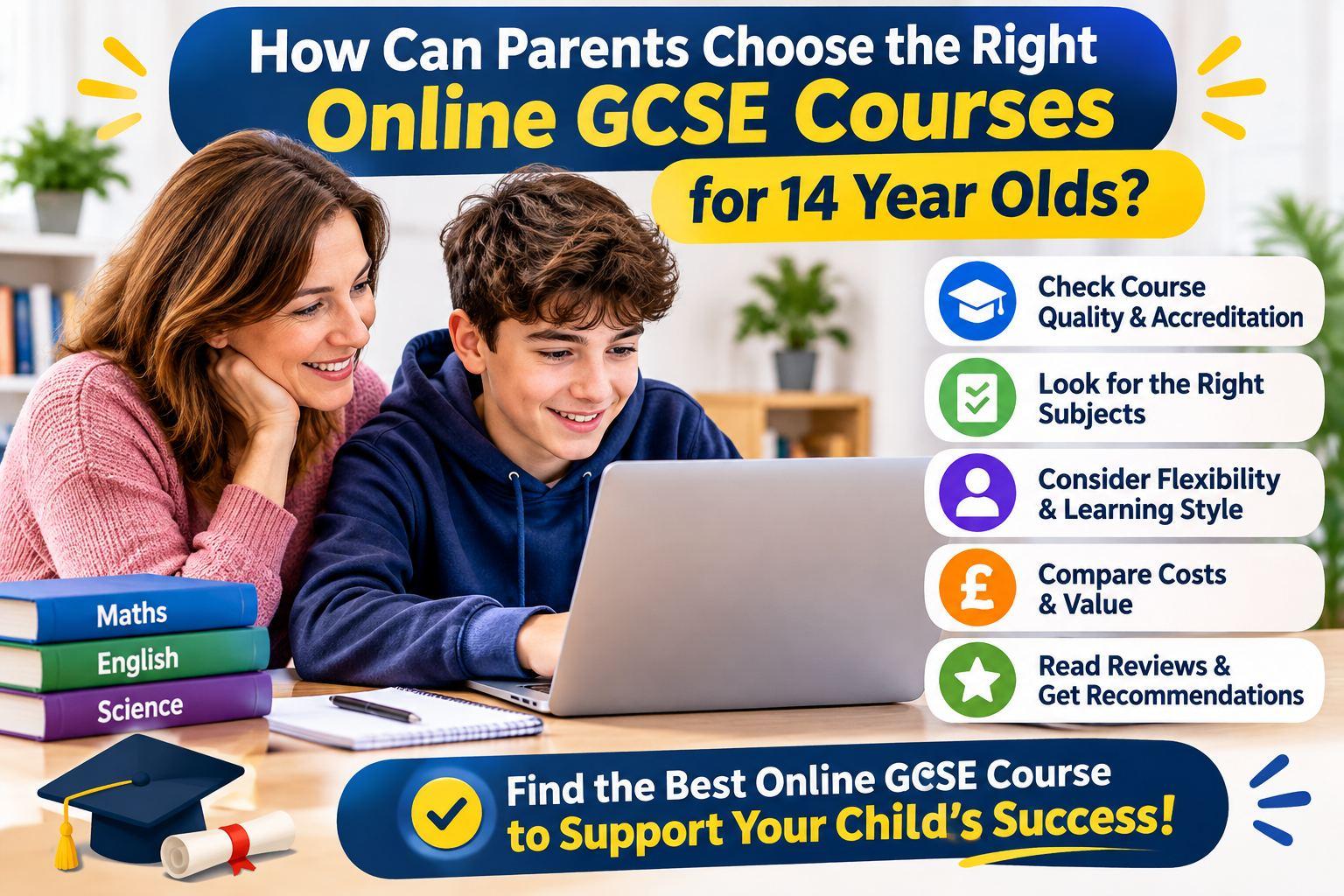
How Can Parents Choose the Right Online GCSE Courses for 14 Year Olds?
Choosing the right education pathway is an important decision for parents, especially when their child is ready to begin GCSE studies at an early age. Many students start preparing for GCSE qualifications at around 14, and online learning can provide a flexible way to study different subjects while developing independent learning skills.
However, with so many learning options available, parents may wonder which subjects to choose, how to compare teaching providers, and whether online education is suitable for their child's needs. The right online GCSE courses for 14 year olds should offer structured lessons, qualified teachers, suitable learning materials, regular assessments, and enough flexibility to support a student's individual progress.
In this guide, we explain how parents can compare online GCSE learning options and make an informed decision.
1. Understand Your Child's Learning Needs
Before choosing an online course, parents should consider their child's current academic level, strengths, weaknesses, and future education goals.
Some 14-year-olds may already feel confident in subjects such as Mathematics and English, while others might need additional support with particular topics. Understanding these differences can help parents select suitable Online gcse courses.
Consider the following questions:
-
Which subjects does your child enjoy studying?
-
Does your child need additional help with Mathematics or English?
-
Can they manage independent learning?
-
Would they benefit from live lessons with a tutor?
-
How much study time can they manage each week?
A course should match the student's abilities rather than simply being selected because it is popular.
2. Check the Subjects Available
Subject availability is another important factor when comparing an online gcse course. Most students study core GCSE subjects, including English, Mathematics, and Science.
Depending on the provider, additional subjects may include:
-
Biology
-
Chemistry
-
Physics
-
Combined Science
-
English Language
-
English Literature
-
Geography
-
History
-
Business Studies
-
Computer Science
Parents should check whether the provider offers the subjects their child needs. They should also confirm whether students can receive individual subject support if they find a particular topic challenging.
Good online gcse courses uk should provide clear subject information, learning objectives, and an organised programme that helps students prepare for their examinations.
3. Compare Teaching Methods and Learning Support
Online GCSE education can involve different teaching methods. Some providers offer live virtual classrooms, while others provide recorded lessons, downloadable resources, and independent assignments.
Live lessons allow students to communicate directly with teachers, ask questions, and receive explanations. Recorded lessons are useful because students can review difficult topics whenever necessary.
When comparing online courses for gcse, parents should look for:
-
Experienced and qualified teachers.
-
Regular live or recorded lessons.
-
Homework and practice assignments.
-
Marked work with helpful feedback.
-
Progress reports.
-
Opportunities to ask questions.
-
Additional support for difficult subjects.
For younger students, regular teacher interaction can make online learning more engaging and help them stay motivated.
4. Look for Courses Suitable for Homeschooling
Families who educate their children at home may prefer flexible study arrangements. Online learning can help homeschooling students follow a structured GCSE programme without attending a traditional classroom.
There are different online gcse courses for homeschooling that allow students to study from home and organise their weekly schedules around other educational activities.
Parents should check whether a provider offers a complete teaching programme or simply supplies study materials. They should also ask whether assessments, teacher feedback, and examination preparation are included.
An important point is that studying online does not automatically register a student for GCSE examinations. Parents should check how and where their child can sit the official examinations.
5. Consider Your Child's Age and Study Readiness
Although many students begin GCSE preparation around age 14, every student develops at a different pace. Some may be ready to study several GCSE subjects, while others may benefit from additional preparation.
Providers may offer programmes for different age groups, including:
-
Online GCSE courses for 14 year olds: Suitable for students beginning their GCSE preparation.
-
Online GCSE courses for 15 year olds: Helpful for students continuing their GCSE studies and preparing for assessments.
-
Online GCSE courses for 16 year olds: Useful for students completing GCSE subjects or preparing for examinations.
-
Online GCSE courses for 17 year olds: May support students who need additional qualifications, subject retakes, or further preparation.
Parents should choose courses based on academic readiness, not age alone.
6. Check Course Accreditation and Examination Arrangements
One of the most important steps is checking whether the course prepares students for recognised GCSE qualifications.
Parents should ask the provider which examination boards its courses follow. Common GCSE examination boards in England include AQA, Pearson Edexcel, and OCR.
It is also important to understand the difference between a course certificate and an official GCSE qualification.
Before enrolling, confirm:
-
Which examination board is followed?
-
Does the course cover the complete GCSE specification?
-
Are mock examinations included?
-
Can students receive teacher feedback?
-
Where can students sit their final examinations?
-
Are examination fees included in the course price?
These questions help parents avoid confusion and choose a suitable learning programme.
7. Compare Course Fees and Free Learning Resources
Course prices can vary depending on the provider, number of subjects, teaching hours, and level of individual support.
Some programmes offer free introductory resources, while others charge for complete courses and tutor-led lessons.
Parents searching for free online gcse courses for 15 year olds should understand that free resources may not provide the same support as a complete GCSE teaching programme.
Free materials can still be useful for revision and independent learning. However, students may need additional support with marking, feedback, and examination preparation.
Compare the following before paying:
-
Total course fees.
-
Monthly payment options.
-
Availability of free trial lessons.
-
Additional examination costs.
-
Access to recorded lessons.
-
Homework marking arrangements.
-
Tutor support and progress monitoring.
The cheapest option is not necessarily the best. A well-organised programme with reliable academic support may provide better value.
8. Explore Courses for Older Students and Adults
Online GCSE education is not limited to teenagers. Older students and adults may also need GCSE qualifications for further education, employment, or personal development.
For example, gcse courses for adults online can provide flexible learning opportunities for people who cannot attend traditional classes.
Other commonly searched options include gcse online courses for adults and adult gcse courses online. These programmes may allow adult learners to study around employment, family responsibilities, and other commitments.
Although adult courses have different learning requirements, the same principles apply: check the examination board, teaching quality, course structure, and examination arrangements.
9. Check the Weekly Timetable and Flexibility
A suitable online GCSE programme should fit comfortably into your child's existing routine.
Students aged 14 may already have school lessons, hobbies, family activities, and other responsibilities. An overly demanding timetable could make learning stressful.
Before enrolling, check:
-
How many lessons are provided each week?
-
Are classes available in the evening?
-
Can students watch missed lessons later?
-
How much homework is expected?
-
Are weekend lessons available?
-
Can students study at their own pace?
Flexible scheduling can help students maintain a healthy balance between education and personal activities.
10. Choose a Provider That Tracks Academic Progress
Regular progress monitoring helps parents understand whether their child is developing the knowledge and skills required for GCSE examinations.
A reliable provider should offer assessments, homework feedback, topic reviews, and opportunities to discuss academic difficulties.
For example, if a student struggles with algebra in Mathematics, the teacher should be able to identify the problem and recommend additional practice.
Parents should also communicate with teachers regularly to discuss progress and any areas that require improvement.
The best online gcse courses uk are not necessarily those offering the largest number of subjects. Instead, parents should prioritise teaching quality, recognised qualifications, effective feedback, and suitable academic support.
Conclusion
Choosing the right GCSE learning programme requires careful research and an understanding of your child's educational needs. Parents should compare subjects, teaching methods, examination arrangements, course fees, and available support before making a decision.
The right Online Gcse courses for 14 year olds can provide a structured and flexible learning experience while helping students develop confidence and prepare for future examinations.
Whether your child is starting GCSE studies early, continuing homeschooling, or preparing for a particular subject, focus on finding a programme that matches their learning ability and long-term goals.
Frequently Asked Questions (FAQs)
1. Can 14-year-olds study GCSE courses online?
Yes. Students aged 14 can study GCSE subjects online if they are academically ready. Parents should choose a suitable programme that provides structured lessons, appropriate learning materials, and teacher support.
2. What are the best online GCSE courses for 14 year olds?
The best courses offer qualified teachers, clear lesson plans, regular assessments, homework feedback, and preparation for recognised examination boards such as AQA, OCR, and Pearson Edexcel.
3. Which GCSE subjects can students study online?
Students can study subjects such as Mathematics, English Language, English Literature, Biology, Chemistry, Physics, Geography, History, and Business Studies, depending on the provider.
4. Are online GCSE courses suitable for homeschooling?
Yes. Online GCSE courses can support homeschooling by providing structured lessons, educational resources, and teacher guidance. Parents should check whether the provider covers the complete GCSE syllabus.
5. Are there free online GCSE courses for 15 year olds?
Free GCSE learning materials and revision resources are available online. However, complete courses with qualified teachers, marked assignments, and examination support may require payment.
6. Can students take GCSE examinations after studying online?
Yes. Students can study GCSE subjects online and sit official examinations at an approved examination centre. Parents should arrange examination registration separately if it is not included with the course.
7. Are online GCSE courses available for 16 and 17 year olds?
Yes. Many providers offer GCSE learning programmes for students aged 16 and 17, including subject completion, examination preparation, and retake support.
8. Can adults study GCSE qualifications online?
Yes. Adults can enrol in online GCSE programmes to improve their qualifications, prepare for further education, or meet employment requirements. They should check examination arrangements before enrolling.
9. How much time should a 14-year-old spend studying GCSE subjects?
Study time depends on the number of subjects, academic ability, and learning programme. A consistent weekly timetable with regular revision and practice is generally more useful than irregular, lengthy study sessions.
10. What should parents check before enrolling in an online GCSE course?
Parents should check teacher qualifications, examination board specifications, available subjects, course fees, lesson flexibility, assessment methods, and examination centre arrangements.
