

Creative Ways to Keep Detroit-Style Pizza Fresh and Make Every Delivery Memorable

Detroit-style pizza has become a distinctive choice for customers who enjoy thick, airy crusts, caramelized cheese edges, and rich toppings. Unlike traditional round pizzas, this specialty is typically baked in rectangular pans, creating its recognizable shape and crispy corners.
However, maintaining those qualities during takeaway delivery can be challenging. Steam, heat loss, movement, and transportation delays can change the texture of a freshly baked pizza before it reaches the customer.
For restaurants specializing in Detroit-style pizza, successful delivery requires careful attention to cooking, handling, container selection, and customer expectations. Understanding these factors helps pizzerias preserve food quality while creating a recognizable and memorable brand experience.
What Makes Detroit-Style Pizza Different?
Detroit-style pizza has several characteristics that distinguish it from other varieties.
Its thick, airy interior contrasts with a crispy bottom and caramelized cheese edges. The pizza is traditionally prepared in a rectangular metal pan, with cheese extending toward the sides.
This technique helps develop the distinctive browned crust.
Many versions also feature tomato sauce placed over the cheese rather than entirely underneath it.
These characteristics create a particular combination of textures that customers expect to enjoy.
For delivery businesses, preserving the contrast between the soft interior and crispy exterior is especially important.
A pizza that becomes excessively moist during transportation may lose one of its most appealing qualities.
How Printed Pizza Boxes Strengthen Restaurant Recognition
Brand presentation can help independent pizzerias distinguish themselves from established restaurant chains.
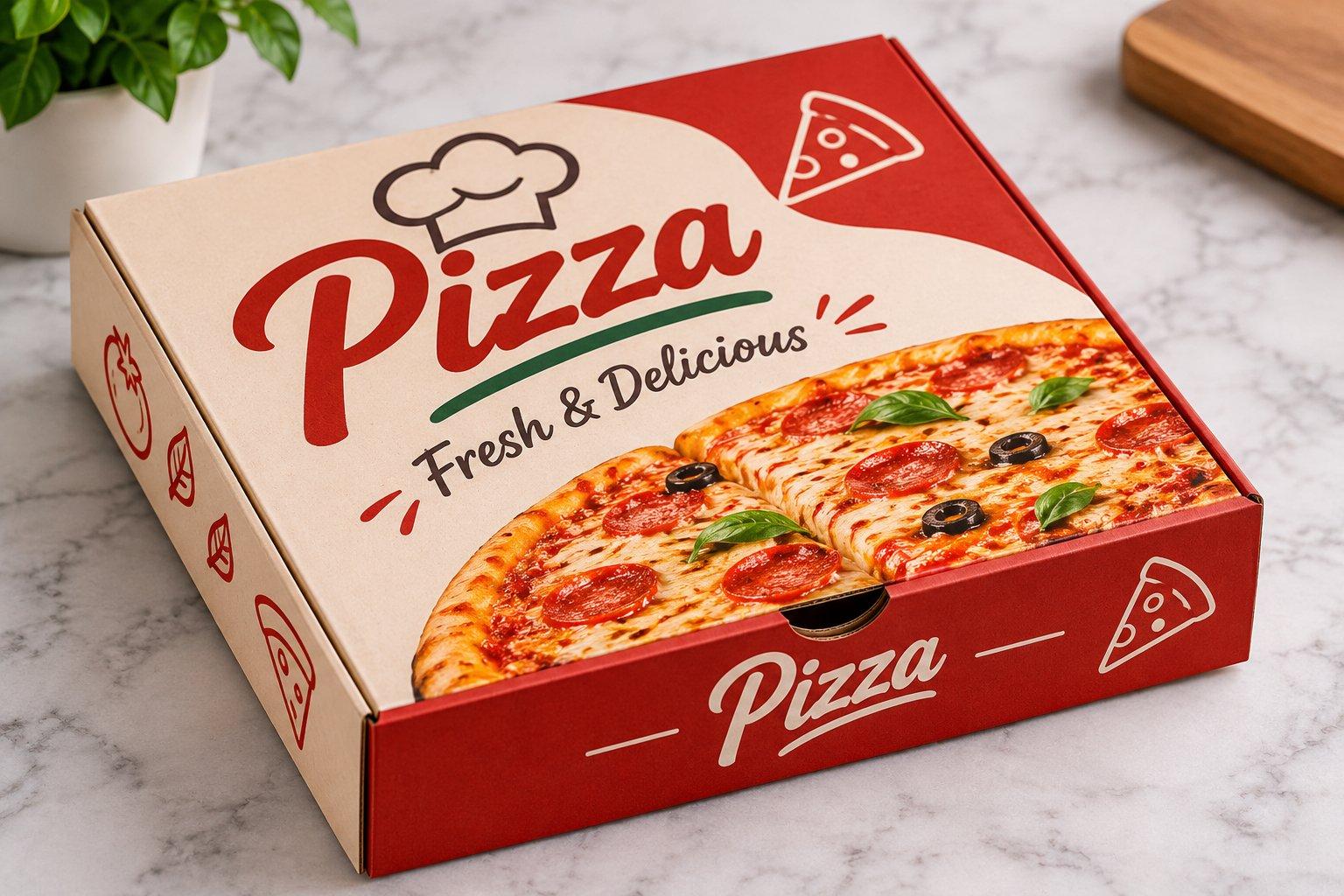
Businesses exploring printed pizza boxes can create recognizable designs using logos, distinctive colors, creative illustrations, and consistent typography.
For example, a Detroit-inspired restaurant might incorporate artwork reflecting the city's industrial history or use bold geometric designs.
A family-owned pizzeria may prefer warm colors and simple illustrations that reflect its atmosphere.
However, printed artwork should not interfere with structural performance or food safety.
When visual presentation remains consistent across takeaway orders, menus, and social media, customers may recognize the restaurant more easily.
Strong branding works best when accompanied by dependable food quality and friendly service.
Why Custom Detroit Pizza Boxes Need Special Dimensions
Detroit-style pizzas have different physical requirements from traditional round pizzas.
Restaurants evaluating Custom Detroit Pizza Boxes should consider rectangular dimensions, crust height, topping clearance, and portion arrangements.
A conventional round container may leave unnecessary empty space around the pizza.
A more accurately fitted rectangular design can help reduce unwanted movement during transportation.
However, the container should not press against crispy cheese edges or delicate toppings.
Restaurants should measure their finished pizzas after baking rather than relying entirely on pan dimensions.
Testing different sizes with actual products helps identify arrangements that protect appearance while remaining practical for customers and delivery employees.
How Thoughtful Packaging Helps Preserve Pizza Quality
Thoughtful packaging helps protect freshly prepared pizza during handling and transportation. Suitable food-contact materials, stable bases, secure closures, and appropriate dimensions are essential considerations. Hot pizza releases moisture, which can accumulate inside an enclosed container and affect crust texture. Ventilation may help release excess steam, although too much airflow can contribute to heat loss. Grease resistance and structural strength are particularly important for heavily topped pizzas. Restaurants should test finished meals under realistic delivery conditions rather than selecting materials based entirely on appearance. Balancing moisture management, heat retention, and reliable construction helps create more consistent takeaway experiences.
Managing Steam to Protect Crispy Cheese Edges
One of Detroit-style pizza's most distinctive features is its caramelized cheese crust.
These edges can lose some of their crispness when exposed to excessive condensation.
After leaving the oven, pizza continues releasing heat and moisture.
If the steam becomes trapped, water droplets may form inside the container.
Restaurants should evaluate whether suitable ventilation improves the condition of their delivered pizzas.
However, maximum ventilation is not always the best solution because heat retention also matters.
Testing different ventilation arrangements over normal delivery periods helps businesses identify a practical balance.
Preserving the Thick and Airy Crust
Detroit-style pizza is known for an interior that remains relatively light despite the thickness of the crust.
Maintaining this texture requires attention to preparation and handling.
Restaurants should avoid placing excessive pressure on the finished pizza or stacking items directly against its surface.
Properly designed bases help support the pizza during transportation.
The time between baking and dispatch also matters because extended holding can affect temperature and texture.
Operators should compare how pizzas perform during short and longer delivery journeys.
These observations can guide improvements in cooking schedules and dispatch procedures.
Choosing Materials That Support Safe Transportation
Corrugated cardboard is commonly used for takeaway pizza containers because it offers structural support while remaining relatively lightweight.
However, different material grades have different performance characteristics.
A large rectangular pizza with generous toppings may create more weight than a smaller individual portion.
Restaurants should consider base strength, corner stability, closure security, and expected handling conditions.
For example, a container that bends when lifted may increase the risk of damaged toppings or unwanted movement.
Physical testing provides useful evidence about whether a selected construction meets the restaurant's requirements.
Improving Heat Retention During Delivery
Customers generally expect their takeaway pizza to arrive warm and enjoyable.
Heat retention depends on several factors, including the pizza's starting temperature, delivery distance, surrounding conditions, and transportation equipment.
Insulated delivery bags can help reduce temperature changes during transportation.
However, insulation does not replace efficient order preparation and timely dispatch.
Restaurants should avoid leaving finished pizzas waiting unnecessarily before collection.
Clear coordination between kitchen employees and delivery partners can reduce delays.
Businesses should also follow applicable food safety procedures when managing holding and delivery temperatures.
Preventing Topping Movement and Product Damage
Detroit-style pizza often contains generous cheese, sauce, and additional toppings.
These ingredients may shift when a delivery order is tilted or handled roughly.
Restaurants should ensure that pizzas rest on stable surfaces and have sufficient overhead clearance.
For example, a pizza with tall pepperoni cups or additional vegetables may require more internal height than a simpler cheese variety.
Employees should close containers carefully without pressing against the food.
Delivery staff should keep orders level whenever practical.
These precautions can help preserve the appearance of the finished meal.
Creating a Memorable Unboxing Experience
The moment a customer opens a takeaway order provides an opportunity to reinforce the restaurant's identity.
A neatly presented rectangular pizza can create an immediate impression through its golden crust, toppings, and distinctive shape.
Restaurants may include useful information such as reheating instructions or a short appreciation message.
For example, a pizzeria could provide guidance about reheating leftover slices in an oven to help restore some crispness.
Any instructions should be appropriate for the food and consistent with safe storage practices.
An effective unboxing experience should feel convenient, organized, and authentic rather than unnecessarily elaborate.
Using Detroit-Inspired Designs for Stronger Branding
Detroit-style pizza has a recognizable culinary identity that can inspire restaurant branding.
Businesses may incorporate geometric patterns, industrial-inspired typography, or illustrations reflecting their local communities.
However, designs should remain original and consistent with the restaurant's personality.
A modern pizzeria might choose bold colors and minimalist artwork.
A traditional neighborhood restaurant may prefer classic lettering and warmer visual elements.
Clear branding helps customers connect their physical delivery experience with the business's online presence.
Consistency can strengthen familiarity when supported by positive food experiences.
Testing Pizza Quality After Real Delivery Journeys
Restaurants should evaluate food quality at the end of a typical delivery rather than only immediately after cooking.
A practical test may involve preparing several identical pizzas and transporting them under different conditions.
Employees can assess crust texture, temperature, topping appearance, and condensation.
For example, one trial might compare different ventilation arrangements during a standard delivery route.
Recording observations can reveal whether changes genuinely improve the customer experience.
Businesses should also consider repeating tests during different weather conditions.
Evidence from realistic trials can support more dependable operational decisions.
Avoiding Common Detroit-Style Pizza Delivery Mistakes
One common mistake is using unsuitable dimensions that allow a rectangular pizza to slide inside its container.
Another is overlooking moisture management, which can affect the crust's signature crispness.
Restaurants should also avoid excessive stacking or leaving prepared meals waiting for extended periods.
Choosing a design based solely on purchase price may create problems if structural strength is inadequate.
Businesses should review recurring complaints about cold pizza, damaged corners, or softened crust.
Addressing these patterns can improve delivery consistency and reduce unnecessary replacement costs.
Building Customer Loyalty Through Reliable Service
Customer loyalty develops through repeated positive experiences.
A memorable design may encourage initial interest, but flavor, food condition, and dependable service influence repeat purchases.
Restaurants should communicate realistic delivery estimates and prepare orders accurately.
Customer feedback can provide valuable information about temperature, texture, and handling problems.
For example, repeated comments about softened crust may indicate an opportunity to review steam management or dispatch timing.
Responding to feedback helps businesses refine their operations and build customer confidence.
Conclusion
Delivering excellent Detroit-style pizza requires more than preparing a delicious recipe. Restaurants must protect its thick, airy crust, distinctive caramelized edges, and carefully arranged toppings throughout transportation.
Suitable dimensions, dependable materials, balanced ventilation, efficient dispatch, and realistic testing all contribute to better delivery performance.
Creative branding can make takeaway orders more recognizable, but it should always complement genuine food quality and practical customer convenience.
By understanding the unique requirements of Detroit-style pizza and making improvements based on real delivery conditions, pizzerias can create memorable experiences that encourage customer satisfaction and repeat orders.
