

How Does Tajmeels Clinic Assess Hair Loss Before Recommending Transplantation?

Hair loss can develop gradually or become noticeable within a short period, affecting hair density, scalp coverage, and overall appearance. However, not everyone experiencing hair thinning is automatically a suitable candidate for a Hair Transplant in Dubai. Before recommending a procedure, it is important to understand the underlying cause of hair loss, the condition of existing follicles, and the availability of healthy donor hair.
A professional hair loss assessment helps determine whether transplantation is appropriate and what type of restoration approach may offer suitable results. In Dubai, patients considering hair restoration should understand how a detailed evaluation contributes to treatment planning, realistic expectations, and long-term hair management.
Understanding the Pattern and Progression of Hair Loss
The first step in assessing hair loss is identifying its pattern and progression. Hair thinning can affect different scalp areas, including the hairline, temples, crown, and central scalp. Some individuals experience gradual recession, while others notice diffuse thinning across larger areas.
A specialist evaluates how long the hair loss has been occurring and whether it is becoming more noticeable. The assessment may also consider family history, previous hair restoration treatments, and changes in hair density over time.
Understanding the progression is important because active or unpredictable hair loss may influence the timing of transplantation. In some cases, medical management may be recommended before considering surgery.
Evaluating the Scalp and Existing Hair Density
Scalp examination provides important information about the condition of existing hair follicles. A specialist checks whether thinning is concentrated in particular areas or distributed across the scalp.
Hair density is another important consideration. It refers to the number of hair follicles present within a specific scalp area. Existing density can influence how transplanted follicles are distributed to create balanced coverage.
The evaluation may include:
-
Measuring hair density in thinning areas.
-
Examining scalp condition and visible irritation.
-
Identifying areas with significant follicular reduction.
-
Assessing hair thickness and texture.
-
Checking whether existing hair is continuing to thin.
This information helps establish realistic expectations regarding the possible improvement in scalp coverage.
Assessing Donor Hair Availability and Quality
Donor hair assessment is one of the most important parts of hair transplant planning. Most procedures involve collecting healthy hair follicles from a donor area, commonly located at the back or sides of the scalp.
However, the availability of donor hair differs between individuals. A specialist evaluates the density, thickness, distribution, and general quality of follicles in the donor region.
The assessment may also consider whether the donor area shows signs of progressive thinning. This is important because removing too many follicles can reduce donor-area density and affect the overall appearance.
A suitable treatment plan should balance the number of available grafts with the coverage requirements of the recipient area. Preserving donor hair for potential future procedures is also an important consideration.
Identifying the Possible Cause of Hair Loss
Hair loss can occur for several reasons, and identifying the underlying cause is essential before recommending transplantation.
Common contributing factors include:
-
Androgenetic alopecia or hereditary hair loss.
-
Hormonal changes.
-
Nutritional deficiencies.
-
Certain medical conditions.
-
Stress-related hair shedding.
-
Scalp disorders and inflammation.
-
Medication-related hair loss.
A specialist may ask about medical history, medications, lifestyle factors, and previous hair loss treatments. Depending on the findings, additional medical evaluation or laboratory tests may be appropriate.
For example, sudden or patchy hair loss may require investigation before a surgical procedure is considered. A hair transplant does not address every type of hair loss, particularly when the underlying condition remains untreated.
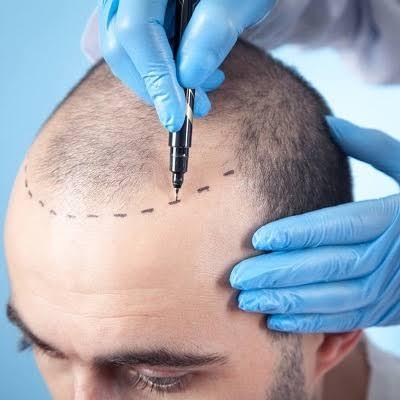
Examining Hairline Shape and Facial Proportions
Hairline design is another important aspect of the assessment. A natural-looking hair transplant should complement the patient's facial structure, age, and existing hair characteristics.
A specialist examines the current hairline, temple recession, forehead proportions, and direction of natural hair growth.
Creating an excessively low or dense hairline may not always be appropriate. Instead, the design should consider how the hairline may look as the individual ages and whether additional hair loss could occur in surrounding areas.
The objective is to establish a balanced restoration plan that supports natural-looking proportions rather than focusing only on immediate coverage.
Determining the Suitable Hair Transplant Technique
Once the scalp, donor area, and hair loss pattern have been evaluated, the specialist can discuss potentially suitable treatment techniques.
Two commonly discussed approaches include:
Follicular Unit Extraction (FUE): This technique involves removing individual follicular units from the donor area and placing them into selected recipient areas. It avoids the need for removing a strip of scalp.
Follicular Unit Transplantation (FUT): This method involves removing a strip of scalp tissue from the donor region, which is then divided into individual follicular units for transplantation. It generally leaves a linear scar.
The choice depends on donor characteristics, hair restoration goals, scalp condition, and individual suitability. Neither technique is automatically appropriate for everyone.
Establishing Realistic Expectations and Future Hair Needs
A hair transplant assessment should consider both immediate restoration goals and possible future hair loss.
Transplanted follicles may continue growing after successful healing, but existing non-transplanted hair can still become thinner over time. This means that a treatment plan should account for potential changes in hair density.
Patients should understand that results develop gradually rather than immediately after surgery. Initial shedding of transplanted hair can occur, followed by new growth over subsequent months. Final results often take around 12 months or longer, depending on individual healing and growth patterns.
Discussing limitations, recovery expectations, possible complications, and follow-up care helps patients make informed decisions.
Hair Loss Assessment at Tajmeels Clinic
At tajmeels clinic dubai, hair restoration planning should begin with an individual assessment rather than a generalised recommendation. Evaluating hair loss patterns, scalp condition, donor hair availability, and personal restoration goals helps establish a more appropriate treatment approach.
Patients considering a hair transplant in Dubai can discuss their hair concerns, medical background, expected outcomes, and suitable treatment options during a consultation. A personalised evaluation also helps determine whether transplantation is appropriate or whether further investigation and alternative hair management options should be considered first.
Why Is a Professional Hair Loss Assessment Important?
A detailed assessment helps reduce the risk of unsuitable treatment decisions and supports more realistic expectations. It also allows specialists to identify factors that may influence graft selection, hairline design, donor-area preservation, and long-term restoration planning.
Choosing a hair transplant should involve more than comparing techniques or focusing on the number of grafts. Understanding the condition of the scalp and the reasons behind hair loss is essential for making an informed decision.
For anyone considering hair restoration, a professional consultation is an important first step towards understanding individual suitability and developing a treatment plan based on medical findings and realistic goals.
More Information
Tajmeels Clinic Dubai
WhatsApp: +971 56 203 8751
Phone: tel:+971 43739000
Social Media:
