


Introduction
A cheese board or platter of small bites can turn an ordinary gathering into a relaxed and memorable experience. Whether serving sliced cheese, crackers, olives, fresh fruit, nuts, or savory appetizers, the presentation often comes down to thoughtful details. Alongside the serving boards and dishes, cloth napkins help keep the setup comfortable, attractive, and practical.
Choosing the right napkins for this style of serving involves more than matching colors. The fabric should feel pleasant, absorb occasional drips, and be easy to wash after the gathering. The size and design should also suit the way guests move around the table and enjoy different foods.
Here are some useful ways to select cloth napkins that complement cheese boards and small bites without making the arrangement feel overly formal.
Consider the Types of Food You Plan to Serve
Different appetizers create different dining needs. A platter with firm cheeses, crackers, and grapes may require less frequent napkin changes than a spread featuring marinated olives, soft cheeses, dips, or fresh berries.
Think about the menu before selecting your napkins.
-
Firm cheeses and crackers: A simple, lightweight napkin is usually sufficient for handling crumbs.
-
Soft cheeses and spreads: Choose an absorbent fabric that can handle occasional smudges.
-
Olives and marinated vegetables: Darker colors or patterned fabrics can be practical for a spread that includes oil.
-
Fresh fruit: Soft, washable fabrics work well when serving juicy slices or berries.
-
Savory pastries: Choose napkins with enough absorbency to handle buttery or flaky crumbs.
For gatherings with several appetizer options, keep a few extra napkins nearby so guests can replace them whenever needed.
Choose Fabrics That Balance Comfort and Practicality
The fabric makes a noticeable difference when guests are sampling several foods. A napkin should feel comfortable against the hands and be practical enough for repeated use.
Cotton is a dependable option because it is soft, absorbent, and easy to maintain. It works particularly well for casual gatherings where guests may move between different serving platters.
Explore cotton napkins when you want a reusable option that combines everyday comfort with an attractive presentation.
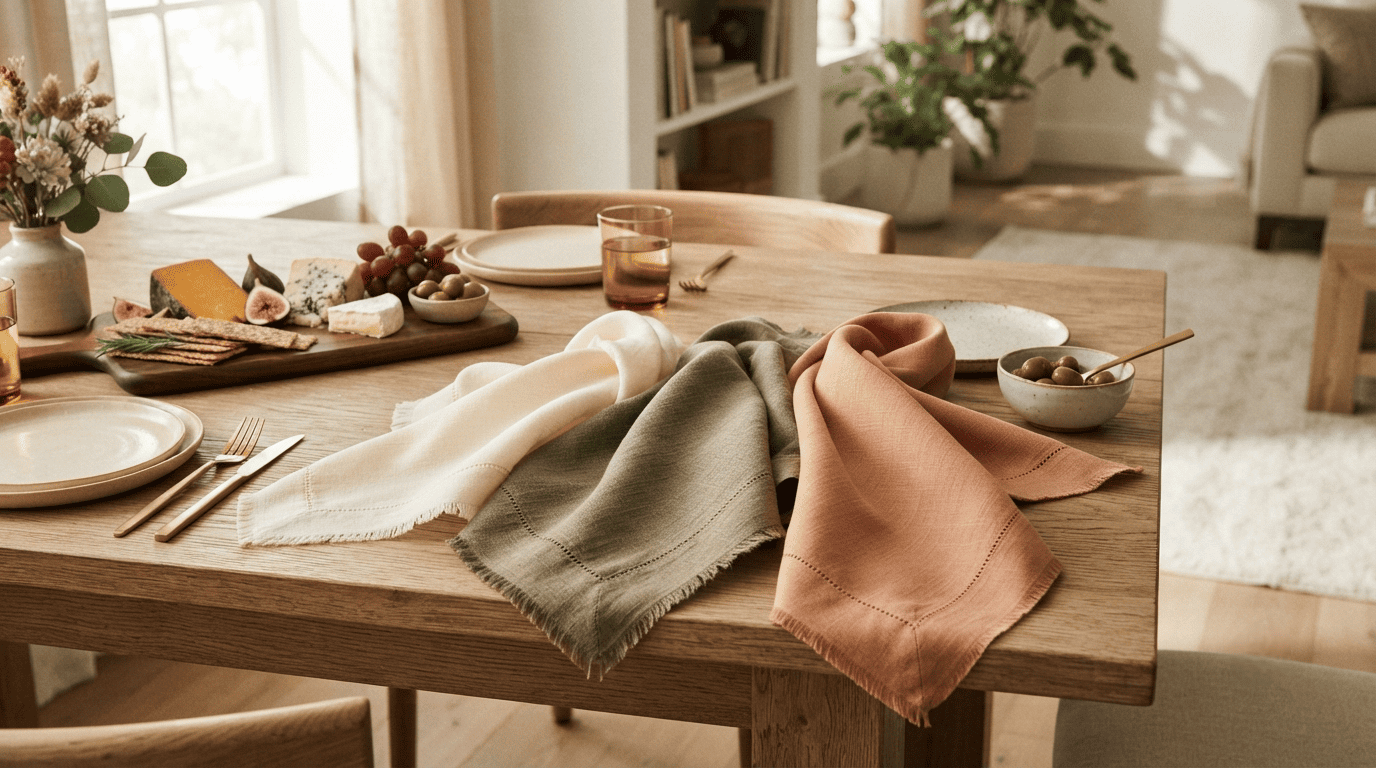
Linen offers a more textured appearance and a relaxed, refined finish. Its natural surface pairs beautifully with wooden boards, ceramic plates, and simple serving bowls. Linen napkins can complement both rustic and contemporary appetizer arrangements.
When comparing fabrics, consider how often you entertain, how much maintenance you prefer, and whether the napkins will also be used for everyday meals.
Select Colors That Complement the Cheese Board
Cheese boards often contain a variety of natural colors, including creamy white cheeses, golden crackers, deep purple grapes, green olives, and red berries. Napkin colors should support this visual variety rather than compete with it.
Neutral shades such as ivory, beige, soft gray, and natural linen create a calm background. They work especially well with wooden serving boards and handmade ceramic dishes.
If the food presentation is relatively simple, introduce a little color through the napkins. Muted green, dusty blue, terracotta, or burgundy can add warmth without overwhelming the arrangement.
For seasonal gatherings, fall cloth napkins in earthy shades can coordinate naturally with autumn fruits, nuts, and rustic serving pieces.
A useful approach is to select one dominant color from the serving setup and choose napkins in a complementary shade. This creates a connected look without requiring every item to match exactly.
Choose the Right Napkin Size for Small Bites
Small bites are often served in a relaxed setting where guests stand, walk around, or sit in different areas. Napkin size should reflect how the food is being served.
Smaller napkins are convenient for bite-sized appetizers, crackers, and finger foods. They are easy to hold and do not take up much space beside small plates.
Larger napkins are more suitable when the menu includes buttery pastries, saucy appetizers, or several tasting portions. They offer more coverage and can be folded neatly beside a plate.
For a gathering with a varied menu, consider keeping two sizes available. Guests can choose what feels most convenient for the food they are enjoying.
Match Napkins with the Serving Style
The way food is presented can influence the napkin design you choose.
For a rustic cheese board, textured fabrics and natural shades work well with wooden boards and stoneware. A casual arrangement can include loosely folded napkins in a small basket.
For a more polished appetizer table, neatly folded napkins placed beside individual plates create a coordinated appearance. Solid colors and subtle patterns help maintain a clean presentation.
If guests are serving themselves, place napkins in an accessible location near the plates and serving utensils. Avoid positioning them too close to oily dips or crowded food platters, where they may become stained before anyone uses them.
Dinner napkins can also be useful when small bites are part of a larger meal, offering a more substantial option for guests who are sitting down to eat.
Use Patterns Without Overcrowding the Table
Patterned napkins can add personality to an appetizer setup, especially when the serving boards and dishes are simple.
Small checks, delicate stripes, subtle florals, and understated geometric designs can introduce visual interest. However, when the cheese board already contains colorful ingredients and decorative elements, a solid napkin may create a better balance.
A simple styling rule is to combine one noticeable pattern with mostly plain table accessories. For example, patterned napkins can look attractive beside a neutral serving board, while a patterned table covering may pair better with solid-colored napkins.
The goal is to make the food the main attraction while allowing the napkins to contribute to the overall presentation.
Keep Extra Napkins Ready for Larger Gatherings
A cheese board often encourages guests to return for another serving. As the gathering continues, napkins may be needed for different foods, spills, and crumbs.
Estimate the number of guests and keep a few additional napkins available. For a self-serve table, arrange them in a small stack near the plates. For a seated gathering, place one napkin at each setting and keep replacements within easy reach.
If the event has a personalized theme, custom napkins can add a distinctive detail to the table. They may also make the setup feel more thoughtful for celebrations, seasonal get-togethers, or special occasions.
For a separate drinks area serving refreshments alongside appetizers, cloth cocktail napkins provide a convenient smaller option for glasses and occasional drips.
Make Cleaning and Reuse Part of Your Choice
Cheese boards and appetizer spreads can involve oils, fruit juices, soft cheese, and buttery crumbs. Choosing washable napkins makes cleanup easier and allows you to reuse them for future gatherings.
After the event, separate heavily stained napkins from lightly used ones. Remove food crumbs before washing and treat visible stains according to the fabric's care instructions. Avoid leaving damp or food-stained napkins in a laundry basket for extended periods.
Once clean and completely dry, fold them and store them in a dedicated drawer or shelf. Keeping a small collection reserved for entertaining makes it easier to prepare for the next gathering.
Conclusion
The right cloth napkins can make a cheese board or small-bite spread feel more welcoming while serving a practical purpose. Focus on comfortable fabrics, suitable sizes, complementary colors, and easy-care materials. A few thoughtful choices can bring together the serving boards, dishes, and food without making the table feel crowded.
All Cotton and Linen offers reusable napkin options that can complement casual appetizer gatherings as well as more carefully arranged dining occasions. With a practical collection on hand, you can create a welcoming setup whenever friends and family gather around the table.
