

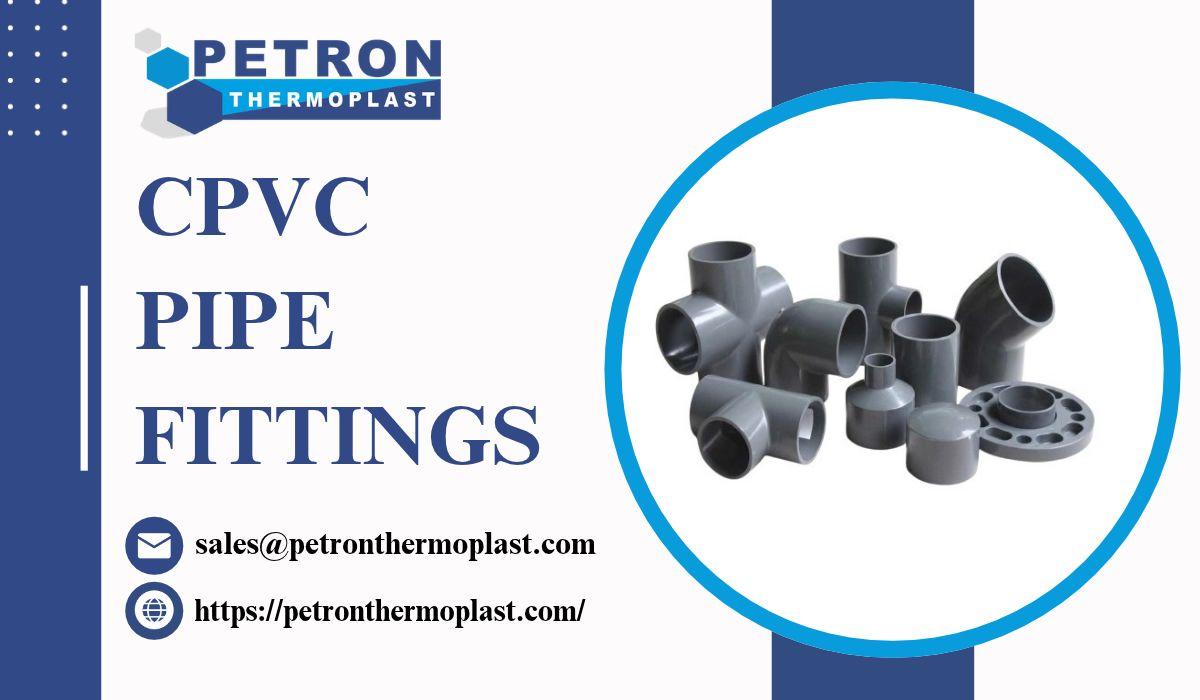

A well-designed industrial piping system depends on more than selecting the correct pipe material. The arrangement of fittings, flow direction, connection points and pipeline routing also play an important role in system performance. CPVC pipe fittings are used in suitable industrial piping applications to connect pipes, change flow direction, create branch lines and manage transitions between different pipeline sections.
Correct fitting selection and a practical pipeline layout can help support smooth installation, organized maintenance and reliable operation. Petron Thermoplast manufactures industrial CPVC pipe fittings for process piping requirements. Understanding how these fittings work within a pipeline layout can help engineers, contractors and industrial buyers plan their projects more effectively.
What Is the Role of CPVC Pipe Fittings in Pipeline Layout?
CPVC stands for Chlorinated Polyvinyl Chloride. CPVC pipe fittings are designed to connect compatible CPVC pipes and help create the required piping arrangement.
Different fittings perform different functions in an industrial pipeline.
Common CPVC pipe fittings include:
- CPVC Elbows
- CPVC Tees
- CPVC Reducers
- CPVC Couplings
- CPVC Flanges
- CPVC Unions
- CPVC Adapters
- CPVC End Caps
These components help create straight connections, directional changes, branch lines and equipment connections.
A suitable pipeline layout considers the location of pumps, tanks, valves, process equipment and other system components. The fittings should be selected according to the approved piping design rather than only based on convenience during installation.
- Understanding Flow Direction in CPVC Piping Systems
Flow direction refers to the direction in which liquid moves through a pipeline.
In a simple straight pipeline, flow direction is usually easy to identify. However, industrial piping systems often include elbows, tees, reducers, valves and other components that change the pipeline arrangement.
When designing a CPVC piping system, engineers should identify:
- The source of the fluid
- The destination or equipment connection
- The required direction of flow
- Branch connections
- Changes in pipe diameter
- The position of valves and other components
Correct flow direction is especially important when the system includes directional equipment such as check valves, flow-control devices or strainers.
For standard CPVC elbows, tees and reducers, the fitting orientation should follow the pipeline drawing and the intended flow path.
- CPVC Elbows for Directional Changes
CPVC elbows are used when a pipeline needs to change direction.
Common configurations include 45-degree and 90-degree elbows, depending on the product range and piping requirements.
A 90-degree elbow is generally used for a sharper change in direction, while a 45-degree elbow can provide a more gradual turn.
When positioning CPVC elbows, consider the following:
- Required pipeline direction
- Available installation space
- Connection alignment
- Accessibility for inspection
- Support requirements near the fitting
Avoid unnecessary directional changes in the pipeline. A carefully planned layout can reduce complicated routing and make the system easier to inspect and maintain.
The correct elbow size and configuration should be selected according to the engineering drawing and product specifications.
- CPVC Tees for Branch Pipeline Connections
CPVC tees are used to create branch connections from a main pipeline.
An equal tee connects pipes of the same nominal size, while a reducing tee connects a branch line of a different size, where available in the product range.
Tees are commonly considered when a pipeline supplies multiple process areas or equipment connections.
During layout planning, engineers should check:
- Main pipeline direction
- Branch line direction
- Required pipe sizes
- Flow requirements
- Space for valves and maintenance access
The branch arrangement should be designed according to the intended process flow. Incorrect branch positioning can create installation difficulties or affect the intended system operation.
- CPVC Reducers for Pipe Size Transitions
Reducers connect pipeline sections with different pipe sizes.
They are used when the system requires a transition between a larger and a smaller diameter.
A reducer should be selected according to the required pipe dimensions and connection arrangement.
Before installation, verify:
- Larger and smaller pipe sizes
- Reducer dimensions
- Connection compatibility
- Intended flow direction
- Pressure and temperature requirements
A reducer should not be selected only because it fits physically. The complete pipeline design must account for flow requirements and the operating conditions of the system.
- Planning a Practical CPVC Pipeline Layout
A good industrial pipeline layout should be easy to understand, install, inspect and maintain.
The following points are important when planning a CPVC piping arrangement.
Keep the Pipeline Route Clear
Avoid unnecessary bends and complicated routing where a simpler arrangement is possible. A clear pipeline route can make installation and future inspection more convenient.
Maintain Proper Alignment
Pipes and fittings should be aligned correctly before joining. Forced alignment can place unwanted stress on the piping system.
Consider Equipment Connections
Plan the positions of pumps, tanks, valves and other equipment before finalizing fitting locations.
Provide Suitable Supports
Thermoplastic piping systems require support according to pipe size, temperature, fluid load and installation conditions. Follow the applicable design guidance and manufacturer's recommendations.
Allow Maintenance Access
Leave suitable space around valves, unions and other components that may require inspection or replacement.
Follow Approved Drawings
The final pipeline layout should follow the approved engineering design. Changes made during installation should be reviewed before implementation.
- Flow Direction Considerations Around Valves and Strainers
Some industrial piping components require specific installation orientation or flow direction.
For example, check valves are designed to permit flow in a specified direction. Strainers may also have a flow arrow or installation instruction that must be followed.
When CPVC pipe fittings are installed near these components, the pipeline layout should allow the correct orientation of the equipment.
Before installation:
- Check the flow arrow on the component, if provided.
- Confirm the inlet and outlet connections.
- Review the manufacturer's installation instructions.
- Ensure the fitting arrangement does not obstruct operation or maintenance.
- Verify that the complete assembly matches the piping drawing.
Do not assume that every component can be installed in any direction. Follow the product-specific instructions.
- Common CPVC Pipeline Layout Mistakes to Avoid
Poor pipeline planning can create problems during installation and operation.
Common mistakes include:
- Selecting fittings without checking pipe dimensions
- Installing directional components against the flow arrow
- Using unnecessary elbows and branch connections
- Ignoring valve and equipment access
- Applying force to align pipes and fittings
- Using an unsuitable joining method
- Failing to provide proper pipe supports
- Ignoring operating pressure and temperature
- Making unapproved changes to the pipeline drawing
These mistakes can affect the reliability and maintainability of the piping system.
A careful review before installation helps identify layout problems early.
- CPVC Pipe Fittings Joining and Installation
CPVC pipe fittings must be installed using a joining method suitable for the product and piping system.
For compatible CPVC socket systems, solvent cement joining may be used according to the manufacturer's procedure. Other fitting designs may use different connection arrangements.
Installation teams should follow the approved instructions for:
- Pipe preparation
- Cutting and deburring
- Surface preparation
- Joining procedure
- Alignment
- Curing time, where applicable
- Inspection and testing
Do not apply a joining method intended for another thermoplastic material without confirming compatibility.
The system should be inspected and tested according to the applicable project requirements before being placed into service.
- How to Select CPVC Pipe Fittings for Your Pipeline
Selecting the right CPVC fittings requires checking the complete application.
Consider these factors before ordering:
Pipe Size: Confirm the required diameter and fitting dimensions.
Fitting Type: Identify whether the layout requires elbows, tees, reducers, couplings or other components.
Operating Pressure: Verify the pressure rating from the approved product specifications.
Temperature: Check the operating temperature and its effect on pressure capacity.
Fluid Compatibility: Confirm that CPVC is suitable for the chemical or liquid being transported.
Connection Type: Select fittings compatible with the pipe and joining method.
Project Quantity: Prepare a fitting list with sizes and quantities.
These details help buyers select suitable components for industrial piping projects.
Why Choose Petron Thermoplast for CPVC Pipe Fittings?
Petron Thermoplast manufactures industrial CPVC pipe fittings for suitable process piping applications. Our product range supports industrial buyers looking for fitting components to create pipeline connections, directional changes and branch arrangements. For project enquiries, buyers can share their required fitting type, size, quantity, connection details and application information.
Conclusion
CPVC pipe fittings are important components in industrial piping systems. Elbows, tees, reducers and other fittings help create the required pipeline route and connect different sections of the system.
Correct flow direction, fitting orientation and pipeline layout contribute to an organized installation. Engineers should consider pipe dimensions, equipment connections, support requirements and maintenance access before finalizing the design.
By selecting suitable CPVC pipe fittings and following approved installation procedures, industrial projects can develop piping systems that meet their intended application requirements.
Frequently Asked Questions
- What is flow direction in a CPVC piping system?
Flow direction is the direction in which fluid moves through the pipeline. It should be identified from the piping design and the direction markings on applicable components.
- How are CPVC elbows used in pipeline layouts?
CPVC elbows change the direction of a pipeline. They are selected according to the required angle, pipe size and layout.
- What is the purpose of a CPVC tee?
A CPVC tee creates a branch connection from a main pipeline and helps distribute flow to another section of the system.
- How do CPVC reducers help in piping systems?
Reducers connect pipes of different sizes and support the required transition in the pipeline layout.
- Can CPVC fittings be installed in any direction?
The orientation of standard fittings depends on the pipeline design. Directional components such as check valves and certain strainers must follow their flow arrows and manufacturer's instructions.
- What should be checked before installing CPVC pipe fittings?
Check pipe size, fitting type, flow direction, connection method, pressure and temperature requirements, chemical compatibility and installation instructions.
