

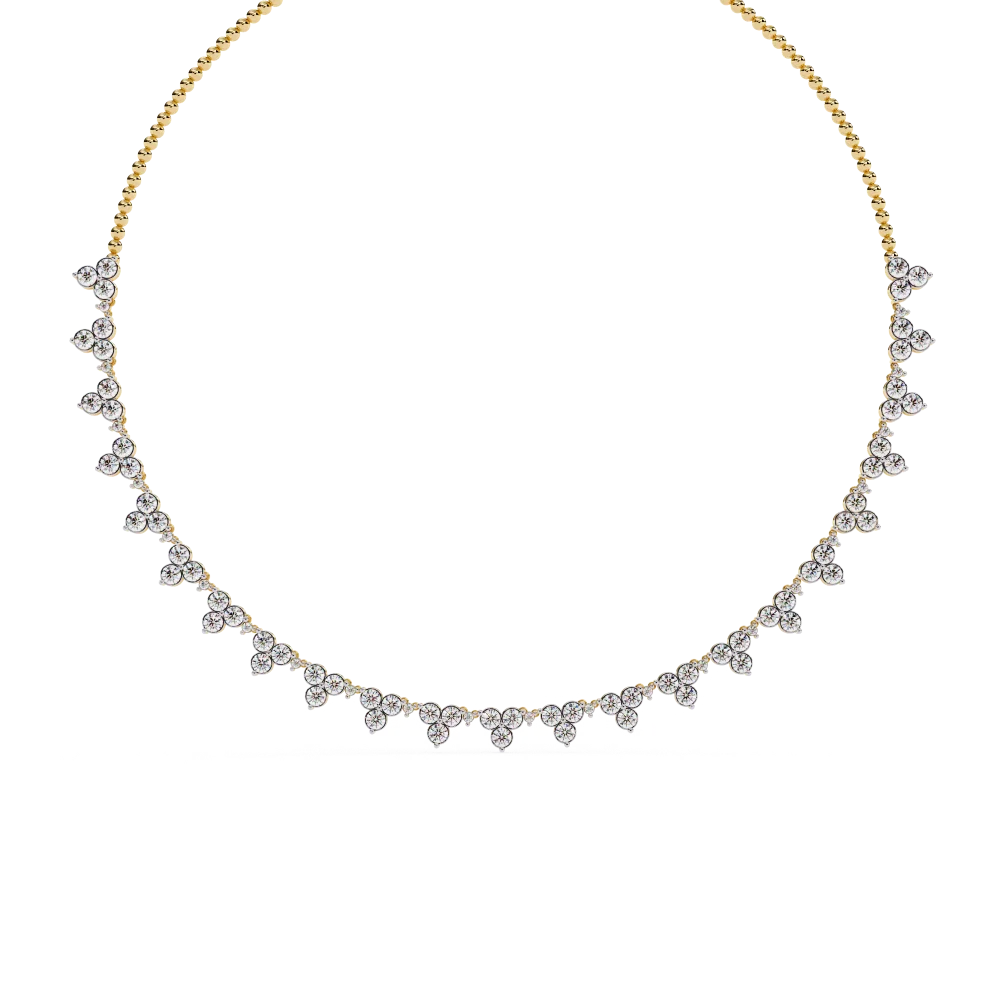
Lab Created Diamond Tennis Chain for Women: Width, Length and Carat Guide

A tennis chain is one of those pieces that looks simple and then makes everything around it look better. A fine line of diamonds, one after another, with no pendant or fuss. It sits on a plain white shirt as well as it does on a silk saree. But before you buy one, three numbers decide how it will look and feel: width, length and total carat weight.
Let us go through each one in plain terms, so you know what to expect from a lab created diamond tennis necklace.
What is a tennis chain, anyway?
The name comes from a famous moment in 1978, when tennis player Chris Evert's diamond bracelet slipped off during a match and play had to stop while she looked for it. Since then, the flexible line of diamonds has been called a tennis bracelet, and the necklace version followed. Today you will find both a lab grown diamond tennis necklace and lab created diamond tennis bracelets in most good jewellery collections.
The design is the same each time: a row of equal sized diamonds set in a flexible chain, usually with a hidden clasp and a safety lock.
Width: how thick should it be?
Width depends on the size of each diamond. In tennis jewellery, the stone size is the width.
- 1.5 to 2 mm: very fine and delicate. A good first tennis necklace, easy for office wear and layering.
- 2.5 to 3 mm: the sweet spot for most women. Visible sparkle without looking heavy.
- 3.5 to 4 mm: a statement. Beautiful for weddings and evening events, though it feels bolder.
- 4 mm and above: a proper showpiece, and a larger investment too.
If you are not sure, hold up a ruler against your collarbone and picture 2 mm and 3 mm. Most people are surprised at how much a single millimetre changes the personality of the necklace.
Length: where should it sit?
Necklace length changes the whole look, so decide this early.
- 14 to 16 inches (choker): sits close to the neck. Dramatic and very striking, and suits low or open necklines.
- 16 to 18 inches: rests at the collarbone. The most popular length for a tennis necklace, and an easy daily wear option.
- 18 to 20 inches: drops a little lower, and works well over round necks and collared shirts.
- 20 to 24 inches: sits on the chest. Better for layering or high necklines.
A useful trick is to take a thin piece of string, tie it around your neck at the point where you want the chain to sit and measure it. Add an inch if you like some room. If you wear mostly kurtas and sarees, 16 to 18 inches usually looks best.
Carat: how much diamond are you actually getting?
This is where people get confused. Total carat weight depends on both width and length. A longer chain with larger stones holds many more diamonds, so the carat count climbs fast.
As a ballpark, and designs do vary:
- A fine 16 inch chain with around 1.5 to 2 mm stones often lands somewhere near 2 to 5 total carats.
- A 16 to 18 inch chain with 2.5 to 3 mm stones typically moves into the range of 6 to 10 carats.
- Chains with 4 mm stones and above can cross 12 carats and up.
These numbers surprise many first time buyers. Tennis jewellery uses lots of small diamonds, so the carat weight adds up even when each stone is small. The same applies to a tennis bracelet, though it is shorter, so a bracelet of 2 to 3 mm stones is often in the 2 to 5 carat range.
What about quality?
With a tennis chain, uniformity matters more than perfection. Because dozens of stones sit next to each other, you want consistent colour, brightness and cut, so no single diamond looks dull or yellowish beside the rest. Look for:
- Colour: near colourless grades (around G to H, or better) keep the line looking white.
- Clarity: eye clean is enough. VS or SI grades often work well, and a small difference in clarity is hard to see at this size.
- Cut: good cut gives the chain its flash. Do not compromise here.
- Certification: certified lab grown diamonds come with a grading report, which helps you confirm quality and total weight.
Setting and clasp: the quiet parts that matter
A good tennis chain has secure four prong or bezel settings, even spacing and a flexible link structure that moves with your neck. The clasp should be smooth and include a safety latch, because a lost tennis necklace is the stuff of nightmares. Check that the gold is stamped with its purity, such as 14k or 18k.
White gold is the traditional choice, since it blends with the diamonds. Yellow gold and rose gold look warm and elegant and are increasingly popular.
Choosing based on your lifestyle
- Daily wear and work: 2 mm stones, 16 to 18 inches.
- Weddings and parties: 3 mm stones, 16 to 18 inches, or a slightly longer length for a flowing look.
- Layering: a slim 16 inch chain next to a longer pendant.
- Gifting: 2.5 mm stones in white gold is a safe, timeless gift for a wife, a mother or yourself.
Why choose lab grown for tennis jewellery?
Since a tennis chain uses so many diamonds, cost is the big factor. A lab created diamond tennis necklace lets you choose a bigger width or higher total carat weight within the same budget. The stones are real diamonds, so you give up nothing in beauty or hardness.
At Better Diamonds, you can look at the lab grown diamond tennis necklace and lab created diamond tennis bracelets collection, compare widths and lengths, and ask the team to match a size to your neck. Take your time with the measurements, because the right fit makes the necklace feel like it belongs to you.
FAQs
1. What is the best length for a women's tennis necklace?
Most women prefer 16 to 18 inches, since it sits comfortably at the collarbone and works with many outfits. Choose a longer chain only if you often wear high necklines.
2. How many carats should a tennis chain be?
It depends on stone size and length. A fine, delicate chain may be around 2 to 5 carats, while a bolder 3 mm chain often reaches 6 to 10 carats.
3. Is a lab created diamond tennis necklace suitable for daily wear?
Yes. The diamonds are very hard, and a secure setting with a safety clasp makes it practical for everyday use. Keep it clean and check the clasp regularly.
