


Overcoming the Sub-10ms Barrier: 5G and Network Latency Solutions for the Industrial Metaverse
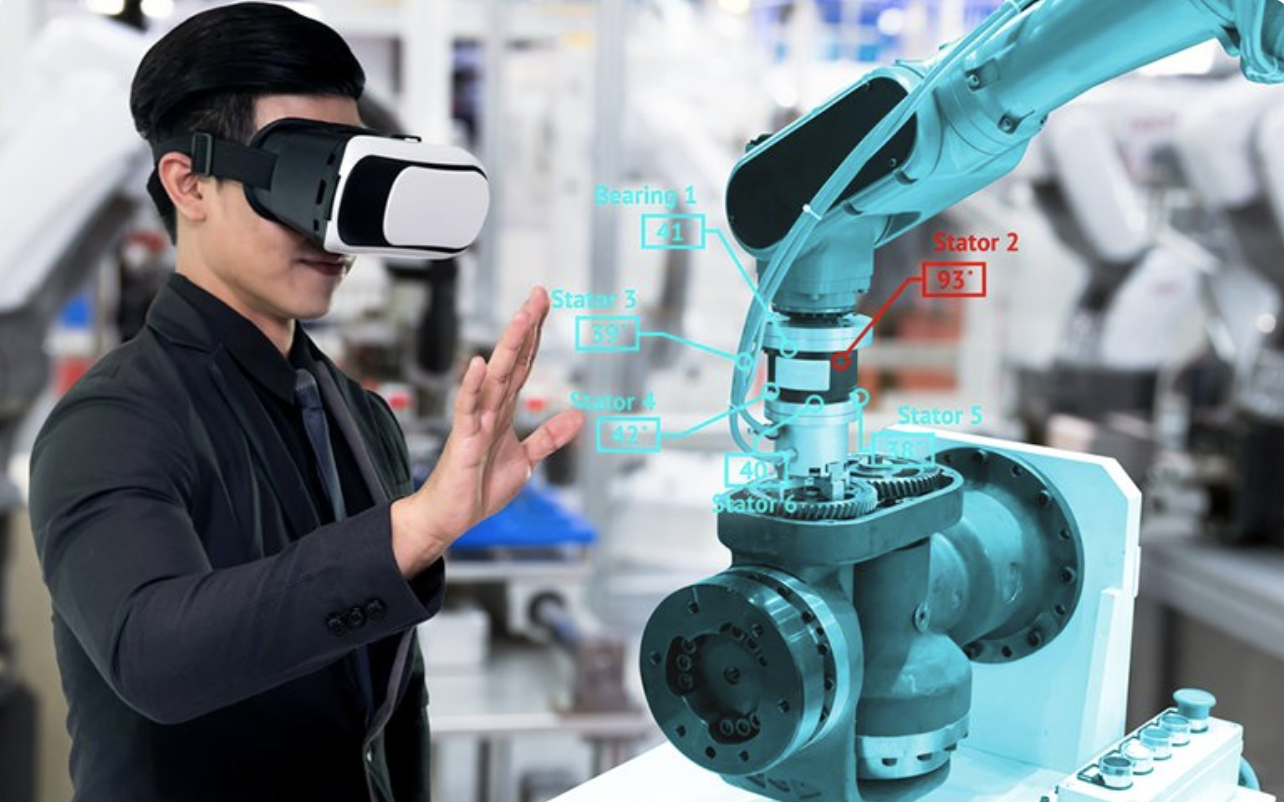
The industrial sector is standing at the precipice of a new operational era driven by the industrial metaverse—a persistent, multi-layered digital twin environment where physical machinery, automated systems, and human workers interact seamlessly in real time. In this ecosystem, an engineer in Germany can wear a spatial computing headset and manipulate a high-precision robotic assembly line located in Tokyo.
However, transporting real-time, deterministic telemetry and spatial rendering data across a network presents a massive technical roadblock: network latency.
When a human interacts with a virtual environment, any lag over 15–20 milliseconds causes immediate motion sickness and cognitive disconnection (known as "simulator sickness"). For industrial machinery, the stakes are even higher. In precision automated manufacturing, a network delay of just 10 milliseconds can cause a robotic arm to overshoot its target, leading to product defects, mechanical damage, or emergency safety shutdowns.
To unlock the true potential of industrial metaverse automation, enterprises are turning to a highly specialized infrastructure stack: Private 5G integrated with Time-Sensitive Networking (TSN). This report explores how these advanced network architecture solutions resolve the latency dilemma.
1. The Heavy Telemetry Load of the Industrial Metaverse
The industrial metaverse is fundamentally a heavy data pipeline. Unlike consumer VR, which mostly processes pre-rendered gaming graphics, an industrial digital twin requires continuous, two-way synchronicity across thousands of data points.
An enterprise metaverse network must simultaneously manage:
-
Spatial Anchoring & Video Streams: High-definition 4K visual feeds mapping the physical environment to the user's headset.
-
Haptic Feedback Loops: Sub-millisecond physical resistance data sent to a technician's haptic gloves during remote maintenance.
-
Control Telemetry: High-frequency signaling commands traveling to Programmable Logic Controllers (PLCs) regulating active physical machinery.
If standard enterprise Wi-Fi or public 4G networks attempt to process this converged data load, the unpredictable packet jitter and data congestion immediately break the real-time loop.
2. 5G as the Foundation: URLLC and Private Cores
To bypass the instability of traditional commercial networks, advanced smart factories deploy dedicated Private 5G networks. Unlike consumer-facing 5G networks optimized for raw download speeds (Enhanced Mobile Broadband, or eMBB), industrial 5G configurations leverage specific core components designed explicitly for mission-critical timing.
Ultra-Reliable Low-Latency Communication (URLLC)
Introduced under international 3GPP standards, URLLC is a distinct network profile engineered specifically for time-critical industrial IoT tasks. URLLC modifies the radio interface to cut processing delays out of the loop:
-
Mini-Slots: Traditional cellular networks process data in rigid time chunks called "slots." URLLC introduces mini-slots, allowing highly critical automation signals to transmit instantly without waiting for standard slot boundaries.
-
Preemption: If the network is heavily loaded with secondary data traffic (like a surveillance video feed), URLLC allows critical machine control packets to actively preempt—or cut in front of—non-critical traffic at the radio level.
Cloud-Native Network Slicing
Through private 5G cores, network architects can practice network slicing. This process creates separate, isolated virtual networks running on the exact same physical hardware infrastructure.
A factory can dedicate a high-bandwidth, best-effort slice for basic plant operations, while carving out a completely protected, ultra-low-latency slice reserved exclusively for spatial metaverse telemetry and real-time robotic motion control.
3. The Ultimate Synergy: 5G and Time-Sensitive Networking (TSN)
While 5G excels at providing low latency over a wireless radio connection, data must still travel through physical routers and switches to reach the factory’s edge servers where the metaverse digital twin is hosted. This is where wireless 5G merges with Time-Sensitive Networking (TSN)—a series of open standards (IEEE 802.1) that bring absolute determinism to network routing.
+-----------------------------------------------------------------------+
|                    END-TO-END DETERMINISTIC NETWORK                   |
|                                                                       |
|  [Industrial Device] ---> (DS-TT) ---> [ 5G Wireless Air Interface ]  |
|                                                      |                |
|  [Edge Metaverse Engine] <--- (NW-TT) <--- [ Private 5G Core (UPF) ]  |
+-----------------------------------------------------------------------+
When 5G and TSN work in harmony, they transform the entire network from a best-effort pipeline into a highly synchronized, predictable framework through three primary methods:
1. Absolute Time Synchronization (IEEE 802.1AS)
A grandmaster clock constantly broadcasts a unified reference time across both the wired factory infrastructure and the wireless 5G network. Every device, sensor, and VR headset operates on the exact same nanosecond timeline, ensuring there is zero coordination drift.
2. Time-Aware Shaper (IEEE 802.1Qbv)
This mechanism organizes network traffic into strict time slots via Gate Control Lists. The network automatically schedules designated windows where all non-critical data gates close completely, leaving the network open exclusively for metaverse control loops to pass through with absolutely zero queueing delays.
3. Path Redundancy (IEEE 802.1CB FRER)
To ensure the high reliability required for heavy machinery operation, Frame Replication and Elimination for Reliability (FRER) sends identical copies of critical data packets across completely separate, independent network paths at the same time. If one path encounters momentary radio interference, the duplicate packet arrives safely on the alternate route, maintaining a continuous, uninterrupted connection.
4. Performance Metrics: The Shift to Wireless Autonomy
Empirical testing across early industrial testbeds shows that moving from standard network setups to a combined 5G-TSN architecture alters primary performance metrics:
| Network Configuration | Average Round-Trip Latency | Packet Delivery Success Rate | Primary Use Cases |
| Standard Enterprise Wi-Fi | 15 ms – 45 ms (High Jitter) | 98.2% | General inventory tracking, static documentation |
| Standard Private 5G | 11.3 ms – 14 ms | 99.9% | Basic video monitoring, mobile service robots |
| Integrated 5G-TSN Network | 2.5 ms – 4.8 ms | 99.999% | Real-time metaverse twins, motion control, remote haptic surgery |
5. Strategic Deployment Architecture: The Edge Computing Layer
Minimizing over-the-air latency means nothing if data must travel hundreds of miles to a centralized public cloud data center for processing. Therefore, the final, indispensable layer of the latency solution is Multi-Access Edge Computing (MEC).
By deploying high-performance graphics rendering servers directly on the factory floor, centimeters away from the private 5G core base station, data loops are kept entirely localized. The spatial tracking data from an operator's headset is processed, rendered inside the digital twin engine, and translated into physical machine commands completely on-site. This architectural choice drops geographic transit times down to a flat zero.
6. Closing Perspectives: Building a Resilient Digital Twin
Solving the network latency puzzle removes the final operational barrier separating conceptual digital twins from practical, daily industrial metaverse integration. By combining the physical flexibility of private 5G with the absolute predictability of Time-Sensitive Networking, modern enterprises can build high-fidelity, interactive, and completely safe virtual command centers.
As these network architectures continue to standardize globally, the traditional physical boundary between the factory operator and the automated machine floor will fade entirely, giving rise to an agile, borderless industrial workforce.

 Bangla